L. V. Ermakova, A. M. Sergeev, O. Yu. Koval’, P. S. Sokolov
{"title":"Stereolithographic 3D Printing of BaSO4: Composites and Ceramics","authors":"L. V. Ermakova, A. M. Sergeev, O. Yu. Koval’, P. S. Sokolov","doi":"10.1134/S1087659624601308","DOIUrl":null,"url":null,"abstract":"<p>Highly filled (up to 55 vol %) low-viscosity (less than 3 Pa s) photocurable suspensions based on micrometer powders of barium sulfate and 1,6-hexanediol diacrylate, suitable for stereolithographic 3D printing, are produced. The 3D printing of high-resolution planar mesh structures using a digital light-emitting diode projection (DLP) is experimentally demonstrated. From the obtained composite objects, dense ceramics of a complex architecture with a hole of up to 550 µm and thin walls of up to 300 µm are produced by burning and subsequent sintering at 850°C. When studying the optical characteristics of ceramics with optically active additives, the characteristic features of both cerium ions Ce<sup>3+</sup> and Eu<sup>2+</sup>, as well as the built-in carbon, are demonstrated.</p>","PeriodicalId":580,"journal":{"name":"Glass Physics and Chemistry","volume":"51 2","pages":"204 - 210"},"PeriodicalIF":0.7000,"publicationDate":"2025-08-12","publicationTypes":"Journal Article","fieldsOfStudy":null,"isOpenAccess":false,"openAccessPdf":"","citationCount":"0","resultStr":null,"platform":"Semanticscholar","paperid":null,"PeriodicalName":"Glass Physics and Chemistry","FirstCategoryId":"88","ListUrlMain":"https://link.springer.com/article/10.1134/S1087659624601308","RegionNum":4,"RegionCategory":"材料科学","ArticlePicture":[],"TitleCN":null,"AbstractTextCN":null,"PMCID":null,"EPubDate":"","PubModel":"","JCR":"Q4","JCRName":"MATERIALS SCIENCE, CERAMICS","Score":null,"Total":0}
引用次数: 0
Abstract
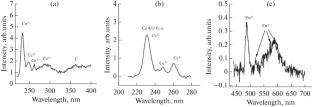
Highly filled (up to 55 vol %) low-viscosity (less than 3 Pa s) photocurable suspensions based on micrometer powders of barium sulfate and 1,6-hexanediol diacrylate, suitable for stereolithographic 3D printing, are produced. The 3D printing of high-resolution planar mesh structures using a digital light-emitting diode projection (DLP) is experimentally demonstrated. From the obtained composite objects, dense ceramics of a complex architecture with a hole of up to 550 µm and thin walls of up to 300 µm are produced by burning and subsequent sintering at 850°C. When studying the optical characteristics of ceramics with optically active additives, the characteristic features of both cerium ions Ce3+ and Eu2+, as well as the built-in carbon, are demonstrated.
期刊介绍:
Glass Physics and Chemistry presents results of research on the inorganic and physical chemistry of glass, ceramics, nanoparticles, nanocomposites, and high-temperature oxides and coatings. The journal welcomes manuscripts from all countries in the English or Russian language.


 求助内容:
 应助结果提醒方式:


 京公网安备 11010802042870号


