Impact of concomitant use of proton pump inhibitors or cardiovascular medication on survival outcomes of patients with metastatic renal cell carcinoma treated with nivolumab.
Ondřej Fiala, Petr Hošek, Michaela Tkadlecová, Bohuslav Melichar, Anežka Zemánková, Jindřich Kopecký, Michal Vočka, Martin Matějů, Radka Lohynská, Dominika Šiková, Petr Stránský, Hana Študentová, Martina Spisarová, Hana Nováková, Peter Priester, Dominika Kryštofová, Lucie Grmelová, Tomáš Büchler, Alexandr Poprach
{"title":"Impact of concomitant use of proton pump inhibitors or cardiovascular medication on survival outcomes of patients with metastatic renal cell carcinoma treated with nivolumab.","authors":"Ondřej Fiala, Petr Hošek, Michaela Tkadlecová, Bohuslav Melichar, Anežka Zemánková, Jindřich Kopecký, Michal Vočka, Martin Matějů, Radka Lohynská, Dominika Šiková, Petr Stránský, Hana Študentová, Martina Spisarová, Hana Nováková, Peter Priester, Dominika Kryštofová, Lucie Grmelová, Tomáš Büchler, Alexandr Poprach","doi":"10.1007/s10585-025-10347-0","DOIUrl":null,"url":null,"abstract":"<p><p>Renal cell cancer (RCC) is typically a disease of older adults, who often have comorbidities requiring the use of multiple concomitant medications. Even though the patients with metastatic RCC (mRCC) are often exposed to concomitant medications in parallel with anticancer agents, the impact of such co-medications remains insufficiently explored. The aim of this study was to investigate the impact of the use of proton pump inhibitors (PPIs) and/or cardiovascular medication on the outcomes of patients with mRCC receiving nivolumab. Clinical data of patients with mRCC treated with nivolumab monotherapy were retrospectively analyzed with a focus on the association between progression-free survival (PFS) or overall survival (OS) and the use of common co-medications including PPIs, acetylsalicylic acid, statins, and antihypertensives. In total, 343 patients with mRCC were included. The median PFS and OS were 4.8 (95% CI 3.9–6.0) and 15.5 (95% CI 10.7–19.6) months vs. 9.7 (95% CI 7.6–12.2) and 29.8 (95% CI 23.7–33.1) months (p < 0.001 and p < 0.001) for PPI users and non-users, respectively. In the Cox multivariate analysis, the use of PPIs remained a significant factor predicting both inferior PFS (HR = 1.870 [95% CI 1.440–2.428], p < 0.001) and OS (HR = 1.674 [95% CI 1.235–2.270], p = 0.001).). We did not find any impact of the basic classes of antihypertensive drugs, statins, or acetylsalicylic acid on the survival outcomes. Present study results demonstrate the negative impact of concomitant PPI use on PFS and OS, whereas neither statins nor antihypertensive medications had a significant impact on survival outcomes in patients with mRCC receiving nivolumab monotherapy.</p>","PeriodicalId":10267,"journal":{"name":"Clinical & Experimental Metastasis","volume":"42 5","pages":"43"},"PeriodicalIF":3.7000,"publicationDate":"2025-08-02","publicationTypes":"Journal Article","fieldsOfStudy":null,"isOpenAccess":false,"openAccessPdf":"https://www.ncbi.nlm.nih.gov/pmc/articles/PMC12317872/pdf/","citationCount":"0","resultStr":null,"platform":"Semanticscholar","paperid":null,"PeriodicalName":"Clinical & Experimental Metastasis","FirstCategoryId":"3","ListUrlMain":"https://doi.org/10.1007/s10585-025-10347-0","RegionNum":3,"RegionCategory":"医学","ArticlePicture":[],"TitleCN":null,"AbstractTextCN":null,"PMCID":null,"EPubDate":"","PubModel":"","JCR":"Q2","JCRName":"ONCOLOGY","Score":null,"Total":0}
引用次数: 0
Abstract
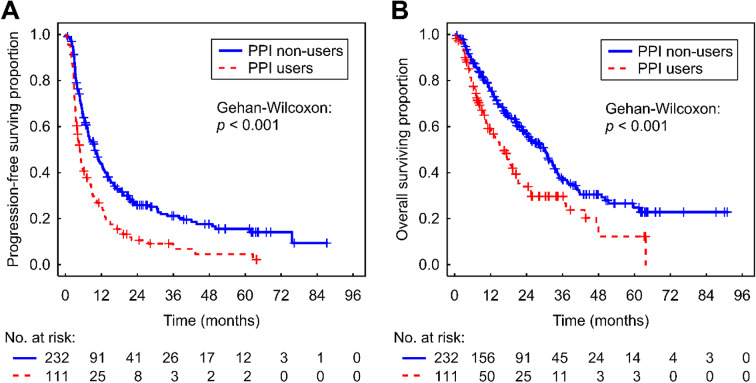
Renal cell cancer (RCC) is typically a disease of older adults, who often have comorbidities requiring the use of multiple concomitant medications. Even though the patients with metastatic RCC (mRCC) are often exposed to concomitant medications in parallel with anticancer agents, the impact of such co-medications remains insufficiently explored. The aim of this study was to investigate the impact of the use of proton pump inhibitors (PPIs) and/or cardiovascular medication on the outcomes of patients with mRCC receiving nivolumab. Clinical data of patients with mRCC treated with nivolumab monotherapy were retrospectively analyzed with a focus on the association between progression-free survival (PFS) or overall survival (OS) and the use of common co-medications including PPIs, acetylsalicylic acid, statins, and antihypertensives. In total, 343 patients with mRCC were included. The median PFS and OS were 4.8 (95% CI 3.9–6.0) and 15.5 (95% CI 10.7–19.6) months vs. 9.7 (95% CI 7.6–12.2) and 29.8 (95% CI 23.7–33.1) months (p < 0.001 and p < 0.001) for PPI users and non-users, respectively. In the Cox multivariate analysis, the use of PPIs remained a significant factor predicting both inferior PFS (HR = 1.870 [95% CI 1.440–2.428], p < 0.001) and OS (HR = 1.674 [95% CI 1.235–2.270], p = 0.001).). We did not find any impact of the basic classes of antihypertensive drugs, statins, or acetylsalicylic acid on the survival outcomes. Present study results demonstrate the negative impact of concomitant PPI use on PFS and OS, whereas neither statins nor antihypertensive medications had a significant impact on survival outcomes in patients with mRCC receiving nivolumab monotherapy.
肾细胞癌(RCC)是一种典型的老年人疾病,通常有合并症,需要使用多种合并药物。尽管转移性肾细胞癌(mRCC)患者经常同时服用抗癌药物,但这种联合药物的影响仍未得到充分探讨。本研究的目的是调查质子泵抑制剂(PPIs)和/或心血管药物的使用对mRCC患者接受纳武单抗治疗的结果的影响。回顾性分析了接受纳武单抗单药治疗的mRCC患者的临床数据,重点是无进展生存期(PFS)或总生存期(OS)与常用联合用药(包括PPIs、乙酰水杨酸、他汀类药物和抗高血压药物)的使用之间的关系。共纳入343例mRCC患者。中位PFS和OS分别为4.8 (95% CI 3.9-6.0)和15.5 (95% CI 10.7-19.6)个月,而9.7 (95% CI 7.6-12.2)和29.8 (95% CI 23.7-33.1)个月
期刊介绍:
The Journal''s scope encompasses all aspects of metastasis research, whether laboratory-based, experimental or clinical and therapeutic. It covers such areas as molecular biology, pharmacology, tumor biology, and clinical cancer treatment (with all its subdivisions of surgery, chemotherapy and radio-therapy as well as pathology and epidemiology) insofar as these disciplines are concerned with the Journal''s core subject of metastasis formation, prevention and treatment.

 求助内容:
 应助结果提醒方式:


 京公网安备 11010802042870号


