{"title":"Occlusal splint effects on visual capacities in patients with temporomandibular disorders (TMD): a prospective interventional cohort study.","authors":"Shahnawaz Khijmatgar, Gianluca Martino Tartaglia, Andrea Sardella, Alessandro Marchesi, Roberto Marchesi, Clarita Pellegrini","doi":"10.1038/s41405-025-00337-5","DOIUrl":null,"url":null,"abstract":"<p><strong>Objectives: </strong>The temporomandibular joint system and visual apparatus seem to be correlated. Our study aimed to examine the potential effects of occlusal splints on visual capacities (accommodation and ocular convergence) in individuals with temporomandibular disorders, followed for a period of 6 months and 1 year, assessing changes over this timeframe.</p><p><strong>Materials and methods: </strong>Forty-two subjects were enrolled in a year-long study conducted at the Operative Unit of Odontostomatology of ASST Santi Paolo e Carlo, in collaboration with the University of Milan, Italy. A gnathological examination was followed by an orthoptic assessment using the stick of Duane and measuring convergence and accommodation at three jaw positions at different time points (T0, T1, T2, T3).</p><p><strong>Results: </strong>After 6 months of occlusal splint therapy, an improvement in visual abilities at maximum intercuspation and resting positions was observed. In contrast, the open-mouth position did not yield statistically significant results. Further assessments at 1 year did not show significant changes. Occlusal splint therapy appears to positively influence visual capacities (in maximum intercuspation and resting positions). While the open-mouth position did not exhibit significant improvements.</p><p><strong>Conclusion: </strong>Our study results highlight the importance of considering jaw positions in evaluating visual function, suggesting the possible integration of occlusal splints with an orthoptic assessment in comprehensive TMD management.</p>","PeriodicalId":36997,"journal":{"name":"BDJ Open","volume":"11 1","pages":"56"},"PeriodicalIF":2.5000,"publicationDate":"2025-06-09","publicationTypes":"Journal Article","fieldsOfStudy":null,"isOpenAccess":false,"openAccessPdf":"https://www.ncbi.nlm.nih.gov/pmc/articles/PMC12149292/pdf/","citationCount":"0","resultStr":null,"platform":"Semanticscholar","paperid":null,"PeriodicalName":"BDJ Open","FirstCategoryId":"1085","ListUrlMain":"https://doi.org/10.1038/s41405-025-00337-5","RegionNum":0,"RegionCategory":null,"ArticlePicture":[],"TitleCN":null,"AbstractTextCN":null,"PMCID":null,"EPubDate":"","PubModel":"","JCR":"Q2","JCRName":"DENTISTRY, ORAL SURGERY & MEDICINE","Score":null,"Total":0}
引用次数: 0
Abstract
Objectives: The temporomandibular joint system and visual apparatus seem to be correlated. Our study aimed to examine the potential effects of occlusal splints on visual capacities (accommodation and ocular convergence) in individuals with temporomandibular disorders, followed for a period of 6 months and 1 year, assessing changes over this timeframe.
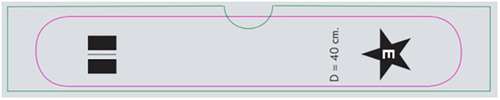
Materials and methods: Forty-two subjects were enrolled in a year-long study conducted at the Operative Unit of Odontostomatology of ASST Santi Paolo e Carlo, in collaboration with the University of Milan, Italy. A gnathological examination was followed by an orthoptic assessment using the stick of Duane and measuring convergence and accommodation at three jaw positions at different time points (T0, T1, T2, T3).
Results: After 6 months of occlusal splint therapy, an improvement in visual abilities at maximum intercuspation and resting positions was observed. In contrast, the open-mouth position did not yield statistically significant results. Further assessments at 1 year did not show significant changes. Occlusal splint therapy appears to positively influence visual capacities (in maximum intercuspation and resting positions). While the open-mouth position did not exhibit significant improvements.
Conclusion: Our study results highlight the importance of considering jaw positions in evaluating visual function, suggesting the possible integration of occlusal splints with an orthoptic assessment in comprehensive TMD management.


 求助内容:
求助内容: 应助结果提醒方式:

 京公网安备 11010802042870号


