Christopher Seifen, Johannes Pordzik, Katharina Ludwig, Katharina Bahr-Hamm, Christoph Raphael Buhr, Christoph Matthias, Haralampos Gouveris
{"title":"Patient education on Instagram? Structured content analysis of the hashtag \"obstructivesleepapnea\".","authors":"Christopher Seifen, Johannes Pordzik, Katharina Ludwig, Katharina Bahr-Hamm, Christoph Raphael Buhr, Christoph Matthias, Haralampos Gouveris","doi":"10.1007/s00405-025-09211-4","DOIUrl":null,"url":null,"abstract":"<p><strong>Purpose: </strong>Instagram ranks among the most used social media platforms worldwide. An increasing number of posts are dedicated to specific medical topics, such as sleep medicine. The educational content of these posts is largely unknown. Therefore, a structured content analysis of posts linked to the hashtag \"obstructivesleepapnea\" was conducted, as obstructive sleep apnea (OSA) represents the most common sleep-related breathing disorder.</p><p><strong>Methods: </strong>The hashtag \"obstructivesleepapnea\" was entered into Instagram's search field. The first linked post was selected and then subdivided into visual content and text content for systematic analysis with a focus on educational information on OSA. Demographic factors of the post such as likes, hashtags and the posting account were also included in the analysis. The data collection was completed for N = 150 consecutive posts.</p><p><strong>Results: </strong>37.3% of the visual content and 32.7% of the text content addressed educational information on OSA. In both subgroups, the most frequently discussed aspects were OSA symptoms, comorbidities, and therapy (visual content: 50.0%, 39.3, and 41.1%, respectively; text content: 42.9%, 44.9%, and 24.9%, respectively). The most common (professional) background of the account, as self-stated by the holder, was dentists (29.5%). Additional sleep medicine content was posted by 34.3% of all accounts.</p><p><strong>Conclusion: </strong>Instagram offers informative content about OSA and is therefore a potential source for patient education. However, the content available is often poorly organized and in most cases incomplete. Patients may have difficulty categorizing the information provided to benefit from it.</p>","PeriodicalId":11952,"journal":{"name":"European Archives of Oto-Rhino-Laryngology","volume":" ","pages":"1263-1269"},"PeriodicalIF":2.2000,"publicationDate":"2026-02-01","publicationTypes":"Journal Article","fieldsOfStudy":null,"isOpenAccess":false,"openAccessPdf":"https://www.ncbi.nlm.nih.gov/pmc/articles/PMC12987904/pdf/","citationCount":"0","resultStr":null,"platform":"Semanticscholar","paperid":null,"PeriodicalName":"European Archives of Oto-Rhino-Laryngology","FirstCategoryId":"3","ListUrlMain":"https://doi.org/10.1007/s00405-025-09211-4","RegionNum":3,"RegionCategory":"医学","ArticlePicture":[],"TitleCN":null,"AbstractTextCN":null,"PMCID":null,"EPubDate":"2025/1/20 0:00:00","PubModel":"Epub","JCR":"Q2","JCRName":"OTORHINOLARYNGOLOGY","Score":null,"Total":0}
引用次数: 0
Abstract
Purpose: Instagram ranks among the most used social media platforms worldwide. An increasing number of posts are dedicated to specific medical topics, such as sleep medicine. The educational content of these posts is largely unknown. Therefore, a structured content analysis of posts linked to the hashtag "obstructivesleepapnea" was conducted, as obstructive sleep apnea (OSA) represents the most common sleep-related breathing disorder.
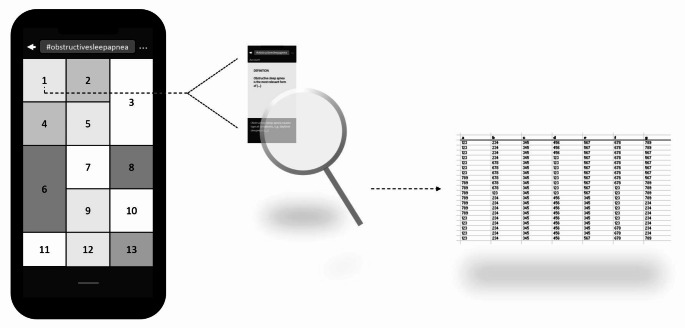
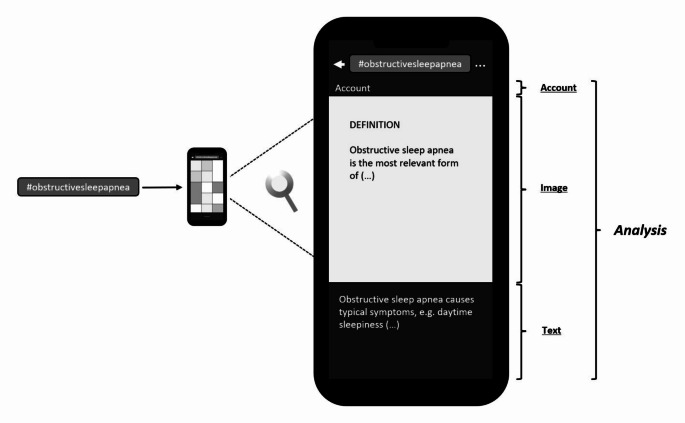
Methods: The hashtag "obstructivesleepapnea" was entered into Instagram's search field. The first linked post was selected and then subdivided into visual content and text content for systematic analysis with a focus on educational information on OSA. Demographic factors of the post such as likes, hashtags and the posting account were also included in the analysis. The data collection was completed for N = 150 consecutive posts.
Results: 37.3% of the visual content and 32.7% of the text content addressed educational information on OSA. In both subgroups, the most frequently discussed aspects were OSA symptoms, comorbidities, and therapy (visual content: 50.0%, 39.3, and 41.1%, respectively; text content: 42.9%, 44.9%, and 24.9%, respectively). The most common (professional) background of the account, as self-stated by the holder, was dentists (29.5%). Additional sleep medicine content was posted by 34.3% of all accounts.
Conclusion: Instagram offers informative content about OSA and is therefore a potential source for patient education. However, the content available is often poorly organized and in most cases incomplete. Patients may have difficulty categorizing the information provided to benefit from it.
期刊介绍:
Official Journal of
European Union of Medical Specialists – ORL Section and Board
Official Journal of Confederation of European Oto-Rhino-Laryngology Head and Neck Surgery
"European Archives of Oto-Rhino-Laryngology" publishes original clinical reports and clinically relevant experimental studies, as well as short communications presenting new results of special interest. With peer review by a respected international editorial board and prompt English-language publication, the journal provides rapid dissemination of information by authors from around the world. This particular feature makes it the journal of choice for readers who want to be informed about the continuing state of the art concerning basic sciences and the diagnosis and management of diseases of the head and neck on an international level.
European Archives of Oto-Rhino-Laryngology was founded in 1864 as "Archiv für Ohrenheilkunde" by A. von Tröltsch, A. Politzer and H. Schwartze.


 求助内容:
求助内容: 应助结果提醒方式:

 京公网安备 11010802042870号


