{"title":"Bioinspired Antiwear Poly(urea-imide) Composites: Influence of Tribology on Polymer Crystal Structure","authors":"Chaoying Liao, Zhaozhu Zhang, Yaohui He, Junya Yuan, Mingming Yang, Peilong Li, Wei Jiang, Yongmin Liang, Weimin Liu","doi":"10.1002/smll.202408249","DOIUrl":null,"url":null,"abstract":"<p>Polymer composite materials encounter considerable challenges in sustaining superior tribological properties at high rotational speeds. Inspired by the microstructure of dragonfly wings, a novel thermally stable and ambient pressure curing poly(urea-imide) resin (PURI) with excellent tribological properties has been eco-friendly synthesis using bio-based greener solvents. Furthermore, The PURI composites enhanced with polyether ether ketone (PEEK) and Polytetrafluoroethylene (PTFE) blended fabrics demonstrate excellent mechanical, with tensile strengths exceeding 175 MPa. The PURI composites synthesized in the green solvent dimethyl isosorbide (DMI) exhibit an average friction coefficient of 0.1160 and an average wear rate of 2.7 × 10<sup>−14 </sup>m<sup>3</sup> (N·m)<sup>−1</sup> at 800 r min<sup>−1</sup>. The excellent tribological performance is primarily attributed to the molecular chain rearrangement of the PURI resin during friction, which leads to the formation of crystalline structures in certain regions, a phenomenon known as friction-induced crystallization. This process is an entropy-reducing mechanism that absorbs other forms of energy, such as frictional heat, during the frictional process. Moreover, the PTFE fibers underwent tribochemical reactions resulting in changes to lattice spacing during friction and contributing to the formation of the tribofilm. This study provides new evidence regarding the frictional mechanisms of polymer composites, which is beneficial for designing high-performance wear-resistant composites.</p>","PeriodicalId":228,"journal":{"name":"Small","volume":"21 7","pages":""},"PeriodicalIF":11.8000,"publicationDate":"2025-01-09","publicationTypes":"Journal Article","fieldsOfStudy":null,"isOpenAccess":false,"openAccessPdf":"","citationCount":"0","resultStr":null,"platform":"Semanticscholar","paperid":null,"PeriodicalName":"Small","FirstCategoryId":"88","ListUrlMain":"https://onlinelibrary.wiley.com/doi/10.1002/smll.202408249","RegionNum":2,"RegionCategory":"材料科学","ArticlePicture":[],"TitleCN":null,"AbstractTextCN":null,"PMCID":null,"EPubDate":"","PubModel":"","JCR":"Q1","JCRName":"CHEMISTRY, MULTIDISCIPLINARY","Score":null,"Total":0}
引用次数: 0
Abstract
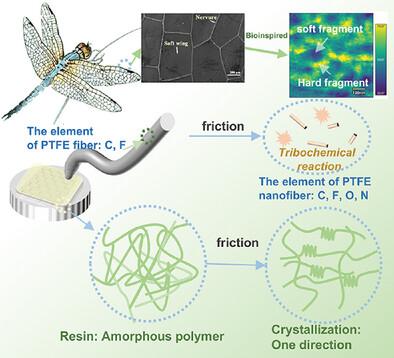
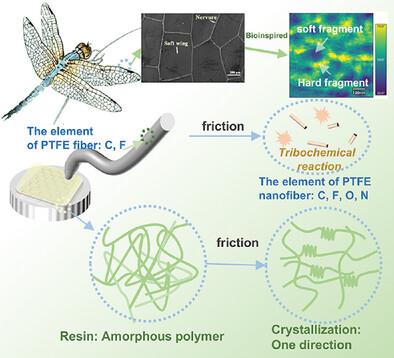
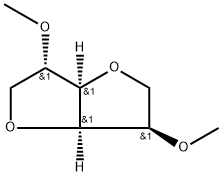
Polymer composite materials encounter considerable challenges in sustaining superior tribological properties at high rotational speeds. Inspired by the microstructure of dragonfly wings, a novel thermally stable and ambient pressure curing poly(urea-imide) resin (PURI) with excellent tribological properties has been eco-friendly synthesis using bio-based greener solvents. Furthermore, The PURI composites enhanced with polyether ether ketone (PEEK) and Polytetrafluoroethylene (PTFE) blended fabrics demonstrate excellent mechanical, with tensile strengths exceeding 175 MPa. The PURI composites synthesized in the green solvent dimethyl isosorbide (DMI) exhibit an average friction coefficient of 0.1160 and an average wear rate of 2.7 × 10⁻¹⁴ m3 (N·m)−1 at 800 r min−1. The excellent tribological performance is primarily attributed to the molecular chain rearrangement of the PURI resin during friction, which leads to the formation of crystalline structures in certain regions, a phenomenon known as friction-induced crystallization. This process is an entropy-reducing mechanism that absorbs other forms of energy, such as frictional heat, during the frictional process. Moreover, the PTFE fibers underwent tribochemical reactions resulting in changes to lattice spacing during friction and contributing to the formation of the tribofilm. This study provides new evidence regarding the frictional mechanisms of polymer composites, which is beneficial for designing high-performance wear-resistant composites.
期刊介绍:
Small serves as an exceptional platform for both experimental and theoretical studies in fundamental and applied interdisciplinary research at the nano- and microscale. The journal offers a compelling mix of peer-reviewed Research Articles, Reviews, Perspectives, and Comments.
With a remarkable 2022 Journal Impact Factor of 13.3 (Journal Citation Reports from Clarivate Analytics, 2023), Small remains among the top multidisciplinary journals, covering a wide range of topics at the interface of materials science, chemistry, physics, engineering, medicine, and biology.
Small's readership includes biochemists, biologists, biomedical scientists, chemists, engineers, information technologists, materials scientists, physicists, and theoreticians alike.


 求助内容:
 应助结果提醒方式:


 京公网安备 11010802042870号


