Yibin Sun, Song Tang, Enrui Li, Chao Wang, Hong Chang, Yixuan Huang, Yi Yang, Ling Jiao, Wenyan Yan, Yifu Lu and Yi Wan*,
{"title":"Identification of Sulfur-Containing Chlorinated Paraffin Structural Analogues in Human Serum: Origination from Biotransformation or Bioaccumulation?","authors":"Yibin Sun, Song Tang, Enrui Li, Chao Wang, Hong Chang, Yixuan Huang, Yi Yang, Ling Jiao, Wenyan Yan, Yifu Lu and Yi Wan*, ","doi":"10.1021/acs.est.3c10056","DOIUrl":null,"url":null,"abstract":"<p >Chlorinated paraffins (CPs) are manufactured and used in high quantities and have diverse structural analogues. It is generally recognized that sulfur-containing structural analogues of CPs are mainly derived from sulfate-conjugated phase II metabolism. In this study, we non-targeted identified three classes of sulfur-containing CP structural analogues (CPs–S) in human serum, including 44 CP sulfates (CPs–SO<sub>4</sub>H/CPs–SO<sub>4</sub>H–OH), 14 chlorinated benzene sulfates (CBs–SO<sub>4</sub>H), and 19 CP sulfite esters (CPs–SO<sub>3</sub>/CPs–S<sub>2</sub>O<sub>6</sub>), which were generated during the production of commercial mixtures of CPs and, thus, bioaccumulated via environmental exposures. We first wrote a program to screen CPs–S, which were baseline-separated from CPs according to their polar functional groups. Then, mass spectral analyses of alkalization–acidification liquid–liquid extracts of serum samples and Orbitrap mass spectrometry analyses in the presence and absence of tetraphenylphosphonium chloride (Ph<sub>4</sub>PCl), respectively, were performed to determine the ionization forms ([M + Cl]<sup>−</sup> or [M – H]<sup>−</sup>) of CPs–S. The presence of fragment ions (SO<sub>4</sub>H<sup>–</sup>, SO<sub>3</sub><sup>–</sup>, SO<sub>2</sub>Cl<sup>–</sup>, and HSO<sub>3</sub><sup>–</sup>) revealed the structures of CPs–S, which were validated by their detections in commercial mixtures of CPs. The estimated total concentrations of CPs–S in the human serum samples were higher than the concentrations of medium- and long-chain CPs. The profiles of CPs–S in human serum were similar to those detected in CP commercial mixtures and rats exposed to the commercial mixtures, but CPs–S were not detected in human liver S9 fractions or rat tissues after exposure to CP standards. These results, together with the knowledge of the processes used to chemically synthesize CPs, demonstrate that CPs–S in humans originates from environmental bioaccumulation.</p>","PeriodicalId":36,"journal":{"name":"环境科学与技术","volume":"58 7","pages":"3462–3471"},"PeriodicalIF":12.2000,"publicationDate":"2024-02-07","publicationTypes":"Journal Article","fieldsOfStudy":null,"isOpenAccess":false,"openAccessPdf":"","citationCount":"0","resultStr":null,"platform":"Semanticscholar","paperid":null,"PeriodicalName":"环境科学与技术","FirstCategoryId":"1","ListUrlMain":"https://pubs.acs.org/doi/10.1021/acs.est.3c10056","RegionNum":1,"RegionCategory":"环境科学与生态学","ArticlePicture":[],"TitleCN":null,"AbstractTextCN":null,"PMCID":null,"EPubDate":"","PubModel":"","JCR":"Q1","JCRName":"ENGINEERING, ENVIRONMENTAL","Score":null,"Total":0}
引用次数: 0
Abstract
Chlorinated paraffins (CPs) are manufactured and used in high quantities and have diverse structural analogues. It is generally recognized that sulfur-containing structural analogues of CPs are mainly derived from sulfate-conjugated phase II metabolism. In this study, we non-targeted identified three classes of sulfur-containing CP structural analogues (CPs–S) in human serum, including 44 CP sulfates (CPs–SO4H/CPs–SO4H–OH), 14 chlorinated benzene sulfates (CBs–SO4H), and 19 CP sulfite esters (CPs–SO3/CPs–S2O6), which were generated during the production of commercial mixtures of CPs and, thus, bioaccumulated via environmental exposures. We first wrote a program to screen CPs–S, which were baseline-separated from CPs according to their polar functional groups. Then, mass spectral analyses of alkalization–acidification liquid–liquid extracts of serum samples and Orbitrap mass spectrometry analyses in the presence and absence of tetraphenylphosphonium chloride (Ph4PCl), respectively, were performed to determine the ionization forms ([M + Cl]− or [M – H]−) of CPs–S. The presence of fragment ions (SO4H–, SO3–, SO2Cl–, and HSO3–) revealed the structures of CPs–S, which were validated by their detections in commercial mixtures of CPs. The estimated total concentrations of CPs–S in the human serum samples were higher than the concentrations of medium- and long-chain CPs. The profiles of CPs–S in human serum were similar to those detected in CP commercial mixtures and rats exposed to the commercial mixtures, but CPs–S were not detected in human liver S9 fractions or rat tissues after exposure to CP standards. These results, together with the knowledge of the processes used to chemically synthesize CPs, demonstrate that CPs–S in humans originates from environmental bioaccumulation.
期刊介绍:
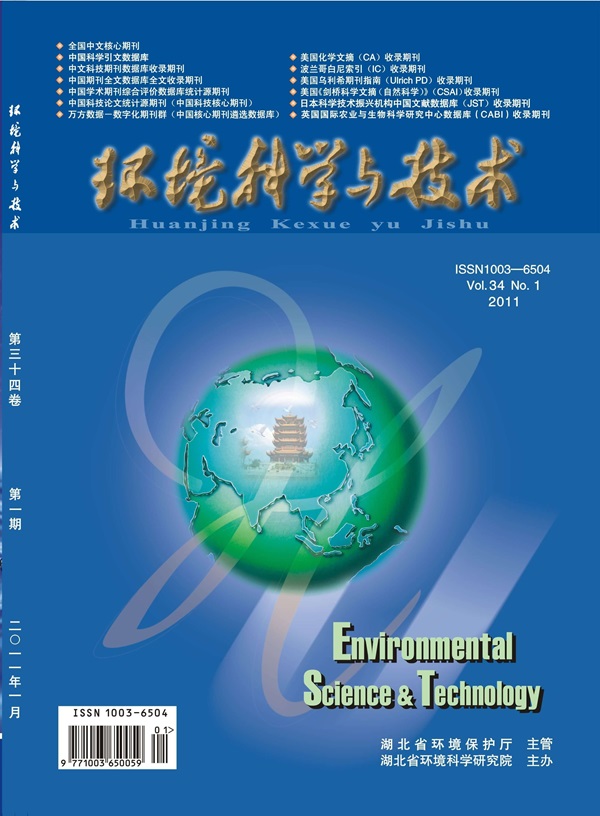
Environmental Science & Technology (ES&T) is a co-sponsored academic and technical magazine by the Hubei Provincial Environmental Protection Bureau and the Hubei Provincial Academy of Environmental Sciences.
Environmental Science & Technology (ES&T) holds the status of Chinese core journals, scientific papers source journals of China, Chinese Science Citation Database source journals, and Chinese Academic Journal Comprehensive Evaluation Database source journals. This publication focuses on the academic field of environmental protection, featuring articles related to environmental protection and technical advancements.



 求助内容:
 应助结果提醒方式:


 京公网安备 11010802042870号


