Karin F K Ejendal, Carmen W Dessauer, Terence E Hébert, Val J Watts
{"title":"多巴胺D(2)受体介导的AC5异源致敏需要信号体组装。","authors":"Karin F K Ejendal, Carmen W Dessauer, Terence E Hébert, Val J Watts","doi":"10.1155/2012/210324","DOIUrl":null,"url":null,"abstract":"<p><p>Chronic dopamine receptor activation is implicated in several central nervous system disorders. Although acute activation of Gα(i)-coupled D(2) dopamine receptors inhibits adenylyl cyclase, persistent activation enhances adenylyl cyclase activity, a phenomenon called heterologous sensitization. Previous work revealed a requirement for Gα(s) in D(2)-induced heterologous sensitization of AC5. To elucidate the mechanism of Gα(s) dependency, we expressed Gα(s) mutants in Gα(s)-deficient Gnas(E2-/E2-) cells. Neither Gα(s)-palmitoylation nor Gα(s)-Gβγ interactions were required for sensitization of AC5. Moreover, we found that coexpressing βARKct-CD8 or Sar1(H79G) blocked heterologous sensitization. These studies are consistent with a role for Gα(s)-AC5 interactions in sensitization however, Gβγ appears to have an indirect role in heterologous sensitization of AC5, possibly by promoting proper signalosome assembly.</p>","PeriodicalId":89176,"journal":{"name":"Journal of signal transduction","volume":" ","pages":"210324"},"PeriodicalIF":0.0000,"publicationDate":"2012-01-01","publicationTypes":"Journal Article","fieldsOfStudy":null,"isOpenAccess":false,"openAccessPdf":"https://sci-hub-pdf.com/10.1155/2012/210324","citationCount":"7","resultStr":"{\"title\":\"Dopamine D(2) Receptor-Mediated Heterologous Sensitization of AC5 Requires Signalosome Assembly.\",\"authors\":\"Karin F K Ejendal, Carmen W Dessauer, Terence E Hébert, Val J Watts\",\"doi\":\"10.1155/2012/210324\",\"DOIUrl\":null,\"url\":null,\"abstract\":\"<p><p>Chronic dopamine receptor activation is implicated in several central nervous system disorders. Although acute activation of Gα(i)-coupled D(2) dopamine receptors inhibits adenylyl cyclase, persistent activation enhances adenylyl cyclase activity, a phenomenon called heterologous sensitization. Previous work revealed a requirement for Gα(s) in D(2)-induced heterologous sensitization of AC5. To elucidate the mechanism of Gα(s) dependency, we expressed Gα(s) mutants in Gα(s)-deficient Gnas(E2-/E2-) cells. Neither Gα(s)-palmitoylation nor Gα(s)-Gβγ interactions were required for sensitization of AC5. Moreover, we found that coexpressing βARKct-CD8 or Sar1(H79G) blocked heterologous sensitization. These studies are consistent with a role for Gα(s)-AC5 interactions in sensitization however, Gβγ appears to have an indirect role in heterologous sensitization of AC5, possibly by promoting proper signalosome assembly.</p>\",\"PeriodicalId\":89176,\"journal\":{\"name\":\"Journal of signal transduction\",\"volume\":\" \",\"pages\":\"210324\"},\"PeriodicalIF\":0.0000,\"publicationDate\":\"2012-01-01\",\"publicationTypes\":\"Journal Article\",\"fieldsOfStudy\":null,\"isOpenAccess\":false,\"openAccessPdf\":\"https://sci-hub-pdf.com/10.1155/2012/210324\",\"citationCount\":\"7\",\"resultStr\":null,\"platform\":\"Semanticscholar\",\"paperid\":null,\"PeriodicalName\":\"Journal of signal transduction\",\"FirstCategoryId\":\"1085\",\"ListUrlMain\":\"https://doi.org/10.1155/2012/210324\",\"RegionNum\":0,\"RegionCategory\":null,\"ArticlePicture\":[],\"TitleCN\":null,\"AbstractTextCN\":null,\"PMCID\":null,\"EPubDate\":\"2012/3/12 0:00:00\",\"PubModel\":\"Epub\",\"JCR\":\"\",\"JCRName\":\"\",\"Score\":null,\"Total\":0}","platform":"Semanticscholar","paperid":null,"PeriodicalName":"Journal of signal transduction","FirstCategoryId":"1085","ListUrlMain":"https://doi.org/10.1155/2012/210324","RegionNum":0,"RegionCategory":null,"ArticlePicture":[],"TitleCN":null,"AbstractTextCN":null,"PMCID":null,"EPubDate":"2012/3/12 0:00:00","PubModel":"Epub","JCR":"","JCRName":"","Score":null,"Total":0}
Dopamine D(2) Receptor-Mediated Heterologous Sensitization of AC5 Requires Signalosome Assembly.
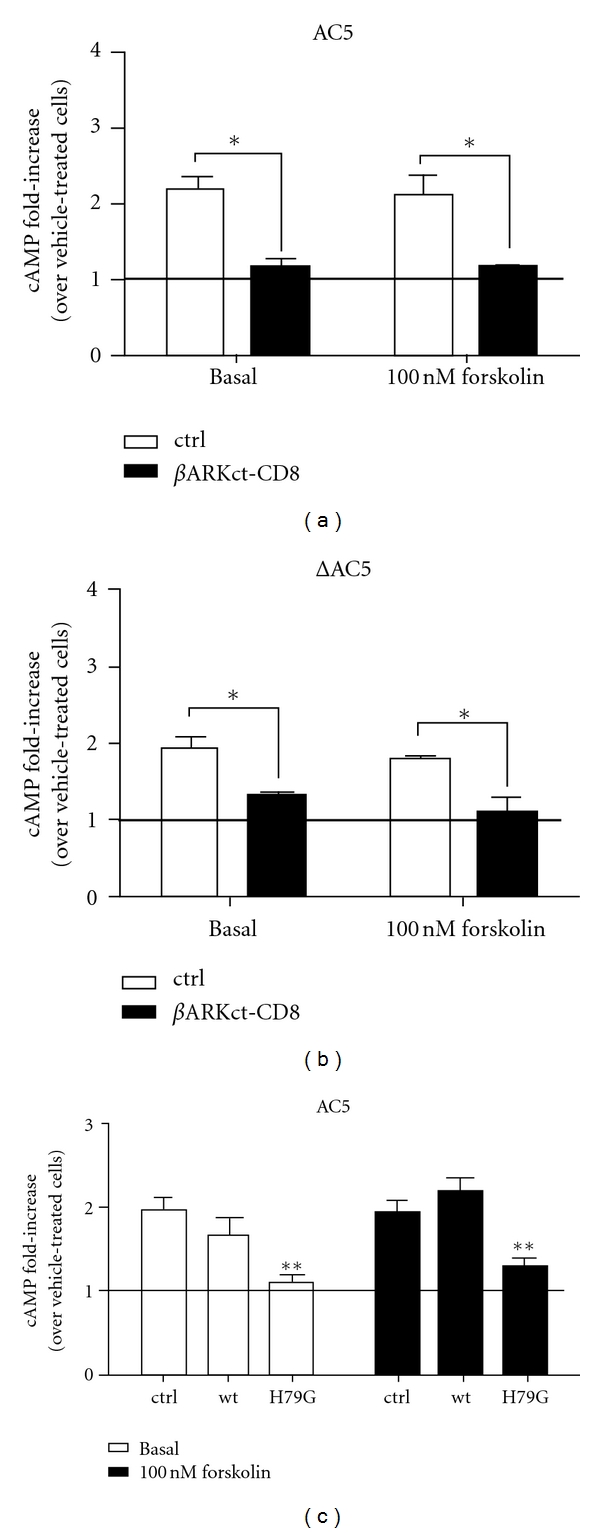
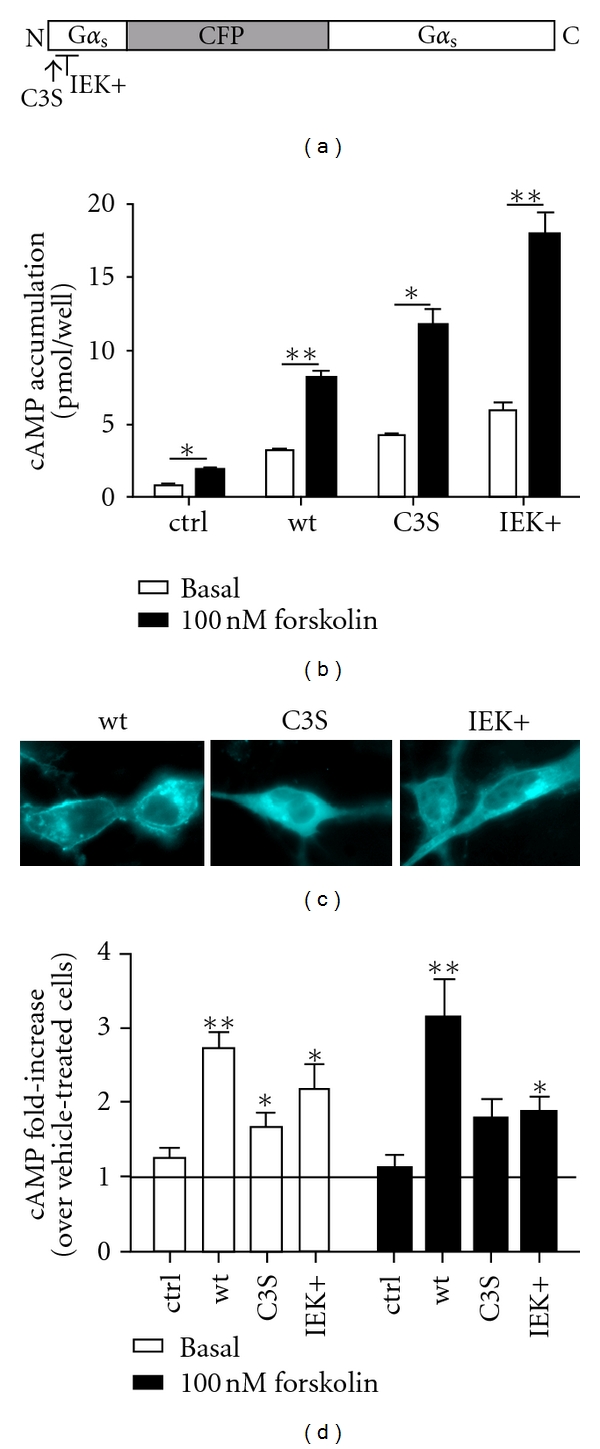
Chronic dopamine receptor activation is implicated in several central nervous system disorders. Although acute activation of Gα(i)-coupled D(2) dopamine receptors inhibits adenylyl cyclase, persistent activation enhances adenylyl cyclase activity, a phenomenon called heterologous sensitization. Previous work revealed a requirement for Gα(s) in D(2)-induced heterologous sensitization of AC5. To elucidate the mechanism of Gα(s) dependency, we expressed Gα(s) mutants in Gα(s)-deficient Gnas(E2-/E2-) cells. Neither Gα(s)-palmitoylation nor Gα(s)-Gβγ interactions were required for sensitization of AC5. Moreover, we found that coexpressing βARKct-CD8 or Sar1(H79G) blocked heterologous sensitization. These studies are consistent with a role for Gα(s)-AC5 interactions in sensitization however, Gβγ appears to have an indirect role in heterologous sensitization of AC5, possibly by promoting proper signalosome assembly.


 求助内容:
求助内容: 应助结果提醒方式:

 京公网安备 11010802042870号

