Sungkrit Pojmonpiti, Mariska Meersschaut, Katja Batens, Margot Baudelet, Veerle De Herdt, Barbara Janssens
{"title":"口腔卫生护理对卒中后吞咽困难住院患者吞咽恢复的影响:系统回顾和荟萃分析。","authors":"Sungkrit Pojmonpiti, Mariska Meersschaut, Katja Batens, Margot Baudelet, Veerle De Herdt, Barbara Janssens","doi":"10.1093/esj/aakag126","DOIUrl":null,"url":null,"abstract":"<p><strong>Objective: </strong>To evaluate the effects of oral hygiene care on swallowing-related outcomes in hospitalised patients with post-stroke dysphagia (PSD).</p><p><strong>Methods: </strong>A systematic literature search was conducted in MEDLINE, Embase, Web of Science, Scopus, CINAHL, CENTRAL and ClinicalTrials.gov up to May 2026. Randomised controlled trials (RCTs) and non-RCTs with a comparison group that reporting swallowing-related outcomes were included. Risk of bias was assessed using RoB 2 for RCTs and ROBINS-I for non-RCTs. Where appropriate, meta-analyses were conducted using random-effects models to estimate mean differences (MDs), odds ratios (ORs) and risk differences (RDs) with 95% confidence intervals (CIs). The certainty of the evidence was assessed using the Grading of Recommendations Assessment, Development and Evaluation (GRADE) framework.</p><p><strong>Results: </strong>Nine studies, comprising 7 RCTs and two non-RCTs, were included, with risk-of-bias ratings ranging from low risk to some concerns for RCTs and moderate risk for non-RCTs. Oral hygiene care increased the odds of achieving independent oral intake compared with usual care (OR = 2.54, 95% CI, 1.80; 3.59; I2 = 0%), corresponding to a 13% absolute increase (RD = 0.13, 95% CI, 0.03; 0.23; I2 = 0%). Functional Oral Intake Scale (FOIS; scores 1-7), with higher scores indicating more independent and unrestricted oral intake, favoured oral hygiene care (MD = 0.40, 95% CI, 0.07; 0.72; I2 = 0%). Similarly, Gugging Swallowing Screen (GUSS; scores 0-20), assessing swallowing safety and dysphagia severity, favoured oral hygiene care (MD = 2.93, 95% CI, 1.01; 4.85; I2 = 0%). The certainty of the evidence for achieving independent oral intake was rated as high.</p><p><strong>Conclusion: </strong>Oral hygiene care supports swallowing recovery in patients with PSD, particularly independent oral intake and should be considered an active component of dysphagia rehabilitation.</p>","PeriodicalId":46821,"journal":{"name":"European Stroke Journal","volume":"11 10","pages":""},"PeriodicalIF":5.2000,"publicationDate":"2026-10-05","publicationTypes":"Journal Article","fieldsOfStudy":null,"isOpenAccess":false,"openAccessPdf":"https://www.ncbi.nlm.nih.gov/pmc/articles/PMC13689882/pdf/","citationCount":"0","resultStr":"{\"title\":\"Effects of oral hygiene care on swallowing recovery in hospitalised patients with post-stroke dysphagia: a systematic review and meta-analysis.\",\"authors\":\"Sungkrit Pojmonpiti, Mariska Meersschaut, Katja Batens, Margot Baudelet, Veerle De Herdt, Barbara Janssens\",\"doi\":\"10.1093/esj/aakag126\",\"DOIUrl\":null,\"url\":null,\"abstract\":\"<p><strong>Objective: </strong>To evaluate the effects of oral hygiene care on swallowing-related outcomes in hospitalised patients with post-stroke dysphagia (PSD).</p><p><strong>Methods: </strong>A systematic literature search was conducted in MEDLINE, Embase, Web of Science, Scopus, CINAHL, CENTRAL and ClinicalTrials.gov up to May 2026. Randomised controlled trials (RCTs) and non-RCTs with a comparison group that reporting swallowing-related outcomes were included. Risk of bias was assessed using RoB 2 for RCTs and ROBINS-I for non-RCTs. Where appropriate, meta-analyses were conducted using random-effects models to estimate mean differences (MDs), odds ratios (ORs) and risk differences (RDs) with 95% confidence intervals (CIs). The certainty of the evidence was assessed using the Grading of Recommendations Assessment, Development and Evaluation (GRADE) framework.</p><p><strong>Results: </strong>Nine studies, comprising 7 RCTs and two non-RCTs, were included, with risk-of-bias ratings ranging from low risk to some concerns for RCTs and moderate risk for non-RCTs. Oral hygiene care increased the odds of achieving independent oral intake compared with usual care (OR = 2.54, 95% CI, 1.80; 3.59; I2 = 0%), corresponding to a 13% absolute increase (RD = 0.13, 95% CI, 0.03; 0.23; I2 = 0%). Functional Oral Intake Scale (FOIS; scores 1-7), with higher scores indicating more independent and unrestricted oral intake, favoured oral hygiene care (MD = 0.40, 95% CI, 0.07; 0.72; I2 = 0%). Similarly, Gugging Swallowing Screen (GUSS; scores 0-20), assessing swallowing safety and dysphagia severity, favoured oral hygiene care (MD = 2.93, 95% CI, 1.01; 4.85; I2 = 0%). The certainty of the evidence for achieving independent oral intake was rated as high.</p><p><strong>Conclusion: </strong>Oral hygiene care supports swallowing recovery in patients with PSD, particularly independent oral intake and should be considered an active component of dysphagia rehabilitation.</p>\",\"PeriodicalId\":46821,\"journal\":{\"name\":\"European Stroke Journal\",\"volume\":\"11 10\",\"pages\":\"\"},\"PeriodicalIF\":5.2000,\"publicationDate\":\"2026-10-05\",\"publicationTypes\":\"Journal Article\",\"fieldsOfStudy\":null,\"isOpenAccess\":false,\"openAccessPdf\":\"https://www.ncbi.nlm.nih.gov/pmc/articles/PMC13689882/pdf/\",\"citationCount\":\"0\",\"resultStr\":null,\"platform\":\"Semanticscholar\",\"paperid\":null,\"PeriodicalName\":\"European Stroke Journal\",\"FirstCategoryId\":\"3\",\"ListUrlMain\":\"https://doi.org/10.1093/esj/aakag126\",\"RegionNum\":3,\"RegionCategory\":\"医学\",\"ArticlePicture\":[],\"TitleCN\":null,\"AbstractTextCN\":null,\"PMCID\":null,\"EPubDate\":\"\",\"PubModel\":\"\",\"JCR\":\"Q1\",\"JCRName\":\"CLINICAL NEUROLOGY\",\"Score\":null,\"Total\":0}","platform":"Semanticscholar","paperid":null,"PeriodicalName":"European Stroke Journal","FirstCategoryId":"3","ListUrlMain":"https://doi.org/10.1093/esj/aakag126","RegionNum":3,"RegionCategory":"医学","ArticlePicture":[],"TitleCN":null,"AbstractTextCN":null,"PMCID":null,"EPubDate":"","PubModel":"","JCR":"Q1","JCRName":"CLINICAL NEUROLOGY","Score":null,"Total":0}
Effects of oral hygiene care on swallowing recovery in hospitalised patients with post-stroke dysphagia: a systematic review and meta-analysis.
Objective: To evaluate the effects of oral hygiene care on swallowing-related outcomes in hospitalised patients with post-stroke dysphagia (PSD).
Methods: A systematic literature search was conducted in MEDLINE, Embase, Web of Science, Scopus, CINAHL, CENTRAL and ClinicalTrials.gov up to May 2026. Randomised controlled trials (RCTs) and non-RCTs with a comparison group that reporting swallowing-related outcomes were included. Risk of bias was assessed using RoB 2 for RCTs and ROBINS-I for non-RCTs. Where appropriate, meta-analyses were conducted using random-effects models to estimate mean differences (MDs), odds ratios (ORs) and risk differences (RDs) with 95% confidence intervals (CIs). The certainty of the evidence was assessed using the Grading of Recommendations Assessment, Development and Evaluation (GRADE) framework.
Results: Nine studies, comprising 7 RCTs and two non-RCTs, were included, with risk-of-bias ratings ranging from low risk to some concerns for RCTs and moderate risk for non-RCTs. Oral hygiene care increased the odds of achieving independent oral intake compared with usual care (OR = 2.54, 95% CI, 1.80; 3.59; I2 = 0%), corresponding to a 13% absolute increase (RD = 0.13, 95% CI, 0.03; 0.23; I2 = 0%). Functional Oral Intake Scale (FOIS; scores 1-7), with higher scores indicating more independent and unrestricted oral intake, favoured oral hygiene care (MD = 0.40, 95% CI, 0.07; 0.72; I2 = 0%). Similarly, Gugging Swallowing Screen (GUSS; scores 0-20), assessing swallowing safety and dysphagia severity, favoured oral hygiene care (MD = 2.93, 95% CI, 1.01; 4.85; I2 = 0%). The certainty of the evidence for achieving independent oral intake was rated as high.
Conclusion: Oral hygiene care supports swallowing recovery in patients with PSD, particularly independent oral intake and should be considered an active component of dysphagia rehabilitation.
期刊介绍:
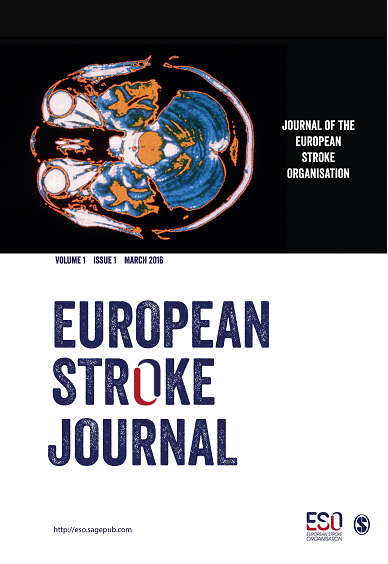
Launched in 2016 the European Stroke Journal (ESJ) is the official journal of the European Stroke Organisation (ESO), a professional non-profit organization with over 1,400 individual members, and affiliations to numerous related national and international societies. ESJ covers clinical stroke research from all fields, including clinical trials, epidemiology, primary and secondary prevention, diagnosis, acute and post-acute management, guidelines, translation of experimental findings into clinical practice, rehabilitation, organisation of stroke care, and societal impact. It is open to authors from all relevant medical and health professions. Article types include review articles, original research, protocols, guidelines, editorials and letters to the Editor. Through ESJ, authors and researchers have gained a new platform for the rapid and professional publication of peer reviewed scientific material of the highest standards; publication in ESJ is highly competitive. The journal and its editorial team has developed excellent cooperation with sister organisations such as the World Stroke Organisation and the International Journal of Stroke, and the American Heart Organization/American Stroke Association and the journal Stroke. ESJ is fully peer-reviewed and is a member of the Committee on Publication Ethics (COPE). Issues are published 4 times a year (March, June, September and December) and articles are published OnlineFirst prior to issue publication.

 求助内容:
 应助结果提醒方式:


 京公网安备 11010802042870号


