David Niedbalka, Felix Donat, Suchetana Samanta, Praveen Bollini, Christoph R Müller, Paula M Abdala
{"title":"甲烷干重整中CH4活化与CoPt原子有序的关系。","authors":"David Niedbalka, Felix Donat, Suchetana Samanta, Praveen Bollini, Christoph R Müller, Paula M Abdala","doi":"10.1039/d6cy00779a","DOIUrl":null,"url":null,"abstract":"<p><p>The dry reforming of methane (DRM) converts two major greenhouse gases, CH<sub>4</sub> and CO<sub>2</sub>, into a synthesis gas (H<sub>2</sub> and CO). Bimetallic DRM catalysts, such as CoPt catalysts, offer structural and electronic tunability and, in turn, potentially a higher product formation rate than monometallic systems. Bimetallic systems can occur as random or ordered alloys (intermetallics), yet it is currently unclear to what extent atomic ordering can affect the intrinsic DRM kinetics. Here, we investigate the structural dynamics of CoPt nanoparticles for DRM using <i>operando</i> X-ray diffraction coupled with X-ray absorption spectroscopy (XRD-XAS), and correlate our structural findings with the observed kinetics. Under DRM conditions, the intermetallic L1<sub>0</sub>-CoPt phase is stable at 700 °C, whereas a random alloy phase dominates at 800 °C. Kinetic analysis of CH<sub>4</sub> activation reveals a change in the apparent activation energy around this structural transition, <i>i.e.</i>, a higher apparent activation energy for the disordered structure, and a lower apparent activation energy for the ordered intermetallic phase. These results provide evidence that the DRM activity of the bimetallic CoPt system is structure-sensitive; a high degree of atomic ordering enhances CH<sub>4</sub> activation.</p>","PeriodicalId":66,"journal":{"name":"Catalysis Science & Technology","volume":" ","pages":"6591-6598"},"PeriodicalIF":4.0000,"publicationDate":"2026-08-19","publicationTypes":"Journal Article","fieldsOfStudy":null,"isOpenAccess":false,"openAccessPdf":"https://www.ncbi.nlm.nih.gov/pmc/articles/PMC13504989/pdf/","citationCount":"0","resultStr":"{\"title\":\"Linking atomic ordering in CoPt to CH<sub>4</sub> activation in dry reforming of methane.\",\"authors\":\"David Niedbalka, Felix Donat, Suchetana Samanta, Praveen Bollini, Christoph R Müller, Paula M Abdala\",\"doi\":\"10.1039/d6cy00779a\",\"DOIUrl\":null,\"url\":null,\"abstract\":\"<p><p>The dry reforming of methane (DRM) converts two major greenhouse gases, CH<sub>4</sub> and CO<sub>2</sub>, into a synthesis gas (H<sub>2</sub> and CO). Bimetallic DRM catalysts, such as CoPt catalysts, offer structural and electronic tunability and, in turn, potentially a higher product formation rate than monometallic systems. Bimetallic systems can occur as random or ordered alloys (intermetallics), yet it is currently unclear to what extent atomic ordering can affect the intrinsic DRM kinetics. Here, we investigate the structural dynamics of CoPt nanoparticles for DRM using <i>operando</i> X-ray diffraction coupled with X-ray absorption spectroscopy (XRD-XAS), and correlate our structural findings with the observed kinetics. Under DRM conditions, the intermetallic L1<sub>0</sub>-CoPt phase is stable at 700 °C, whereas a random alloy phase dominates at 800 °C. Kinetic analysis of CH<sub>4</sub> activation reveals a change in the apparent activation energy around this structural transition, <i>i.e.</i>, a higher apparent activation energy for the disordered structure, and a lower apparent activation energy for the ordered intermetallic phase. These results provide evidence that the DRM activity of the bimetallic CoPt system is structure-sensitive; a high degree of atomic ordering enhances CH<sub>4</sub> activation.</p>\",\"PeriodicalId\":66,\"journal\":{\"name\":\"Catalysis Science & Technology\",\"volume\":\" \",\"pages\":\"6591-6598\"},\"PeriodicalIF\":4.0000,\"publicationDate\":\"2026-08-19\",\"publicationTypes\":\"Journal Article\",\"fieldsOfStudy\":null,\"isOpenAccess\":false,\"openAccessPdf\":\"https://www.ncbi.nlm.nih.gov/pmc/articles/PMC13504989/pdf/\",\"citationCount\":\"0\",\"resultStr\":null,\"platform\":\"Semanticscholar\",\"paperid\":null,\"PeriodicalName\":\"Catalysis Science & Technology\",\"FirstCategoryId\":\"92\",\"ListUrlMain\":\"https://doi.org/10.1039/d6cy00779a\",\"RegionNum\":3,\"RegionCategory\":\"化学\",\"ArticlePicture\":[],\"TitleCN\":null,\"AbstractTextCN\":null,\"PMCID\":null,\"EPubDate\":\"2026/10/5 0:00:00\",\"PubModel\":\"eCollection\",\"JCR\":\"Q2\",\"JCRName\":\"CHEMISTRY, PHYSICAL\",\"Score\":null,\"Total\":0}","platform":"Semanticscholar","paperid":null,"PeriodicalName":"Catalysis Science & Technology","FirstCategoryId":"92","ListUrlMain":"https://doi.org/10.1039/d6cy00779a","RegionNum":3,"RegionCategory":"化学","ArticlePicture":[],"TitleCN":null,"AbstractTextCN":null,"PMCID":null,"EPubDate":"2026/10/5 0:00:00","PubModel":"eCollection","JCR":"Q2","JCRName":"CHEMISTRY, PHYSICAL","Score":null,"Total":0}
Linking atomic ordering in CoPt to CH4 activation in dry reforming of methane.
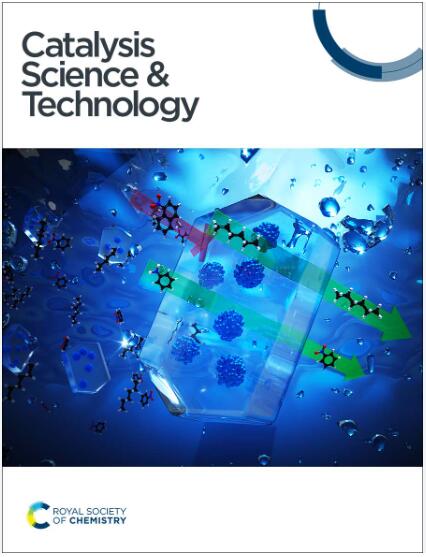
The dry reforming of methane (DRM) converts two major greenhouse gases, CH4 and CO2, into a synthesis gas (H2 and CO). Bimetallic DRM catalysts, such as CoPt catalysts, offer structural and electronic tunability and, in turn, potentially a higher product formation rate than monometallic systems. Bimetallic systems can occur as random or ordered alloys (intermetallics), yet it is currently unclear to what extent atomic ordering can affect the intrinsic DRM kinetics. Here, we investigate the structural dynamics of CoPt nanoparticles for DRM using operando X-ray diffraction coupled with X-ray absorption spectroscopy (XRD-XAS), and correlate our structural findings with the observed kinetics. Under DRM conditions, the intermetallic L10-CoPt phase is stable at 700 °C, whereas a random alloy phase dominates at 800 °C. Kinetic analysis of CH4 activation reveals a change in the apparent activation energy around this structural transition, i.e., a higher apparent activation energy for the disordered structure, and a lower apparent activation energy for the ordered intermetallic phase. These results provide evidence that the DRM activity of the bimetallic CoPt system is structure-sensitive; a high degree of atomic ordering enhances CH4 activation.
期刊介绍:
A multidisciplinary journal focusing on cutting edge research across all fundamental science and technological aspects of catalysis.
Editor-in-chief: Bert Weckhuysen
Impact factor: 5.0
Time to first decision (peer reviewed only): 31 days

 求助内容:
 应助结果提醒方式:


 京公网安备 11010802042870号


