R Z Luo, Y Liang, R C Wang, Y N Li, Y Y Ou, Y Y Liu, Y C Wu, J Ma
{"title":"[中、日文《南京脉诊图》脉理解读]。","authors":"R Z Luo, Y Liang, R C Wang, Y N Li, Y Y Ou, Y Y Liu, Y C Wu, J Ma","doi":"10.3760/cma.j.cn112155-20250923-00165","DOIUrl":null,"url":null,"abstract":"<p><p>This paper systematically reviewed the evolvement and development of pulse diagnosis illustrations in the annotated versions of <i>Nan Jing</i> in both Chinese and Japanese editions. It compared and analysed the content and characteristics of the three pulse diagram systems - the Ding, the Hua and the Zhang in China with that in the annotated edition of <i>Nan Jing</i> in the Japanese edition in the Edo period of Japan. The paper demonstrated the core function of pulse diagrams in interpreting the theories of pulse in <i>Nan Jing</i>. It was found that the pulse diagram illustrations evolved through multiple dynasties and came to the Ding system which focused on the pulse patterns corresponded to 'heaven and humans', the Hua which integrated multi-dimensional factors and the Zhang which fully differentiated diagrams clinically. By comparison the annotated Japanese version of <i>Nan Jing</i>,based on the three pulse diagram systems above in China, featured with localisation evolution, such as disassembled diagram illustrations, metric refinement, and functional differentiation. It was also found that <i>Nan Jing</i> in China as well as in Japan both undertook holistic insights and dialectical thinking, presented different interpretation for the diverse medical practice and cultural context differentiation, providing academic references for the visualized evolvement and cross-cultural communication in terms of traditional Chinese pulse theory.</p>","PeriodicalId":35995,"journal":{"name":"中华医史杂志","volume":"56 4","pages":"195-206"},"PeriodicalIF":0.0000,"publicationDate":"2026-07-28","publicationTypes":"Journal Article","fieldsOfStudy":null,"isOpenAccess":false,"openAccessPdf":"","citationCount":"0","resultStr":"{\"title\":\"[Interpreting the pulse diagnosis diagrams and the pulse principles in <i>Nan Jing</i> in both Chinese and Japanese editions].\",\"authors\":\"R Z Luo, Y Liang, R C Wang, Y N Li, Y Y Ou, Y Y Liu, Y C Wu, J Ma\",\"doi\":\"10.3760/cma.j.cn112155-20250923-00165\",\"DOIUrl\":null,\"url\":null,\"abstract\":\"<p><p>This paper systematically reviewed the evolvement and development of pulse diagnosis illustrations in the annotated versions of <i>Nan Jing</i> in both Chinese and Japanese editions. It compared and analysed the content and characteristics of the three pulse diagram systems - the Ding, the Hua and the Zhang in China with that in the annotated edition of <i>Nan Jing</i> in the Japanese edition in the Edo period of Japan. The paper demonstrated the core function of pulse diagrams in interpreting the theories of pulse in <i>Nan Jing</i>. It was found that the pulse diagram illustrations evolved through multiple dynasties and came to the Ding system which focused on the pulse patterns corresponded to 'heaven and humans', the Hua which integrated multi-dimensional factors and the Zhang which fully differentiated diagrams clinically. By comparison the annotated Japanese version of <i>Nan Jing</i>,based on the three pulse diagram systems above in China, featured with localisation evolution, such as disassembled diagram illustrations, metric refinement, and functional differentiation. It was also found that <i>Nan Jing</i> in China as well as in Japan both undertook holistic insights and dialectical thinking, presented different interpretation for the diverse medical practice and cultural context differentiation, providing academic references for the visualized evolvement and cross-cultural communication in terms of traditional Chinese pulse theory.</p>\",\"PeriodicalId\":35995,\"journal\":{\"name\":\"中华医史杂志\",\"volume\":\"56 4\",\"pages\":\"195-206\"},\"PeriodicalIF\":0.0000,\"publicationDate\":\"2026-07-28\",\"publicationTypes\":\"Journal Article\",\"fieldsOfStudy\":null,\"isOpenAccess\":false,\"openAccessPdf\":\"\",\"citationCount\":\"0\",\"resultStr\":null,\"platform\":\"Semanticscholar\",\"paperid\":null,\"PeriodicalName\":\"中华医史杂志\",\"FirstCategoryId\":\"1090\",\"ListUrlMain\":\"https://doi.org/10.3760/cma.j.cn112155-20250923-00165\",\"RegionNum\":0,\"RegionCategory\":null,\"ArticlePicture\":[],\"TitleCN\":null,\"AbstractTextCN\":null,\"PMCID\":null,\"EPubDate\":\"\",\"PubModel\":\"\",\"JCR\":\"Q4\",\"JCRName\":\"Medicine\",\"Score\":null,\"Total\":0}","platform":"Semanticscholar","paperid":null,"PeriodicalName":"中华医史杂志","FirstCategoryId":"1090","ListUrlMain":"https://doi.org/10.3760/cma.j.cn112155-20250923-00165","RegionNum":0,"RegionCategory":null,"ArticlePicture":[],"TitleCN":null,"AbstractTextCN":null,"PMCID":null,"EPubDate":"","PubModel":"","JCR":"Q4","JCRName":"Medicine","Score":null,"Total":0}
[Interpreting the pulse diagnosis diagrams and the pulse principles in Nan Jing in both Chinese and Japanese editions].
This paper systematically reviewed the evolvement and development of pulse diagnosis illustrations in the annotated versions of Nan Jing in both Chinese and Japanese editions. It compared and analysed the content and characteristics of the three pulse diagram systems - the Ding, the Hua and the Zhang in China with that in the annotated edition of Nan Jing in the Japanese edition in the Edo period of Japan. The paper demonstrated the core function of pulse diagrams in interpreting the theories of pulse in Nan Jing. It was found that the pulse diagram illustrations evolved through multiple dynasties and came to the Ding system which focused on the pulse patterns corresponded to 'heaven and humans', the Hua which integrated multi-dimensional factors and the Zhang which fully differentiated diagrams clinically. By comparison the annotated Japanese version of Nan Jing,based on the three pulse diagram systems above in China, featured with localisation evolution, such as disassembled diagram illustrations, metric refinement, and functional differentiation. It was also found that Nan Jing in China as well as in Japan both undertook holistic insights and dialectical thinking, presented different interpretation for the diverse medical practice and cultural context differentiation, providing academic references for the visualized evolvement and cross-cultural communication in terms of traditional Chinese pulse theory.
期刊介绍:
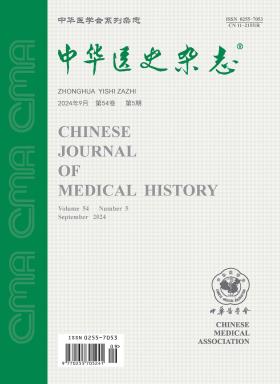
The Chinese Journal of Medical History is the only professional academic journal on medical history in the country. The first publication was named "Journal of Medical History" and was designated as a quarterly publication. In 2009, it was changed from quarterly to bimonthly.
The Chinese Journal of Medical History has columns such as special articles, reviews, expert talks, medical history treatises, literature research, forums and debates, historical accounts, figures, short essays, graduate forums, lectures, historical materials, medical history, and book reviews.
Chinese Journal of Medical History has been included in the US Medline online database.

 求助内容:
 应助结果提醒方式:


 京公网安备 11010802042870号


