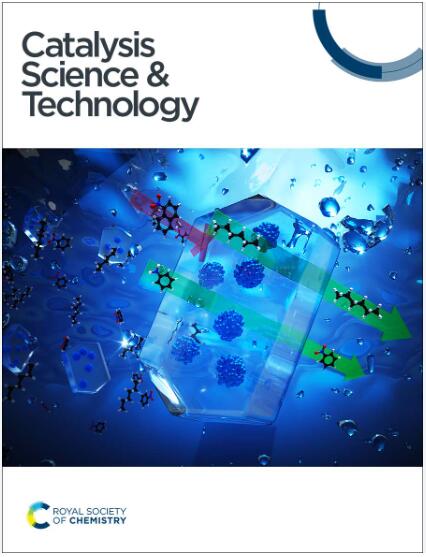
J. Roelf F. Maring, Emerson L. dos Santos Veiga, Francisco F. Tabuti, Majid Ahmadi, Fabio C. Fonseca, Vasileios Kyriakou
{"title":"Operando溶解FeNi3纳米颗粒促进固体氧化物燃料电池中乙醇的内部重整","authors":"J. Roelf F. Maring, Emerson L. dos Santos Veiga, Francisco F. Tabuti, Majid Ahmadi, Fabio C. Fonseca, Vasileios Kyriakou","doi":"10.1039/d5cy01572c","DOIUrl":null,"url":null,"abstract":"<div><div>Direct ethanol solid oxide fuel cells (SOFCs) are considered promising for power generation with high efficiency and flexibility from sustainable sources. Among their major challenges is the choice of catalytically active, chemically stable and coking tolerant fuel electrodes (anodes) for the internal reforming and oxidation of ethanol. Here, we <em>operando</em> exsolved FeNi<sub>3</sub> nanoparticles from a Ni-doped SFM (Sr<sub>2</sub>Fe<sub>1.3</sub>Mo<sub>0.5</sub>Ni<sub>0.2</sub>O<sub>6±<em>δ</em></sub>, SFMNi) fuel electrode that significantly enhanced the power output. Our analysis confirmed that Ni doping increased surface basicity and oxygen vacancy concentration which are linked to ethanol steam reforming selectivity toward dehydrogenation pathways over the undesired dehydration observed for the undoped SFM sample. The thermocatalytic studies revealed the high ethanol reforming activity of FeNi<sub>3</sub> nanoparticles with intriguing coking tolerance properties as confirmed by crystallographic and Raman analyses. This resulted in a >30% enhancement in the peak power density with adequate stability. Our findings highlight the strong coupling between reforming activity and electrochemical performance, positioning the use of nanoparticle-functionalized perovskite electrodes as a promising strategy for efficient and flexible SOFCs operating on renewable fuels.</div></div>","PeriodicalId":66,"journal":{"name":"Catalysis Science & Technology","volume":"16 12","pages":"Pages 4220-4231"},"PeriodicalIF":4.0000,"publicationDate":"2026-06-22","publicationTypes":"Journal Article","fieldsOfStudy":null,"isOpenAccess":false,"openAccessPdf":"","citationCount":"0","resultStr":"{\"title\":\"Operando exsolved FeNi3 nanoparticles for boosting ethanol internal reforming in solid oxide fuel cells\",\"authors\":\"J. Roelf F. Maring, Emerson L. dos Santos Veiga, Francisco F. Tabuti, Majid Ahmadi, Fabio C. Fonseca, Vasileios Kyriakou\",\"doi\":\"10.1039/d5cy01572c\",\"DOIUrl\":null,\"url\":null,\"abstract\":\"<div><div>Direct ethanol solid oxide fuel cells (SOFCs) are considered promising for power generation with high efficiency and flexibility from sustainable sources. Among their major challenges is the choice of catalytically active, chemically stable and coking tolerant fuel electrodes (anodes) for the internal reforming and oxidation of ethanol. Here, we <em>operando</em> exsolved FeNi<sub>3</sub> nanoparticles from a Ni-doped SFM (Sr<sub>2</sub>Fe<sub>1.3</sub>Mo<sub>0.5</sub>Ni<sub>0.2</sub>O<sub>6±<em>δ</em></sub>, SFMNi) fuel electrode that significantly enhanced the power output. Our analysis confirmed that Ni doping increased surface basicity and oxygen vacancy concentration which are linked to ethanol steam reforming selectivity toward dehydrogenation pathways over the undesired dehydration observed for the undoped SFM sample. The thermocatalytic studies revealed the high ethanol reforming activity of FeNi<sub>3</sub> nanoparticles with intriguing coking tolerance properties as confirmed by crystallographic and Raman analyses. This resulted in a >30% enhancement in the peak power density with adequate stability. Our findings highlight the strong coupling between reforming activity and electrochemical performance, positioning the use of nanoparticle-functionalized perovskite electrodes as a promising strategy for efficient and flexible SOFCs operating on renewable fuels.</div></div>\",\"PeriodicalId\":66,\"journal\":{\"name\":\"Catalysis Science & Technology\",\"volume\":\"16 12\",\"pages\":\"Pages 4220-4231\"},\"PeriodicalIF\":4.0000,\"publicationDate\":\"2026-06-22\",\"publicationTypes\":\"Journal Article\",\"fieldsOfStudy\":null,\"isOpenAccess\":false,\"openAccessPdf\":\"\",\"citationCount\":\"0\",\"resultStr\":null,\"platform\":\"Semanticscholar\",\"paperid\":null,\"PeriodicalName\":\"Catalysis Science & Technology\",\"FirstCategoryId\":\"92\",\"ListUrlMain\":\"https://www.sciencedirect.com/org/science/article/pii/S2044475326002364\",\"RegionNum\":3,\"RegionCategory\":\"化学\",\"ArticlePicture\":[],\"TitleCN\":null,\"AbstractTextCN\":null,\"PMCID\":null,\"EPubDate\":\"2026/5/12 0:00:00\",\"PubModel\":\"Epub\",\"JCR\":\"Q2\",\"JCRName\":\"CHEMISTRY, PHYSICAL\",\"Score\":null,\"Total\":0}","platform":"Semanticscholar","paperid":null,"PeriodicalName":"Catalysis Science & Technology","FirstCategoryId":"92","ListUrlMain":"https://www.sciencedirect.com/org/science/article/pii/S2044475326002364","RegionNum":3,"RegionCategory":"化学","ArticlePicture":[],"TitleCN":null,"AbstractTextCN":null,"PMCID":null,"EPubDate":"2026/5/12 0:00:00","PubModel":"Epub","JCR":"Q2","JCRName":"CHEMISTRY, PHYSICAL","Score":null,"Total":0}
Operando exsolved FeNi3 nanoparticles for boosting ethanol internal reforming in solid oxide fuel cells
Direct ethanol solid oxide fuel cells (SOFCs) are considered promising for power generation with high efficiency and flexibility from sustainable sources. Among their major challenges is the choice of catalytically active, chemically stable and coking tolerant fuel electrodes (anodes) for the internal reforming and oxidation of ethanol. Here, we operando exsolved FeNi3 nanoparticles from a Ni-doped SFM (Sr2Fe1.3Mo0.5Ni0.2O6±δ, SFMNi) fuel electrode that significantly enhanced the power output. Our analysis confirmed that Ni doping increased surface basicity and oxygen vacancy concentration which are linked to ethanol steam reforming selectivity toward dehydrogenation pathways over the undesired dehydration observed for the undoped SFM sample. The thermocatalytic studies revealed the high ethanol reforming activity of FeNi3 nanoparticles with intriguing coking tolerance properties as confirmed by crystallographic and Raman analyses. This resulted in a >30% enhancement in the peak power density with adequate stability. Our findings highlight the strong coupling between reforming activity and electrochemical performance, positioning the use of nanoparticle-functionalized perovskite electrodes as a promising strategy for efficient and flexible SOFCs operating on renewable fuels.
期刊介绍:
A multidisciplinary journal focusing on cutting edge research across all fundamental science and technological aspects of catalysis.
Editor-in-chief: Bert Weckhuysen
Impact factor: 5.0
Time to first decision (peer reviewed only): 31 days