
SrTiO3纳米片载体晶面对汽车尾气净化钯催化剂性能的影响

IF 4 3区 化学 Q2 CHEMISTRY, PHYSICAL
Catalysis Science & Technology Pub Date : 2026-06-22 Epub Date: 2026-05-18 DOI:10.1039/d6cy00414h
Toyokazu Tanabe, Moe Hokugo, Sei Imatoku, Kentaro Toyama, Takaaki Morimoto, Reito Kobayashi, Shugoro Tsutsumi, Saburo Hosokawa
{"title":"SrTiO3纳米片载体晶面对汽车尾气净化钯催化剂性能的影响","authors":"Toyokazu Tanabe,&nbsp;Moe Hokugo,&nbsp;Sei Imatoku,&nbsp;Kentaro Toyama,&nbsp;Takaaki Morimoto,&nbsp;Reito Kobayashi,&nbsp;Shugoro Tsutsumi,&nbsp;Saburo Hosokawa","doi":"10.1039/d6cy00414h","DOIUrl":null,"url":null,"abstract":"<div><div>This study examines how the exposed crystal facets of SrTiO<sub>3</sub> (STO) nanosheets affect the catalytic behavior of supported Pd nanoparticles for automotive exhaust purification. The Pd/STO(111)-facet nanosheet shows lower light-off temperatures for CO–C<sub>3</sub>H<sub>6</sub> oxidation and NO reduction than the Pd/STO(100)-facet nanosheet, even though its surface area is much smaller. Structural analyses reveal that the STO(111) facet creates a much stronger metal–support interaction (MSI), stabilizing highly dispersed Pd nanoparticles (≈4.6 nm) and maintaining both PdO and Pd<sup>0</sup> during the reaction. This strong MSI suppresses sintering and supports dual oxidation states, leading to superior catalytic performance. In contrast, the weaker MSI on the STO(100) facet allows Pd to grow into large particles (≈60.2 nm) with limited redox flexibility and fewer active sites, resulting in poorer activity. These results demonstrate that the facet-dependent MSI is the key to controlling Pd dispersion and oxidation-state dynamics, highlighting crystal facet engineering as an effective strategy for designing high-performance oxide-supported catalysts.</div></div>","PeriodicalId":66,"journal":{"name":"Catalysis Science & Technology","volume":"16 12","pages":"Pages 4173-4180"},"PeriodicalIF":4.0000,"publicationDate":"2026-06-22","publicationTypes":"Journal Article","fieldsOfStudy":null,"isOpenAccess":false,"openAccessPdf":"","citationCount":"0","resultStr":"{\"title\":\"Influence of crystal facets of SrTiO3 nanosheet supports on Pd catalysts for automotive exhaust purification\",\"authors\":\"Toyokazu Tanabe,&nbsp;Moe Hokugo,&nbsp;Sei Imatoku,&nbsp;Kentaro Toyama,&nbsp;Takaaki Morimoto,&nbsp;Reito Kobayashi,&nbsp;Shugoro Tsutsumi,&nbsp;Saburo Hosokawa\",\"doi\":\"10.1039/d6cy00414h\",\"DOIUrl\":null,\"url\":null,\"abstract\":\"<div><div>This study examines how the exposed crystal facets of SrTiO<sub>3</sub> (STO) nanosheets affect the catalytic behavior of supported Pd nanoparticles for automotive exhaust purification. The Pd/STO(111)-facet nanosheet shows lower light-off temperatures for CO–C<sub>3</sub>H<sub>6</sub> oxidation and NO reduction than the Pd/STO(100)-facet nanosheet, even though its surface area is much smaller. Structural analyses reveal that the STO(111) facet creates a much stronger metal–support interaction (MSI), stabilizing highly dispersed Pd nanoparticles (≈4.6 nm) and maintaining both PdO and Pd<sup>0</sup> during the reaction. This strong MSI suppresses sintering and supports dual oxidation states, leading to superior catalytic performance. In contrast, the weaker MSI on the STO(100) facet allows Pd to grow into large particles (≈60.2 nm) with limited redox flexibility and fewer active sites, resulting in poorer activity. These results demonstrate that the facet-dependent MSI is the key to controlling Pd dispersion and oxidation-state dynamics, highlighting crystal facet engineering as an effective strategy for designing high-performance oxide-supported catalysts.</div></div>\",\"PeriodicalId\":66,\"journal\":{\"name\":\"Catalysis Science & Technology\",\"volume\":\"16 12\",\"pages\":\"Pages 4173-4180\"},\"PeriodicalIF\":4.0000,\"publicationDate\":\"2026-06-22\",\"publicationTypes\":\"Journal Article\",\"fieldsOfStudy\":null,\"isOpenAccess\":false,\"openAccessPdf\":\"\",\"citationCount\":\"0\",\"resultStr\":null,\"platform\":\"Semanticscholar\",\"paperid\":null,\"PeriodicalName\":\"Catalysis Science & Technology\",\"FirstCategoryId\":\"92\",\"ListUrlMain\":\"https://www.sciencedirect.com/org/science/article/pii/S2044475326002285\",\"RegionNum\":3,\"RegionCategory\":\"化学\",\"ArticlePicture\":[],\"TitleCN\":null,\"AbstractTextCN\":null,\"PMCID\":null,\"EPubDate\":\"2026/5/18 0:00:00\",\"PubModel\":\"Epub\",\"JCR\":\"Q2\",\"JCRName\":\"CHEMISTRY, PHYSICAL\",\"Score\":null,\"Total\":0}","platform":"Semanticscholar","paperid":null,"PeriodicalName":"Catalysis Science & Technology","FirstCategoryId":"92","ListUrlMain":"https://www.sciencedirect.com/org/science/article/pii/S2044475326002285","RegionNum":3,"RegionCategory":"化学","ArticlePicture":[],"TitleCN":null,"AbstractTextCN":null,"PMCID":null,"EPubDate":"2026/5/18 0:00:00","PubModel":"Epub","JCR":"Q2","JCRName":"CHEMISTRY, PHYSICAL","Score":null,"Total":0}
引用次数: 0

摘要

本研究考察了SrTiO3 (STO)纳米片的暴露晶面如何影响负载型钯纳米颗粒在汽车尾气净化中的催化行为。与Pd/STO(100)纳米片相比,Pd/STO(111)纳米片在CO-C3H6氧化和NO还原过程中表现出更低的起燃温度,尽管其表面积要小得多。结构分析表明,STO(111)面产生了更强的金属-载体相互作用(MSI),稳定了高度分散的Pd纳米颗粒(≈4.6 nm),并在反应过程中维持了PdO和Pd0。这种强MSI抑制烧结和支持双氧化态,导致优越的催化性能。相比之下,STO(100)表面较弱的MSI使得Pd生长成大颗粒(≈60.2 nm),具有有限的氧化还原灵活性和较少的活性位点,导致活性较差。这些结果表明,晶面相关的MSI是控制钯分散和氧化态动力学的关键,突出了晶面工程是设计高性能氧化物负载催化剂的有效策略。
本文章由计算机程序翻译,如有差异,请以英文原文为准。

Influence of crystal facets of SrTiO3 nanosheet supports on Pd catalysts for automotive exhaust purification

Influence of crystal facets of SrTiO3 nanosheet supports on Pd catalysts for automotive exhaust purification
This study examines how the exposed crystal facets of SrTiO3 (STO) nanosheets affect the catalytic behavior of supported Pd nanoparticles for automotive exhaust purification. The Pd/STO(111)-facet nanosheet shows lower light-off temperatures for CO–C3H6 oxidation and NO reduction than the Pd/STO(100)-facet nanosheet, even though its surface area is much smaller. Structural analyses reveal that the STO(111) facet creates a much stronger metal–support interaction (MSI), stabilizing highly dispersed Pd nanoparticles (≈4.6 nm) and maintaining both PdO and Pd0 during the reaction. This strong MSI suppresses sintering and supports dual oxidation states, leading to superior catalytic performance. In contrast, the weaker MSI on the STO(100) facet allows Pd to grow into large particles (≈60.2 nm) with limited redox flexibility and fewer active sites, resulting in poorer activity. These results demonstrate that the facet-dependent MSI is the key to controlling Pd dispersion and oxidation-state dynamics, highlighting crystal facet engineering as an effective strategy for designing high-performance oxide-supported catalysts.
求助全文
通过发布文献求助,成功后即可免费获取论文全文。 去求助
来源期刊
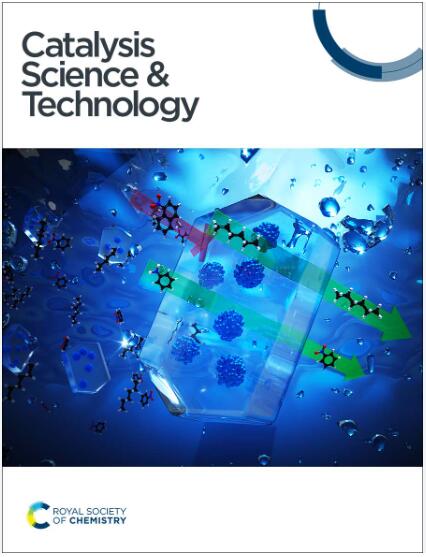
Catalysis Science & Technology
Catalysis Science & Technology CHEMISTRY, PHYSICAL-
CiteScore
8.70
自引率
6.00%
发文量
587
审稿时长
1.5 months
期刊介绍: A multidisciplinary journal focusing on cutting edge research across all fundamental science and technological aspects of catalysis. Editor-in-chief: Bert Weckhuysen Impact factor: 5.0 Time to first decision (peer reviewed only): 31 days

×
引用
GB/T 7714-2015
复制
MLA
复制
APA
复制
导出至
BibTeX EndNote RefMan NoteFirst NoteExpress
×
提示
您的信息不完整,为了账户安全,请先补充。
现在去补充
×
提示
您因"违规操作"
具体请查看互助需知
我知道了
×
提示
确定
请完成安全验证×
copy
已复制链接
快去分享给好友吧!
我知道了
右上角分享
点击右上角分享
0
联系我们:info@booksci.cn Book学术提供免费学术资源搜索服务,方便国内外学者检索中英文文献。致力于提供最便捷和优质的服务体验。 Copyright © 2023 布克学术 All rights reserved.
京ICP备2023020795号-1
ghs 京公网安备 11010802042870号
Book学术文献互助
Book学术文献互助群
群 号:604180095
Book学术官方微信
小红书


