
负载超痕量钯的RuO2-ZnO异质结催化光辅助C-C偶联反应中电子-空穴分离的控制

IF 4 3区 化学 Q2 CHEMISTRY, PHYSICAL
Catalysis Science & Technology Pub Date : 2026-05-19 Epub Date: 2026-02-27 DOI:10.1039/d5cy01590a
Tonmoy J. Bora , Donguk Kim , Young-Bin Park , Gaurisankar Phukan , Shamim Islam , Arpita Devi , Kusum K. Bania
{"title":"负载超痕量钯的RuO2-ZnO异质结催化光辅助C-C偶联反应中电子-空穴分离的控制","authors":"Tonmoy J. Bora ,&nbsp;Donguk Kim ,&nbsp;Young-Bin Park ,&nbsp;Gaurisankar Phukan ,&nbsp;Shamim Islam ,&nbsp;Arpita Devi ,&nbsp;Kusum K. Bania","doi":"10.1039/d5cy01590a","DOIUrl":null,"url":null,"abstract":"<div><div>Zinc-oxide (ZnO) in combination with ruthenium-oxide (RuO<sub>2</sub>) appeared to be an effective light harvesting heterojunction, controlling the electron (e<sup>−</sup>) and hole (h<sup>+</sup>) recombination rate. An ultra-trace amount of palladium (Pd) loaded into this RuO<sub>2</sub>–ZnO hybrid heterojunction enabled a new, sustainable, cost-effective yet highly efficient non-free radical photocatalytic pathway for the Suzuki–Miyaura cross-coupling (SMCC) reaction, achieving superior selectivity and biaryl product yields over existing methods. Although research has aimed at improving photocatalysts' performance in SMCC, no study has yet been performed to understand such heterojunctions in the photocatalytic SMCC reaction. In the catalyst, ZnO retained its original role by absorbing UV-light, while RuO<sub>2</sub>, on the other hand, played a crucial role as a quasi-metallic co-catalyst favouring charge-carrier transportation. This cooperative charge-management strategy resulted in prolonged charge separation, enhanced redox-activity, and maximized the utilization of Pd centres. The reaction proceeded with 100% selectivity and provided excellent yields (up to 98%) within a very short reaction time of 70 min in a greener methanol/water (MeOH/H<sub>2</sub>O) solvent system. Some of the resulting SMCC keto-derivative products were reduced to synthesize a new range of important alcohol derivatives, further expanding the study. An in-depth kinetic study provided deeper insight into the reaction dynamics, while a systematic mechanistic analysis elucidated the charge carriers involved. Density functional theory (DFT) analysis was also performed to examine and compare the interactions involved in the photocatalysts. This work thus demonstrated a photostable, heterogeneous, recyclable, cost-effective, non-free radical and greener photocatalytic pathway for the SMCC reaction, highlighting the potential of multi-component semiconductor–metal architectures in the selective SMCC reaction with significantly low Pd loading.</div></div>","PeriodicalId":66,"journal":{"name":"Catalysis Science & Technology","volume":"16 9","pages":"Pages 3160-3182"},"PeriodicalIF":4.0000,"publicationDate":"2026-05-19","publicationTypes":"Journal Article","fieldsOfStudy":null,"isOpenAccess":false,"openAccessPdf":"","citationCount":"0","resultStr":"{\"title\":\"Controlling the electron–hole separation in photo-assisted C–C coupling reactions catalysed by a RuO2–ZnO heterojunction loaded with ultra trace palladium\",\"authors\":\"Tonmoy J. Bora ,&nbsp;Donguk Kim ,&nbsp;Young-Bin Park ,&nbsp;Gaurisankar Phukan ,&nbsp;Shamim Islam ,&nbsp;Arpita Devi ,&nbsp;Kusum K. Bania\",\"doi\":\"10.1039/d5cy01590a\",\"DOIUrl\":null,\"url\":null,\"abstract\":\"<div><div>Zinc-oxide (ZnO) in combination with ruthenium-oxide (RuO<sub>2</sub>) appeared to be an effective light harvesting heterojunction, controlling the electron (e<sup>−</sup>) and hole (h<sup>+</sup>) recombination rate. An ultra-trace amount of palladium (Pd) loaded into this RuO<sub>2</sub>–ZnO hybrid heterojunction enabled a new, sustainable, cost-effective yet highly efficient non-free radical photocatalytic pathway for the Suzuki–Miyaura cross-coupling (SMCC) reaction, achieving superior selectivity and biaryl product yields over existing methods. Although research has aimed at improving photocatalysts' performance in SMCC, no study has yet been performed to understand such heterojunctions in the photocatalytic SMCC reaction. In the catalyst, ZnO retained its original role by absorbing UV-light, while RuO<sub>2</sub>, on the other hand, played a crucial role as a quasi-metallic co-catalyst favouring charge-carrier transportation. This cooperative charge-management strategy resulted in prolonged charge separation, enhanced redox-activity, and maximized the utilization of Pd centres. The reaction proceeded with 100% selectivity and provided excellent yields (up to 98%) within a very short reaction time of 70 min in a greener methanol/water (MeOH/H<sub>2</sub>O) solvent system. Some of the resulting SMCC keto-derivative products were reduced to synthesize a new range of important alcohol derivatives, further expanding the study. An in-depth kinetic study provided deeper insight into the reaction dynamics, while a systematic mechanistic analysis elucidated the charge carriers involved. Density functional theory (DFT) analysis was also performed to examine and compare the interactions involved in the photocatalysts. This work thus demonstrated a photostable, heterogeneous, recyclable, cost-effective, non-free radical and greener photocatalytic pathway for the SMCC reaction, highlighting the potential of multi-component semiconductor–metal architectures in the selective SMCC reaction with significantly low Pd loading.</div></div>\",\"PeriodicalId\":66,\"journal\":{\"name\":\"Catalysis Science & Technology\",\"volume\":\"16 9\",\"pages\":\"Pages 3160-3182\"},\"PeriodicalIF\":4.0000,\"publicationDate\":\"2026-05-19\",\"publicationTypes\":\"Journal Article\",\"fieldsOfStudy\":null,\"isOpenAccess\":false,\"openAccessPdf\":\"\",\"citationCount\":\"0\",\"resultStr\":null,\"platform\":\"Semanticscholar\",\"paperid\":null,\"PeriodicalName\":\"Catalysis Science & Technology\",\"FirstCategoryId\":\"92\",\"ListUrlMain\":\"https://www.sciencedirect.com/org/science/article/pii/S2044475326001589\",\"RegionNum\":3,\"RegionCategory\":\"化学\",\"ArticlePicture\":[],\"TitleCN\":null,\"AbstractTextCN\":null,\"PMCID\":null,\"EPubDate\":\"2026/2/27 0:00:00\",\"PubModel\":\"Epub\",\"JCR\":\"Q2\",\"JCRName\":\"CHEMISTRY, PHYSICAL\",\"Score\":null,\"Total\":0}","platform":"Semanticscholar","paperid":null,"PeriodicalName":"Catalysis Science & Technology","FirstCategoryId":"92","ListUrlMain":"https://www.sciencedirect.com/org/science/article/pii/S2044475326001589","RegionNum":3,"RegionCategory":"化学","ArticlePicture":[],"TitleCN":null,"AbstractTextCN":null,"PMCID":null,"EPubDate":"2026/2/27 0:00:00","PubModel":"Epub","JCR":"Q2","JCRName":"CHEMISTRY, PHYSICAL","Score":null,"Total":0}
引用次数: 0

摘要

氧化锌(ZnO)与氧化钌(RuO2)结合是一种有效的光捕获异质结,可以控制电子(e−)和空穴(h+)的复合速率。将超微量钯(Pd)负载到RuO2-ZnO杂化异质结中,为Suzuki-Miyaura交叉偶联(SMCC)反应提供了一种新的、可持续的、经济高效的非自由基光催化途径,比现有方法具有更高的选择性和联芳基产物收率。虽然研究旨在提高光催化剂在SMCC中的性能,但尚未有研究了解光催化SMCC反应中的这种异质结。在催化剂中,ZnO通过吸收紫外光保留了其原有的作用,而RuO2则作为准金属助催化剂发挥了关键作用,有利于电荷载流子的输运。这种合作电荷管理策略延长了电荷分离时间,增强了氧化还原活性,并最大限度地提高了Pd中心的利用率。在较环保的甲醇/水(MeOH/H2O)溶剂体系中,在70 min的极短反应时间内,反应选择性为100%,收率高达98%。由此产生的一些SMCC酮衍生物产品被还原成一系列新的重要的醇衍生物,进一步扩大了研究范围。深入的动力学研究提供了对反应动力学更深入的认识,而系统的机理分析阐明了所涉及的载流子。密度泛函理论(DFT)分析也用于检查和比较光催化剂中涉及的相互作用。因此,这项工作为SMCC反应展示了一种光稳定、多相、可回收、低成本、非自由基和更环保的光催化途径,突出了多组分半导体-金属结构在低Pd负载的选择性SMCC反应中的潜力。
本文章由计算机程序翻译,如有差异,请以英文原文为准。

Controlling the electron–hole separation in photo-assisted C–C coupling reactions catalysed by a RuO2–ZnO heterojunction loaded with ultra trace palladium

Controlling the electron–hole separation in photo-assisted C–C coupling reactions catalysed by a RuO2–ZnO heterojunction loaded with ultra trace palladium
Zinc-oxide (ZnO) in combination with ruthenium-oxide (RuO2) appeared to be an effective light harvesting heterojunction, controlling the electron (e−) and hole (h+) recombination rate. An ultra-trace amount of palladium (Pd) loaded into this RuO2–ZnO hybrid heterojunction enabled a new, sustainable, cost-effective yet highly efficient non-free radical photocatalytic pathway for the Suzuki–Miyaura cross-coupling (SMCC) reaction, achieving superior selectivity and biaryl product yields over existing methods. Although research has aimed at improving photocatalysts' performance in SMCC, no study has yet been performed to understand such heterojunctions in the photocatalytic SMCC reaction. In the catalyst, ZnO retained its original role by absorbing UV-light, while RuO2, on the other hand, played a crucial role as a quasi-metallic co-catalyst favouring charge-carrier transportation. This cooperative charge-management strategy resulted in prolonged charge separation, enhanced redox-activity, and maximized the utilization of Pd centres. The reaction proceeded with 100% selectivity and provided excellent yields (up to 98%) within a very short reaction time of 70 min in a greener methanol/water (MeOH/H2O) solvent system. Some of the resulting SMCC keto-derivative products were reduced to synthesize a new range of important alcohol derivatives, further expanding the study. An in-depth kinetic study provided deeper insight into the reaction dynamics, while a systematic mechanistic analysis elucidated the charge carriers involved. Density functional theory (DFT) analysis was also performed to examine and compare the interactions involved in the photocatalysts. This work thus demonstrated a photostable, heterogeneous, recyclable, cost-effective, non-free radical and greener photocatalytic pathway for the SMCC reaction, highlighting the potential of multi-component semiconductor–metal architectures in the selective SMCC reaction with significantly low Pd loading.
求助全文
通过发布文献求助,成功后即可免费获取论文全文。 去求助
来源期刊
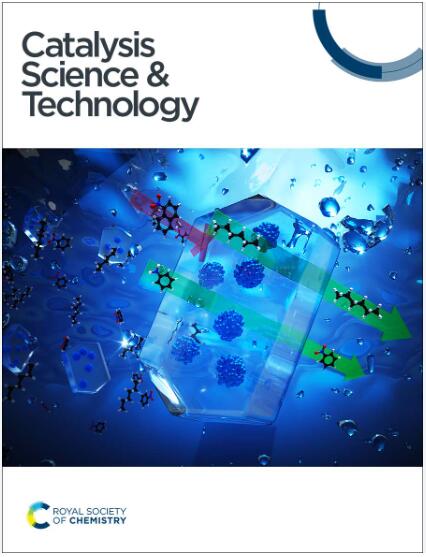
Catalysis Science & Technology
Catalysis Science & Technology CHEMISTRY, PHYSICAL-
CiteScore
8.70
自引率
6.00%
发文量
587
审稿时长
1.5 months
期刊介绍: A multidisciplinary journal focusing on cutting edge research across all fundamental science and technological aspects of catalysis. Editor-in-chief: Bert Weckhuysen Impact factor: 5.0 Time to first decision (peer reviewed only): 31 days

×
引用
GB/T 7714-2015
复制
MLA
复制
APA
复制
导出至
BibTeX EndNote RefMan NoteFirst NoteExpress
×
提示
您的信息不完整,为了账户安全,请先补充。
现在去补充
×
提示
您因"违规操作"
具体请查看互助需知
我知道了
×
提示
确定
请完成安全验证×
copy
已复制链接
快去分享给好友吧!
我知道了
右上角分享
点击右上角分享
0
联系我们:info@booksci.cn Book学术提供免费学术资源搜索服务,方便国内外学者检索中英文文献。致力于提供最便捷和优质的服务体验。 Copyright © 2023 布克学术 All rights reserved.
京ICP备2023020795号-1
ghs 京公网安备 11010802042870号
Book学术文献互助
Book学术文献互助群
群 号:604180095
Book学术官方微信
小红书


