Huanran Ma , Haotong Wei , Xin Qi , Dan Wu , Huixin Yu , Huanxin Zhao
{"title":"设计用于强化水处理的FeOOH/g-C3N4/CA复合光催化膜:协同光催化和芬顿样过程","authors":"Huanran Ma , Haotong Wei , Xin Qi , Dan Wu , Huixin Yu , Huanxin Zhao","doi":"10.1039/d6cy00172f","DOIUrl":null,"url":null,"abstract":"<div><div>Integrating membrane filtration, photocatalysis, and Fenton-like processes into a synergistic photocatalytic membrane has emerged as a highly promising strategy for efficient water treatment. Herein, a FeOOH/g-C<sub>3</sub>N<sub>4</sub>/CA composite membrane (FGCM) was designed and fabricated to combine membrane filtration with photocatalysis. Owing to the rational design, the FGCM achieved efficient separation of photo-generated charges and responded effectively to both visible light and actual solar light. The catalytic performance of the FGCM for rhodamine B (RhB) removal was systematically investigated under visible light with H<sub>2</sub>O<sub>2</sub> assistance. The results showed a 93.2% removal within 2.72 ms residence time under optimized conditions. Experimental and mechanistic analysis demonstrated that the rational design of the FeOOH/g-C<sub>3</sub>N<sub>4</sub> heterojunction broadened the visible-light absorption range and enhanced charge separation. Scavenging experiments and electron paramagnetic resonance (EPR) detection proved that ·OH, O<sub>2</sub>˙<sup>−</sup>/<sup>1</sup>O<sub>2</sub>, and h<sup>+</sup> played important roles in RhB removal. The ·OH and O<sub>2</sub>˙<sup>−</sup> radicals, produced from charge separation in g-C<sub>3</sub>N<sub>4</sub>, served as the dominant species for RhB degradation, while the promoted electron transfer from g-C<sub>3</sub>N<sub>4</sub> to FeOOH drove the Fe(<span>iii</span>)/Fe(<span>ii</span>) cycle to continuously activate H<sub>2</sub>O<sub>2</sub>. Furthermore, the FGCM system demonstrated good anti-fouling ability, stability, and adaptability in complex water matrices.</div></div>","PeriodicalId":66,"journal":{"name":"Catalysis Science & Technology","volume":"16 9","pages":"Pages 3311-3320"},"PeriodicalIF":4.0000,"publicationDate":"2026-05-19","publicationTypes":"Journal Article","fieldsOfStudy":null,"isOpenAccess":false,"openAccessPdf":"","citationCount":"0","resultStr":"{\"title\":\"Engineering a FeOOH/g-C3N4/CA composite photocatalytic membrane for enhanced water treatment: synergistic photocatalysis and Fenton-like processes\",\"authors\":\"Huanran Ma , Haotong Wei , Xin Qi , Dan Wu , Huixin Yu , Huanxin Zhao\",\"doi\":\"10.1039/d6cy00172f\",\"DOIUrl\":null,\"url\":null,\"abstract\":\"<div><div>Integrating membrane filtration, photocatalysis, and Fenton-like processes into a synergistic photocatalytic membrane has emerged as a highly promising strategy for efficient water treatment. Herein, a FeOOH/g-C<sub>3</sub>N<sub>4</sub>/CA composite membrane (FGCM) was designed and fabricated to combine membrane filtration with photocatalysis. Owing to the rational design, the FGCM achieved efficient separation of photo-generated charges and responded effectively to both visible light and actual solar light. The catalytic performance of the FGCM for rhodamine B (RhB) removal was systematically investigated under visible light with H<sub>2</sub>O<sub>2</sub> assistance. The results showed a 93.2% removal within 2.72 ms residence time under optimized conditions. Experimental and mechanistic analysis demonstrated that the rational design of the FeOOH/g-C<sub>3</sub>N<sub>4</sub> heterojunction broadened the visible-light absorption range and enhanced charge separation. Scavenging experiments and electron paramagnetic resonance (EPR) detection proved that ·OH, O<sub>2</sub>˙<sup>−</sup>/<sup>1</sup>O<sub>2</sub>, and h<sup>+</sup> played important roles in RhB removal. The ·OH and O<sub>2</sub>˙<sup>−</sup> radicals, produced from charge separation in g-C<sub>3</sub>N<sub>4</sub>, served as the dominant species for RhB degradation, while the promoted electron transfer from g-C<sub>3</sub>N<sub>4</sub> to FeOOH drove the Fe(<span>iii</span>)/Fe(<span>ii</span>) cycle to continuously activate H<sub>2</sub>O<sub>2</sub>. Furthermore, the FGCM system demonstrated good anti-fouling ability, stability, and adaptability in complex water matrices.</div></div>\",\"PeriodicalId\":66,\"journal\":{\"name\":\"Catalysis Science & Technology\",\"volume\":\"16 9\",\"pages\":\"Pages 3311-3320\"},\"PeriodicalIF\":4.0000,\"publicationDate\":\"2026-05-19\",\"publicationTypes\":\"Journal Article\",\"fieldsOfStudy\":null,\"isOpenAccess\":false,\"openAccessPdf\":\"\",\"citationCount\":\"0\",\"resultStr\":null,\"platform\":\"Semanticscholar\",\"paperid\":null,\"PeriodicalName\":\"Catalysis Science & Technology\",\"FirstCategoryId\":\"92\",\"ListUrlMain\":\"https://www.sciencedirect.com/org/science/article/pii/S2044475326001723\",\"RegionNum\":3,\"RegionCategory\":\"化学\",\"ArticlePicture\":[],\"TitleCN\":null,\"AbstractTextCN\":null,\"PMCID\":null,\"EPubDate\":\"2026/4/12 0:00:00\",\"PubModel\":\"Epub\",\"JCR\":\"Q2\",\"JCRName\":\"CHEMISTRY, PHYSICAL\",\"Score\":null,\"Total\":0}","platform":"Semanticscholar","paperid":null,"PeriodicalName":"Catalysis Science & Technology","FirstCategoryId":"92","ListUrlMain":"https://www.sciencedirect.com/org/science/article/pii/S2044475326001723","RegionNum":3,"RegionCategory":"化学","ArticlePicture":[],"TitleCN":null,"AbstractTextCN":null,"PMCID":null,"EPubDate":"2026/4/12 0:00:00","PubModel":"Epub","JCR":"Q2","JCRName":"CHEMISTRY, PHYSICAL","Score":null,"Total":0}
Engineering a FeOOH/g-C3N4/CA composite photocatalytic membrane for enhanced water treatment: synergistic photocatalysis and Fenton-like processes
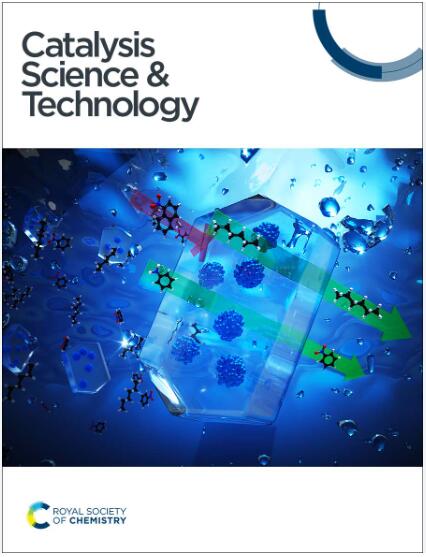
Integrating membrane filtration, photocatalysis, and Fenton-like processes into a synergistic photocatalytic membrane has emerged as a highly promising strategy for efficient water treatment. Herein, a FeOOH/g-C3N4/CA composite membrane (FGCM) was designed and fabricated to combine membrane filtration with photocatalysis. Owing to the rational design, the FGCM achieved efficient separation of photo-generated charges and responded effectively to both visible light and actual solar light. The catalytic performance of the FGCM for rhodamine B (RhB) removal was systematically investigated under visible light with H2O2 assistance. The results showed a 93.2% removal within 2.72 ms residence time under optimized conditions. Experimental and mechanistic analysis demonstrated that the rational design of the FeOOH/g-C3N4 heterojunction broadened the visible-light absorption range and enhanced charge separation. Scavenging experiments and electron paramagnetic resonance (EPR) detection proved that ·OH, O2˙−/1O2, and h+ played important roles in RhB removal. The ·OH and O2˙− radicals, produced from charge separation in g-C3N4, served as the dominant species for RhB degradation, while the promoted electron transfer from g-C3N4 to FeOOH drove the Fe(iii)/Fe(ii) cycle to continuously activate H2O2. Furthermore, the FGCM system demonstrated good anti-fouling ability, stability, and adaptability in complex water matrices.
期刊介绍:
A multidisciplinary journal focusing on cutting edge research across all fundamental science and technological aspects of catalysis.
Editor-in-chief: Bert Weckhuysen
Impact factor: 5.0
Time to first decision (peer reviewed only): 31 days