{"title":"能力和交货时间限制下大流行性流感疫苗快速分发的数学规划","authors":"Yun-Chia Liang, Dominico Laksma Paramestha","doi":"10.1007/s10479-026-07180-3","DOIUrl":null,"url":null,"abstract":"<div><p>Rapid mass vaccination is critical for curbing transmission during large-scale outbreaks, yet many optimization models emphasize cost or equity without explicitly shaping rollout speed. This study develops a deterministic time-oriented mathematical programming framework for national vaccine distribution that integrates multi-echelon flows, inter-echelon lead times, cold-chain capacity limits, and clinic service constraints. A time-weighted allocation objective is proposed to prioritize earlier coverage and is benchmarked against direct makespan minimization. Results show that the time-weighted formulation consistently increases early cumulative coverage while matching the final completion period obtained under makespan minimization across the tested benchmark instances, yielding a more favorable rollout trajectory without compromising completion time. Scenario experiments indicate that omitting supply availability, lead times, or clinic capacity can substantially underestimate rollout duration. In the Indonesia-based case study, vaccine availability, delivery delays, and vaccination throughput emerge as the dominant drivers of temporal performance, whereas expanding storage capacity provides limited marginal gains once feasibility is ensured. The findings highlight high-leverage interventions that strengthen upstream flow reliability and improve clinical throughput to accelerate population coverage under binding operational constraints.</p></div>","PeriodicalId":8215,"journal":{"name":"Annals of Operations Research","volume":"360 2-3","pages":"1209 - 1249"},"PeriodicalIF":4.5000,"publicationDate":"2026-04-15","publicationTypes":"Journal Article","fieldsOfStudy":null,"isOpenAccess":false,"openAccessPdf":"","citationCount":"0","resultStr":"{\"title\":\"Mathematical programming for rapid pandemic vaccine distribution under capacity and lead-time constraints\",\"authors\":\"Yun-Chia Liang, Dominico Laksma Paramestha\",\"doi\":\"10.1007/s10479-026-07180-3\",\"DOIUrl\":null,\"url\":null,\"abstract\":\"<div><p>Rapid mass vaccination is critical for curbing transmission during large-scale outbreaks, yet many optimization models emphasize cost or equity without explicitly shaping rollout speed. This study develops a deterministic time-oriented mathematical programming framework for national vaccine distribution that integrates multi-echelon flows, inter-echelon lead times, cold-chain capacity limits, and clinic service constraints. A time-weighted allocation objective is proposed to prioritize earlier coverage and is benchmarked against direct makespan minimization. Results show that the time-weighted formulation consistently increases early cumulative coverage while matching the final completion period obtained under makespan minimization across the tested benchmark instances, yielding a more favorable rollout trajectory without compromising completion time. Scenario experiments indicate that omitting supply availability, lead times, or clinic capacity can substantially underestimate rollout duration. In the Indonesia-based case study, vaccine availability, delivery delays, and vaccination throughput emerge as the dominant drivers of temporal performance, whereas expanding storage capacity provides limited marginal gains once feasibility is ensured. The findings highlight high-leverage interventions that strengthen upstream flow reliability and improve clinical throughput to accelerate population coverage under binding operational constraints.</p></div>\",\"PeriodicalId\":8215,\"journal\":{\"name\":\"Annals of Operations Research\",\"volume\":\"360 2-3\",\"pages\":\"1209 - 1249\"},\"PeriodicalIF\":4.5000,\"publicationDate\":\"2026-04-15\",\"publicationTypes\":\"Journal Article\",\"fieldsOfStudy\":null,\"isOpenAccess\":false,\"openAccessPdf\":\"\",\"citationCount\":\"0\",\"resultStr\":null,\"platform\":\"Semanticscholar\",\"paperid\":null,\"PeriodicalName\":\"Annals of Operations Research\",\"FirstCategoryId\":\"91\",\"ListUrlMain\":\"https://link.springer.com/article/10.1007/s10479-026-07180-3\",\"RegionNum\":3,\"RegionCategory\":\"管理学\",\"ArticlePicture\":[],\"TitleCN\":null,\"AbstractTextCN\":null,\"PMCID\":null,\"EPubDate\":\"\",\"PubModel\":\"\",\"JCR\":\"Q1\",\"JCRName\":\"OPERATIONS RESEARCH & MANAGEMENT SCIENCE\",\"Score\":null,\"Total\":0}","platform":"Semanticscholar","paperid":null,"PeriodicalName":"Annals of Operations Research","FirstCategoryId":"91","ListUrlMain":"https://link.springer.com/article/10.1007/s10479-026-07180-3","RegionNum":3,"RegionCategory":"管理学","ArticlePicture":[],"TitleCN":null,"AbstractTextCN":null,"PMCID":null,"EPubDate":"","PubModel":"","JCR":"Q1","JCRName":"OPERATIONS RESEARCH & MANAGEMENT SCIENCE","Score":null,"Total":0}
Mathematical programming for rapid pandemic vaccine distribution under capacity and lead-time constraints
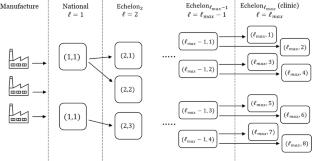
Rapid mass vaccination is critical for curbing transmission during large-scale outbreaks, yet many optimization models emphasize cost or equity without explicitly shaping rollout speed. This study develops a deterministic time-oriented mathematical programming framework for national vaccine distribution that integrates multi-echelon flows, inter-echelon lead times, cold-chain capacity limits, and clinic service constraints. A time-weighted allocation objective is proposed to prioritize earlier coverage and is benchmarked against direct makespan minimization. Results show that the time-weighted formulation consistently increases early cumulative coverage while matching the final completion period obtained under makespan minimization across the tested benchmark instances, yielding a more favorable rollout trajectory without compromising completion time. Scenario experiments indicate that omitting supply availability, lead times, or clinic capacity can substantially underestimate rollout duration. In the Indonesia-based case study, vaccine availability, delivery delays, and vaccination throughput emerge as the dominant drivers of temporal performance, whereas expanding storage capacity provides limited marginal gains once feasibility is ensured. The findings highlight high-leverage interventions that strengthen upstream flow reliability and improve clinical throughput to accelerate population coverage under binding operational constraints.
期刊介绍:
The Annals of Operations Research publishes peer-reviewed original articles dealing with key aspects of operations research, including theory, practice, and computation. The journal publishes full-length research articles, short notes, expositions and surveys, reports on computational studies, and case studies that present new and innovative practical applications.
In addition to regular issues, the journal publishes periodic special volumes that focus on defined fields of operations research, ranging from the highly theoretical to the algorithmic and the applied. These volumes have one or more Guest Editors who are responsible for collecting the papers and overseeing the refereeing process.

 求助内容:
求助内容: 应助结果提醒方式:

 京公网安备 11010802042870号


