A. V. Kiryukhin, O. V. Bergal-Kuvikas, M. V. Lemzikov
{"title":"从地震资料看Shiveluch火山岩浆系统及其地质力学解释","authors":"A. V. Kiryukhin, O. V. Bergal-Kuvikas, M. V. Lemzikov","doi":"10.1134/S0742046326700077","DOIUrl":null,"url":null,"abstract":"<p>Magmatic activity beneath Shiveluch volcano in 2000–2023 was manifested in the injection of dykes and sills (detected by the Frac-Digger method) with increased concentration in the depth ranges from –1 to +1 km, and from –3 to –2.5 km and NNE striking of dykes toward to Klyuchevskoy volcano. Further seismic lineament analysis reveals a zone of NNE striking trans-volcanic dykes that include more than a half of the total 198K micro-earthquakes recorded in North Group of Volcanoes (NGV), extended under volcanoes into 120 km length (dip angle 79 degrees and dip azimuth of 299°). A regional deep seismogenic fault beneath (dip angle 81 degrees and dip azimuth of 296°) at open mode NF geomechanical conditions, and enormous cold spring discharge (12.3 m<sup>3</sup>/s) are also hosted in this zone, thus, along with other geological and petrological evidences, it may be defined as NGV rift zone. In many cases (Oct. 28, 2010, Dec. 03, 2013, Dec. 30, 2018, Apr. 10, 2023) paroxysmal eruptions of Shiveluch volcano were preceded by seismic activity in the deep magma chamber of Klyuchevskoy volcano, that’s supposed to be source of trans-volcanic dykes originating from Klyuchevskoy to Shiveluch along NGV rift zone.</p>","PeriodicalId":56112,"journal":{"name":"Journal of Volcanology and Seismology","volume":"20 2","pages":"136 - 163"},"PeriodicalIF":0.9000,"publicationDate":"2026-04-24","publicationTypes":"Journal Article","fieldsOfStudy":null,"isOpenAccess":false,"openAccessPdf":"","citationCount":"0","resultStr":"{\"title\":\"Magmatic System of Shiveluch Volcano from Seismic Data with Geomechanical Interpretation\",\"authors\":\"A. V. Kiryukhin, O. V. Bergal-Kuvikas, M. V. Lemzikov\",\"doi\":\"10.1134/S0742046326700077\",\"DOIUrl\":null,\"url\":null,\"abstract\":\"<p>Magmatic activity beneath Shiveluch volcano in 2000–2023 was manifested in the injection of dykes and sills (detected by the Frac-Digger method) with increased concentration in the depth ranges from –1 to +1 km, and from –3 to –2.5 km and NNE striking of dykes toward to Klyuchevskoy volcano. Further seismic lineament analysis reveals a zone of NNE striking trans-volcanic dykes that include more than a half of the total 198K micro-earthquakes recorded in North Group of Volcanoes (NGV), extended under volcanoes into 120 km length (dip angle 79 degrees and dip azimuth of 299°). A regional deep seismogenic fault beneath (dip angle 81 degrees and dip azimuth of 296°) at open mode NF geomechanical conditions, and enormous cold spring discharge (12.3 m<sup>3</sup>/s) are also hosted in this zone, thus, along with other geological and petrological evidences, it may be defined as NGV rift zone. In many cases (Oct. 28, 2010, Dec. 03, 2013, Dec. 30, 2018, Apr. 10, 2023) paroxysmal eruptions of Shiveluch volcano were preceded by seismic activity in the deep magma chamber of Klyuchevskoy volcano, that’s supposed to be source of trans-volcanic dykes originating from Klyuchevskoy to Shiveluch along NGV rift zone.</p>\",\"PeriodicalId\":56112,\"journal\":{\"name\":\"Journal of Volcanology and Seismology\",\"volume\":\"20 2\",\"pages\":\"136 - 163\"},\"PeriodicalIF\":0.9000,\"publicationDate\":\"2026-04-24\",\"publicationTypes\":\"Journal Article\",\"fieldsOfStudy\":null,\"isOpenAccess\":false,\"openAccessPdf\":\"\",\"citationCount\":\"0\",\"resultStr\":null,\"platform\":\"Semanticscholar\",\"paperid\":null,\"PeriodicalName\":\"Journal of Volcanology and Seismology\",\"FirstCategoryId\":\"89\",\"ListUrlMain\":\"https://link.springer.com/article/10.1134/S0742046326700077\",\"RegionNum\":4,\"RegionCategory\":\"地球科学\",\"ArticlePicture\":[],\"TitleCN\":null,\"AbstractTextCN\":null,\"PMCID\":null,\"EPubDate\":\"\",\"PubModel\":\"\",\"JCR\":\"Q4\",\"JCRName\":\"GEOCHEMISTRY & GEOPHYSICS\",\"Score\":null,\"Total\":0}","platform":"Semanticscholar","paperid":null,"PeriodicalName":"Journal of Volcanology and Seismology","FirstCategoryId":"89","ListUrlMain":"https://link.springer.com/article/10.1134/S0742046326700077","RegionNum":4,"RegionCategory":"地球科学","ArticlePicture":[],"TitleCN":null,"AbstractTextCN":null,"PMCID":null,"EPubDate":"","PubModel":"","JCR":"Q4","JCRName":"GEOCHEMISTRY & GEOPHYSICS","Score":null,"Total":0}
Magmatic System of Shiveluch Volcano from Seismic Data with Geomechanical Interpretation
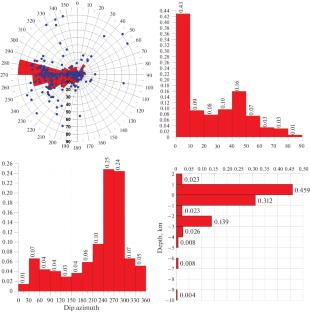
Magmatic activity beneath Shiveluch volcano in 2000–2023 was manifested in the injection of dykes and sills (detected by the Frac-Digger method) with increased concentration in the depth ranges from –1 to +1 km, and from –3 to –2.5 km and NNE striking of dykes toward to Klyuchevskoy volcano. Further seismic lineament analysis reveals a zone of NNE striking trans-volcanic dykes that include more than a half of the total 198K micro-earthquakes recorded in North Group of Volcanoes (NGV), extended under volcanoes into 120 km length (dip angle 79 degrees and dip azimuth of 299°). A regional deep seismogenic fault beneath (dip angle 81 degrees and dip azimuth of 296°) at open mode NF geomechanical conditions, and enormous cold spring discharge (12.3 m3/s) are also hosted in this zone, thus, along with other geological and petrological evidences, it may be defined as NGV rift zone. In many cases (Oct. 28, 2010, Dec. 03, 2013, Dec. 30, 2018, Apr. 10, 2023) paroxysmal eruptions of Shiveluch volcano were preceded by seismic activity in the deep magma chamber of Klyuchevskoy volcano, that’s supposed to be source of trans-volcanic dykes originating from Klyuchevskoy to Shiveluch along NGV rift zone.
期刊介绍:
Journal of Volcanology and Seismology publishes theoretical and experimental studies, communications, and reports on volcanic, seismic, geodynamic, and magmatic processes occurring in the areas of island arcs and other active regions of the Earth. In particular, the journal looks at present-day land and submarine volcanic activity; Neogene–Quaternary volcanism; mechanisms of plutonic activity; the geochemistry of volcanic and postvolcanic processes; geothermal systems in volcanic regions; and seismological monitoring. In addition, the journal surveys earthquakes, volcanic eruptions, and techniques for predicting them.

 求助内容:
求助内容: 应助结果提醒方式:

 京公网安备 11010802042870号


