肩袖疾病的蛋白质组学生物标志物:来自系统回顾和网络分析的当前证据和转化意义

IF 5.9 1区 医学 Q1 ORTHOPEDICS
Journal of Orthopaedic Translation Pub Date : 2026-03-01 Epub Date: 2026-03-24 DOI:10.1016/j.jot.2026.101069
Elvira Immacolata Parrotta , Giorgia Lucia Benedetto , Giovanni Cuda , Raffaele Covello , Umile Giuseppe Longo , Arianna Carnevale , Olimpio Galasso , Giorgio Gasparini , Michele Mercurio
{"title":"肩袖疾病的蛋白质组学生物标志物:来自系统回顾和网络分析的当前证据和转化意义","authors":"Elvira Immacolata Parrotta ,&nbsp;Giorgia Lucia Benedetto ,&nbsp;Giovanni Cuda ,&nbsp;Raffaele Covello ,&nbsp;Umile Giuseppe Longo ,&nbsp;Arianna Carnevale ,&nbsp;Olimpio Galasso ,&nbsp;Giorgio Gasparini ,&nbsp;Michele Mercurio","doi":"10.1016/j.jot.2026.101069","DOIUrl":null,"url":null,"abstract":"<div><h3>Background</h3><div>Rotator cuff disorders are among the most common causes of shoulder pain and dysfunction, primarily driven by chronic inflammation and degenerative changes in tendon tissue. These alterations lead to progressive structural damage and compromised function. In recent years, proteomic profiling has emerged as a promising strategy for identifying molecular signatures associated with disease mechanisms and potential translational applications.</div></div><div><h3>Methods</h3><div>A systematic review was conducted using PubMed and Scopus databases, targeting studies published between 2015 and 2024. Included studies focused on proteomic biomarker analysis in synovial fluid, and blood from patients affected by rotator cuff disorders. Methodological quality and risk of bias were evaluated using the Newcastle-Ottawa Scale for observational studies and the RoB 2.0 tool for randomized controlled trials.</div></div><div><h3>Results</h3><div>Seven studies were found to meet the inclusion criteria. Among the most consistently reported proteins were matrix metalloproteinase-1, matrix metalloproteinase-13, interleukin-1β, interleukin-6, and transforming growth factor-β1, with a predominant presence in synovial fluid samples. Enrichment analyses pointed to their involvement in inflammatory cascades, extracellular matrix turnover, and neovascularization. Network analysis of protein-protein interactions highlighted interleukin-6 and matrix metalloproteinase-13 as central nodes, indicating a pivotal role in modulating disease progression.</div></div><div><h3>Conclusions</h3><div>The most reported biomarkers, such as matrix metalloproteinase-1, matrix metalloproteinase-13, interleukin-1<strong>β</strong>, interleukin-6, and transforming growth factor-<strong>β</strong>1, are associated primarily with inflammatory signaling and extracellular matrix remodeling, highlighting their involvement in molecular pathways related to rotator cuff disease progression and tissue degeneration. Gene Ontology enrichment and KEGG pathway analyses further revealed that these proteins are significantly involved in biological processes relevant to tendon degeneration, including cytokine-mediated signaling, the wound response, and ECM organization.</div></div><div><h3>Clinical implications</h3><div>The identified biomarkers, particularly interleukin-6, matrix metalloproteinase-1, matrix metalloproteinase-13, and transforming growth factor-β1, may represent candidates for inclusion in future multi-analyte diagnostic panels, pending rigorous clinical validation. However, at present these applications remain hypothetical. Further large-scale, standardized, and longitudinal studies are required to validate their incremental value beyond imaging and clinical evaluation before any clinical translation can be considered.</div></div><div><h3>The translational potential of this article</h3><div>This systematic review synthesizes current evidence on proteomic biomarkers detectable in the synovial fluid and blood of patients with rotator cuff disorders, highlighting candidate molecules (e.g., IL-6, MMP-1, MMP-13, TGF-β1) that are mechanistically linked to inflammation and extracellular matrix remodeling. While these markers are not disease-specific, they may have translational utility as components of multi-analyte panels for (1) stratifying disease severity, (2) monitoring biological response to conservative or surgical treatments, and (3) potentially informing future strategies for disease stratification and personalized therapeutic approaches. Real-world clinical translation will require standardized sample collection and assay protocols, analytical validation (targeted MS or clinical immunoassays), and prospective studies to define diagnostic thresholds and incremental value over imaging and clinical assessment.</div></div>","PeriodicalId":16636,"journal":{"name":"Journal of Orthopaedic Translation","volume":"57 ","pages":"Article 101069"},"PeriodicalIF":5.9000,"publicationDate":"2026-03-01","publicationTypes":"Journal Article","fieldsOfStudy":null,"isOpenAccess":false,"openAccessPdf":"","citationCount":"0","resultStr":"{\"title\":\"Proteomic biomarkers in rotator cuff disease: Current evidence and translational implications from a systematic review and network analysis\",\"authors\":\"Elvira Immacolata Parrotta ,&nbsp;Giorgia Lucia Benedetto ,&nbsp;Giovanni Cuda ,&nbsp;Raffaele Covello ,&nbsp;Umile Giuseppe Longo ,&nbsp;Arianna Carnevale ,&nbsp;Olimpio Galasso ,&nbsp;Giorgio Gasparini ,&nbsp;Michele Mercurio\",\"doi\":\"10.1016/j.jot.2026.101069\",\"DOIUrl\":null,\"url\":null,\"abstract\":\"<div><h3>Background</h3><div>Rotator cuff disorders are among the most common causes of shoulder pain and dysfunction, primarily driven by chronic inflammation and degenerative changes in tendon tissue. These alterations lead to progressive structural damage and compromised function. In recent years, proteomic profiling has emerged as a promising strategy for identifying molecular signatures associated with disease mechanisms and potential translational applications.</div></div><div><h3>Methods</h3><div>A systematic review was conducted using PubMed and Scopus databases, targeting studies published between 2015 and 2024. Included studies focused on proteomic biomarker analysis in synovial fluid, and blood from patients affected by rotator cuff disorders. Methodological quality and risk of bias were evaluated using the Newcastle-Ottawa Scale for observational studies and the RoB 2.0 tool for randomized controlled trials.</div></div><div><h3>Results</h3><div>Seven studies were found to meet the inclusion criteria. Among the most consistently reported proteins were matrix metalloproteinase-1, matrix metalloproteinase-13, interleukin-1β, interleukin-6, and transforming growth factor-β1, with a predominant presence in synovial fluid samples. Enrichment analyses pointed to their involvement in inflammatory cascades, extracellular matrix turnover, and neovascularization. Network analysis of protein-protein interactions highlighted interleukin-6 and matrix metalloproteinase-13 as central nodes, indicating a pivotal role in modulating disease progression.</div></div><div><h3>Conclusions</h3><div>The most reported biomarkers, such as matrix metalloproteinase-1, matrix metalloproteinase-13, interleukin-1<strong>β</strong>, interleukin-6, and transforming growth factor-<strong>β</strong>1, are associated primarily with inflammatory signaling and extracellular matrix remodeling, highlighting their involvement in molecular pathways related to rotator cuff disease progression and tissue degeneration. Gene Ontology enrichment and KEGG pathway analyses further revealed that these proteins are significantly involved in biological processes relevant to tendon degeneration, including cytokine-mediated signaling, the wound response, and ECM organization.</div></div><div><h3>Clinical implications</h3><div>The identified biomarkers, particularly interleukin-6, matrix metalloproteinase-1, matrix metalloproteinase-13, and transforming growth factor-β1, may represent candidates for inclusion in future multi-analyte diagnostic panels, pending rigorous clinical validation. However, at present these applications remain hypothetical. Further large-scale, standardized, and longitudinal studies are required to validate their incremental value beyond imaging and clinical evaluation before any clinical translation can be considered.</div></div><div><h3>The translational potential of this article</h3><div>This systematic review synthesizes current evidence on proteomic biomarkers detectable in the synovial fluid and blood of patients with rotator cuff disorders, highlighting candidate molecules (e.g., IL-6, MMP-1, MMP-13, TGF-β1) that are mechanistically linked to inflammation and extracellular matrix remodeling. While these markers are not disease-specific, they may have translational utility as components of multi-analyte panels for (1) stratifying disease severity, (2) monitoring biological response to conservative or surgical treatments, and (3) potentially informing future strategies for disease stratification and personalized therapeutic approaches. Real-world clinical translation will require standardized sample collection and assay protocols, analytical validation (targeted MS or clinical immunoassays), and prospective studies to define diagnostic thresholds and incremental value over imaging and clinical assessment.</div></div>\",\"PeriodicalId\":16636,\"journal\":{\"name\":\"Journal of Orthopaedic Translation\",\"volume\":\"57 \",\"pages\":\"Article 101069\"},\"PeriodicalIF\":5.9000,\"publicationDate\":\"2026-03-01\",\"publicationTypes\":\"Journal Article\",\"fieldsOfStudy\":null,\"isOpenAccess\":false,\"openAccessPdf\":\"\",\"citationCount\":\"0\",\"resultStr\":null,\"platform\":\"Semanticscholar\",\"paperid\":null,\"PeriodicalName\":\"Journal of Orthopaedic Translation\",\"FirstCategoryId\":\"3\",\"ListUrlMain\":\"https://www.sciencedirect.com/science/article/pii/S2214031X26000240\",\"RegionNum\":1,\"RegionCategory\":\"医学\",\"ArticlePicture\":[],\"TitleCN\":null,\"AbstractTextCN\":null,\"PMCID\":null,\"EPubDate\":\"2026/3/24 0:00:00\",\"PubModel\":\"Epub\",\"JCR\":\"Q1\",\"JCRName\":\"ORTHOPEDICS\",\"Score\":null,\"Total\":0}","platform":"Semanticscholar","paperid":null,"PeriodicalName":"Journal of Orthopaedic Translation","FirstCategoryId":"3","ListUrlMain":"https://www.sciencedirect.com/science/article/pii/S2214031X26000240","RegionNum":1,"RegionCategory":"医学","ArticlePicture":[],"TitleCN":null,"AbstractTextCN":null,"PMCID":null,"EPubDate":"2026/3/24 0:00:00","PubModel":"Epub","JCR":"Q1","JCRName":"ORTHOPEDICS","Score":null,"Total":0}
引用次数: 0

摘要

背景:肩袖疾病是肩关节疼痛和功能障碍最常见的原因之一,主要由慢性炎症和肌腱组织退行性改变引起。这些改变导致进行性结构损伤和功能受损。近年来,蛋白质组学分析已成为一种有前途的策略,用于识别与疾病机制和潜在的翻译应用相关的分子特征。方法使用PubMed和Scopus数据库对2015 - 2024年间发表的研究进行系统评价。纳入的研究集中在肩袖疾病患者的滑液和血液中的蛋白质组学生物标志物分析。观察性研究采用纽卡斯尔-渥太华量表,随机对照试验采用RoB 2.0工具,对方法学质量和偏倚风险进行评估。结果7项研究符合纳入标准。其中最一致报道的蛋白质是基质金属蛋白酶-1、基质金属蛋白酶-13、白细胞介素-1β、白细胞介素-6和转化生长因子-β1,主要存在于滑液样品中。富集分析指出它们参与炎症级联反应、细胞外基质转换和新生血管。蛋白相互作用的网络分析强调白细胞介素-6和基质金属蛋白酶-13是中心节点,表明在调节疾病进展中起关键作用。结论报道最多的生物标志物,如基质金属蛋白酶-1、基质金属蛋白酶-13、白细胞介素-1β、白细胞介素-6和转化生长因子-β1,主要与炎症信号传导和细胞外基质重塑相关,突出表明它们参与了与肌腱套疾病进展和组织变性相关的分子途径。基因本体富集和KEGG通路分析进一步表明,这些蛋白显著参与与肌腱变性相关的生物过程,包括细胞因子介导的信号传导、伤口反应和ECM组织。临床意义已确定的生物标志物,特别是白细胞介素-6、基质金属蛋白酶-1、基质金属蛋白酶-13和转化生长因子-β1,可能代表未来多分析物诊断小组的候选物,有待严格的临床验证。然而,目前这些应用仍然是假设的。在考虑任何临床转化之前,需要进一步的大规模、标准化和纵向研究来验证其在影像学和临床评估之外的增量价值。这篇系统综述综合了目前在肩袖疾病患者的滑液和血液中检测到的蛋白质组学生物标志物的证据,突出了与炎症和细胞外基质重塑有机制联系的候选分子(如IL-6、MMP-1、MMP-13、TGF-β1)。虽然这些标志物不是疾病特异性的,但它们作为多分析物面板的组成部分可能具有转化效用,可用于(1)疾病严重程度分层,(2)监测对保守或手术治疗的生物反应,以及(3)潜在地为疾病分层和个性化治疗方法的未来策略提供信息。现实世界的临床翻译将需要标准化的样本收集和分析方案,分析验证(靶向质谱或临床免疫测定),以及确定诊断阈值和成像和临床评估的增量价值的前瞻性研究。
本文章由计算机程序翻译,如有差异,请以英文原文为准。

Proteomic biomarkers in rotator cuff disease: Current evidence and translational implications from a systematic review and network analysis

Proteomic biomarkers in rotator cuff disease: Current evidence and translational implications from a systematic review and network analysis

Background

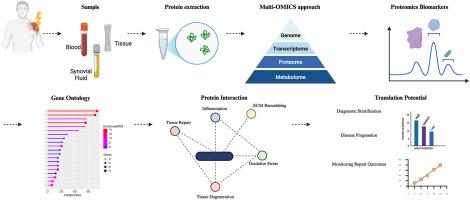
Rotator cuff disorders are among the most common causes of shoulder pain and dysfunction, primarily driven by chronic inflammation and degenerative changes in tendon tissue. These alterations lead to progressive structural damage and compromised function. In recent years, proteomic profiling has emerged as a promising strategy for identifying molecular signatures associated with disease mechanisms and potential translational applications.

Methods

A systematic review was conducted using PubMed and Scopus databases, targeting studies published between 2015 and 2024. Included studies focused on proteomic biomarker analysis in synovial fluid, and blood from patients affected by rotator cuff disorders. Methodological quality and risk of bias were evaluated using the Newcastle-Ottawa Scale for observational studies and the RoB 2.0 tool for randomized controlled trials.

Results

Seven studies were found to meet the inclusion criteria. Among the most consistently reported proteins were matrix metalloproteinase-1, matrix metalloproteinase-13, interleukin-1β, interleukin-6, and transforming growth factor-β1, with a predominant presence in synovial fluid samples. Enrichment analyses pointed to their involvement in inflammatory cascades, extracellular matrix turnover, and neovascularization. Network analysis of protein-protein interactions highlighted interleukin-6 and matrix metalloproteinase-13 as central nodes, indicating a pivotal role in modulating disease progression.

Conclusions

The most reported biomarkers, such as matrix metalloproteinase-1, matrix metalloproteinase-13, interleukin-1β, interleukin-6, and transforming growth factor-β1, are associated primarily with inflammatory signaling and extracellular matrix remodeling, highlighting their involvement in molecular pathways related to rotator cuff disease progression and tissue degeneration. Gene Ontology enrichment and KEGG pathway analyses further revealed that these proteins are significantly involved in biological processes relevant to tendon degeneration, including cytokine-mediated signaling, the wound response, and ECM organization.

Clinical implications

The identified biomarkers, particularly interleukin-6, matrix metalloproteinase-1, matrix metalloproteinase-13, and transforming growth factor-β1, may represent candidates for inclusion in future multi-analyte diagnostic panels, pending rigorous clinical validation. However, at present these applications remain hypothetical. Further large-scale, standardized, and longitudinal studies are required to validate their incremental value beyond imaging and clinical evaluation before any clinical translation can be considered.

The translational potential of this article

This systematic review synthesizes current evidence on proteomic biomarkers detectable in the synovial fluid and blood of patients with rotator cuff disorders, highlighting candidate molecules (e.g., IL-6, MMP-1, MMP-13, TGF-β1) that are mechanistically linked to inflammation and extracellular matrix remodeling. While these markers are not disease-specific, they may have translational utility as components of multi-analyte panels for (1) stratifying disease severity, (2) monitoring biological response to conservative or surgical treatments, and (3) potentially informing future strategies for disease stratification and personalized therapeutic approaches. Real-world clinical translation will require standardized sample collection and assay protocols, analytical validation (targeted MS or clinical immunoassays), and prospective studies to define diagnostic thresholds and incremental value over imaging and clinical assessment.
求助全文
通过发布文献求助,成功后即可免费获取论文全文。 去求助
来源期刊
Journal of Orthopaedic Translation
Journal of Orthopaedic Translation Medicine-Orthopedics and Sports Medicine
CiteScore
11.80
自引率
13.60%
发文量
91
审稿时长
29 days
期刊介绍: The Journal of Orthopaedic Translation (JOT) is the official peer-reviewed, open access journal of the Chinese Speaking Orthopaedic Society (CSOS) and the International Chinese Musculoskeletal Research Society (ICMRS). It is published quarterly, in January, April, July and October, by Elsevier.

×
引用
GB/T 7714-2015
复制
MLA
复制
APA
复制
导出至
BibTeX EndNote RefMan NoteFirst NoteExpress
×
提示
您的信息不完整,为了账户安全,请先补充。
现在去补充
×
提示
您因"违规操作"
具体请查看互助需知
我知道了
×
提示
确定
请完成安全验证×
copy
已复制链接
快去分享给好友吧!
我知道了
右上角分享
点击右上角分享
0
联系我们:info@booksci.cn Book学术提供免费学术资源搜索服务,方便国内外学者检索中英文文献。致力于提供最便捷和优质的服务体验。 Copyright © 2023 布克学术 All rights reserved.
京ICP备2023020795号-1
ghs 京公网安备 11010802042870号
Book学术文献互助
Book学术文献互助群
群 号:604180095
Book学术官方微信
小红书