Charlotte Brookes, Alice Rose, Moatisim Qayyum-Bin-Asim, Vijay Kolli, Jonathan Lohn, Alex J Trompeter
{"title":"下肢外伤后计划截肢:指征和长期并发症发生率。","authors":"Charlotte Brookes, Alice Rose, Moatisim Qayyum-Bin-Asim, Vijay Kolli, Jonathan Lohn, Alex J Trompeter","doi":"10.1302/2633-1462.73.BJO-2025-0308.R1","DOIUrl":null,"url":null,"abstract":"<p><strong>Aims: </strong>The decision to proceed to planned lower limb amputation in the context of previous trauma is a complex one. Much of the existing literature with regard to decision for amputation, and outcomes, focuses on a different patient demographic (older patients with diabetes or vascular disease) and therefore is unlikely to be applicable to young patients. In this study, we aim to identify the reasons for proceeding to a planned lower limb amputation in patients with previous lower limb trauma. We report on postoperative amputation complication rates, including reoperation, infection, phantom limb pain, and neuroma. The data were derived from one of the largest amputee multidisciplinary rehabilitation units in the UK.</p><p><strong>Methods: </strong>A retrospective analysis was undertaken of a prospectively collected database of all lower limb amputations secondary to trauma from a regional multidisciplinary amputee service in London. Clinical records were consulted for date and mechanism of injury of index trauma, date of amputation, evidence of reoperation, infection (superficial or deep), phantom limb pain, and neuroma. Amputations were deemed planned if occurring > six weeks post-traumatic injury.</p><p><strong>Results: </strong>A total of 69 amputations in 66 patients were analyzed. Mean age at index trauma was 38 years (10 to 77), and mean age at time of amputation was 45 years (12 to 80). The most prevalent mechanism of injury was road traffic accident (41%), followed by fall from a height (28%). Mean time from index trauma to amputation was 77 months (3 to 508). Chronic pain and infection were the leading causes in proceeding to a planned amputation (32% and 29%, respectively); nonunion accounted for 23%. Post-amputation rates of phantom limb pain, reoperation, and neuroma were 52.17%, 18.84%, and 8.70%, respectively. Infection was reported at a rate of 33%. Mean follow-up from time of amputation was 128 months.</p><p><strong>Conclusion: </strong>Chronic pain and infection are the most common reasons for proceeding to planned amputation of a previously traumatized lower limb. The rates of reoperation, neuroma, and phantom limb pain following planned amputation due to trauma are in keeping with those published for amputations secondary to diabetes or vascular disease. However, we report a higher rate of infection, likely attributable to chronic infection as a leading cause for planned amputation. Our data can assist clinicians and patients in making the complex, informed decision of whether to proceed to amputation. This is the first study describing the incidence of complications in patients with planned lower limb amputations due to trauma in the UK.</p>","PeriodicalId":34103,"journal":{"name":"Bone & Joint Open","volume":"7 3","pages":"448-454"},"PeriodicalIF":3.1000,"publicationDate":"2026-03-26","publicationTypes":"Journal Article","fieldsOfStudy":null,"isOpenAccess":false,"openAccessPdf":"https://www.ncbi.nlm.nih.gov/pmc/articles/PMC13019648/pdf/","citationCount":"0","resultStr":"{\"title\":\"Planned amputations after lower limb trauma : indications and long-term complication rates.\",\"authors\":\"Charlotte Brookes, Alice Rose, Moatisim Qayyum-Bin-Asim, Vijay Kolli, Jonathan Lohn, Alex J Trompeter\",\"doi\":\"10.1302/2633-1462.73.BJO-2025-0308.R1\",\"DOIUrl\":null,\"url\":null,\"abstract\":\"<p><strong>Aims: </strong>The decision to proceed to planned lower limb amputation in the context of previous trauma is a complex one. Much of the existing literature with regard to decision for amputation, and outcomes, focuses on a different patient demographic (older patients with diabetes or vascular disease) and therefore is unlikely to be applicable to young patients. In this study, we aim to identify the reasons for proceeding to a planned lower limb amputation in patients with previous lower limb trauma. We report on postoperative amputation complication rates, including reoperation, infection, phantom limb pain, and neuroma. The data were derived from one of the largest amputee multidisciplinary rehabilitation units in the UK.</p><p><strong>Methods: </strong>A retrospective analysis was undertaken of a prospectively collected database of all lower limb amputations secondary to trauma from a regional multidisciplinary amputee service in London. Clinical records were consulted for date and mechanism of injury of index trauma, date of amputation, evidence of reoperation, infection (superficial or deep), phantom limb pain, and neuroma. Amputations were deemed planned if occurring > six weeks post-traumatic injury.</p><p><strong>Results: </strong>A total of 69 amputations in 66 patients were analyzed. Mean age at index trauma was 38 years (10 to 77), and mean age at time of amputation was 45 years (12 to 80). The most prevalent mechanism of injury was road traffic accident (41%), followed by fall from a height (28%). Mean time from index trauma to amputation was 77 months (3 to 508). Chronic pain and infection were the leading causes in proceeding to a planned amputation (32% and 29%, respectively); nonunion accounted for 23%. Post-amputation rates of phantom limb pain, reoperation, and neuroma were 52.17%, 18.84%, and 8.70%, respectively. Infection was reported at a rate of 33%. Mean follow-up from time of amputation was 128 months.</p><p><strong>Conclusion: </strong>Chronic pain and infection are the most common reasons for proceeding to planned amputation of a previously traumatized lower limb. The rates of reoperation, neuroma, and phantom limb pain following planned amputation due to trauma are in keeping with those published for amputations secondary to diabetes or vascular disease. However, we report a higher rate of infection, likely attributable to chronic infection as a leading cause for planned amputation. Our data can assist clinicians and patients in making the complex, informed decision of whether to proceed to amputation. This is the first study describing the incidence of complications in patients with planned lower limb amputations due to trauma in the UK.</p>\",\"PeriodicalId\":34103,\"journal\":{\"name\":\"Bone & Joint Open\",\"volume\":\"7 3\",\"pages\":\"448-454\"},\"PeriodicalIF\":3.1000,\"publicationDate\":\"2026-03-26\",\"publicationTypes\":\"Journal Article\",\"fieldsOfStudy\":null,\"isOpenAccess\":false,\"openAccessPdf\":\"https://www.ncbi.nlm.nih.gov/pmc/articles/PMC13019648/pdf/\",\"citationCount\":\"0\",\"resultStr\":null,\"platform\":\"Semanticscholar\",\"paperid\":null,\"PeriodicalName\":\"Bone & Joint Open\",\"FirstCategoryId\":\"1085\",\"ListUrlMain\":\"https://doi.org/10.1302/2633-1462.73.BJO-2025-0308.R1\",\"RegionNum\":0,\"RegionCategory\":null,\"ArticlePicture\":[],\"TitleCN\":null,\"AbstractTextCN\":null,\"PMCID\":null,\"EPubDate\":\"\",\"PubModel\":\"\",\"JCR\":\"Q1\",\"JCRName\":\"ORTHOPEDICS\",\"Score\":null,\"Total\":0}","platform":"Semanticscholar","paperid":null,"PeriodicalName":"Bone & Joint Open","FirstCategoryId":"1085","ListUrlMain":"https://doi.org/10.1302/2633-1462.73.BJO-2025-0308.R1","RegionNum":0,"RegionCategory":null,"ArticlePicture":[],"TitleCN":null,"AbstractTextCN":null,"PMCID":null,"EPubDate":"","PubModel":"","JCR":"Q1","JCRName":"ORTHOPEDICS","Score":null,"Total":0}
Planned amputations after lower limb trauma : indications and long-term complication rates.
Aims: The decision to proceed to planned lower limb amputation in the context of previous trauma is a complex one. Much of the existing literature with regard to decision for amputation, and outcomes, focuses on a different patient demographic (older patients with diabetes or vascular disease) and therefore is unlikely to be applicable to young patients. In this study, we aim to identify the reasons for proceeding to a planned lower limb amputation in patients with previous lower limb trauma. We report on postoperative amputation complication rates, including reoperation, infection, phantom limb pain, and neuroma. The data were derived from one of the largest amputee multidisciplinary rehabilitation units in the UK.
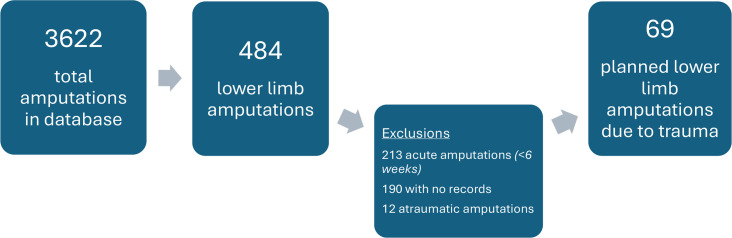
Methods: A retrospective analysis was undertaken of a prospectively collected database of all lower limb amputations secondary to trauma from a regional multidisciplinary amputee service in London. Clinical records were consulted for date and mechanism of injury of index trauma, date of amputation, evidence of reoperation, infection (superficial or deep), phantom limb pain, and neuroma. Amputations were deemed planned if occurring > six weeks post-traumatic injury.
Results: A total of 69 amputations in 66 patients were analyzed. Mean age at index trauma was 38 years (10 to 77), and mean age at time of amputation was 45 years (12 to 80). The most prevalent mechanism of injury was road traffic accident (41%), followed by fall from a height (28%). Mean time from index trauma to amputation was 77 months (3 to 508). Chronic pain and infection were the leading causes in proceeding to a planned amputation (32% and 29%, respectively); nonunion accounted for 23%. Post-amputation rates of phantom limb pain, reoperation, and neuroma were 52.17%, 18.84%, and 8.70%, respectively. Infection was reported at a rate of 33%. Mean follow-up from time of amputation was 128 months.
Conclusion: Chronic pain and infection are the most common reasons for proceeding to planned amputation of a previously traumatized lower limb. The rates of reoperation, neuroma, and phantom limb pain following planned amputation due to trauma are in keeping with those published for amputations secondary to diabetes or vascular disease. However, we report a higher rate of infection, likely attributable to chronic infection as a leading cause for planned amputation. Our data can assist clinicians and patients in making the complex, informed decision of whether to proceed to amputation. This is the first study describing the incidence of complications in patients with planned lower limb amputations due to trauma in the UK.



 求助内容:
求助内容: 应助结果提醒方式:

 京公网安备 11010802042870号


