Guilherme Feijó de Sousa, Chrystian Nunes Gonçalves, Danillo de Oliveira Della Senta, Camila Garcia de Souza, Alice Calderipe de Lima, João Carlos Rodrigues, Maureen Legendre, David M. Markovitz, Luciano da Silva Pinto
{"title":"香蕉凝集素rbanleclike和H84T-BanLec的体外和体外比较分析","authors":"Guilherme Feijó de Sousa, Chrystian Nunes Gonçalves, Danillo de Oliveira Della Senta, Camila Garcia de Souza, Alice Calderipe de Lima, João Carlos Rodrigues, Maureen Legendre, David M. Markovitz, Luciano da Silva Pinto","doi":"10.1007/s10930-026-10326-8","DOIUrl":null,"url":null,"abstract":"<div>\n \n <p>In this study, we conducted structural and comparative analyses of two recombinant banana lectins, rBanLec-like and H84T-BanLec, using both in silico and in vitro approaches. Sequence alignment showed 91.5% identity between the lectins, with differences in 12 amino acids. Structural modeling and secondary structure analysis indicated a high degree of structural similarity, with a root mean square deviation (RMSD) of 0.382 Å, suggesting that the sequence modifications did not lead to significant structural changes. Molecular docking experiments demonstrated a strong affinity of both lectins for mannose, with rBanLec-like exhibiting a lower binding free energy (− 6.6 kcal/mol) compared to H84T-BanLec (− 4.5 kcal/mol). Molecular dynamics simulations confirmed the stability of both proteins, although rBanLec-like displayed greater conformational flexibility. Expression in <i>Escherichia coli</i> showed successful production of both lectins, but rBanLec-like was detected in both soluble and insoluble fractions, whereas H84T-BanLec was exclusively obtained in the soluble fraction. Both lectins significantly inhibited the growth of colorectal adenocarcinoma cells by 62.6% and 76%, respectively. These findings contribute to the structural and functional understanding of banana lectins, highlighting their potential for biotechnological and therapeutic applications.</p>\n </div>","PeriodicalId":793,"journal":{"name":"The Protein Journal","volume":"45 2","pages":"318 - 331"},"PeriodicalIF":1.4000,"publicationDate":"2026-03-19","publicationTypes":"Journal Article","fieldsOfStudy":null,"isOpenAccess":false,"openAccessPdf":"https://link.springer.com/content/pdf/10.1007/s10930-026-10326-8.pdf","citationCount":"0","resultStr":"{\"title\":\"Comparative Analysis of Banana Lectins rBanLec-Like and H84T-BanLec: An In Silico and In Vitro Approach\",\"authors\":\"Guilherme Feijó de Sousa, Chrystian Nunes Gonçalves, Danillo de Oliveira Della Senta, Camila Garcia de Souza, Alice Calderipe de Lima, João Carlos Rodrigues, Maureen Legendre, David M. Markovitz, Luciano da Silva Pinto\",\"doi\":\"10.1007/s10930-026-10326-8\",\"DOIUrl\":null,\"url\":null,\"abstract\":\"<div>\\n \\n <p>In this study, we conducted structural and comparative analyses of two recombinant banana lectins, rBanLec-like and H84T-BanLec, using both in silico and in vitro approaches. Sequence alignment showed 91.5% identity between the lectins, with differences in 12 amino acids. Structural modeling and secondary structure analysis indicated a high degree of structural similarity, with a root mean square deviation (RMSD) of 0.382 Å, suggesting that the sequence modifications did not lead to significant structural changes. Molecular docking experiments demonstrated a strong affinity of both lectins for mannose, with rBanLec-like exhibiting a lower binding free energy (− 6.6 kcal/mol) compared to H84T-BanLec (− 4.5 kcal/mol). Molecular dynamics simulations confirmed the stability of both proteins, although rBanLec-like displayed greater conformational flexibility. Expression in <i>Escherichia coli</i> showed successful production of both lectins, but rBanLec-like was detected in both soluble and insoluble fractions, whereas H84T-BanLec was exclusively obtained in the soluble fraction. Both lectins significantly inhibited the growth of colorectal adenocarcinoma cells by 62.6% and 76%, respectively. These findings contribute to the structural and functional understanding of banana lectins, highlighting their potential for biotechnological and therapeutic applications.</p>\\n </div>\",\"PeriodicalId\":793,\"journal\":{\"name\":\"The Protein Journal\",\"volume\":\"45 2\",\"pages\":\"318 - 331\"},\"PeriodicalIF\":1.4000,\"publicationDate\":\"2026-03-19\",\"publicationTypes\":\"Journal Article\",\"fieldsOfStudy\":null,\"isOpenAccess\":false,\"openAccessPdf\":\"https://link.springer.com/content/pdf/10.1007/s10930-026-10326-8.pdf\",\"citationCount\":\"0\",\"resultStr\":null,\"platform\":\"Semanticscholar\",\"paperid\":null,\"PeriodicalName\":\"The Protein Journal\",\"FirstCategoryId\":\"2\",\"ListUrlMain\":\"https://link.springer.com/article/10.1007/s10930-026-10326-8\",\"RegionNum\":4,\"RegionCategory\":\"生物学\",\"ArticlePicture\":[],\"TitleCN\":null,\"AbstractTextCN\":null,\"PMCID\":null,\"EPubDate\":\"\",\"PubModel\":\"\",\"JCR\":\"Q4\",\"JCRName\":\"BIOCHEMISTRY & MOLECULAR BIOLOGY\",\"Score\":null,\"Total\":0}","platform":"Semanticscholar","paperid":null,"PeriodicalName":"The Protein Journal","FirstCategoryId":"2","ListUrlMain":"https://link.springer.com/article/10.1007/s10930-026-10326-8","RegionNum":4,"RegionCategory":"生物学","ArticlePicture":[],"TitleCN":null,"AbstractTextCN":null,"PMCID":null,"EPubDate":"","PubModel":"","JCR":"Q4","JCRName":"BIOCHEMISTRY & MOLECULAR BIOLOGY","Score":null,"Total":0}
Comparative Analysis of Banana Lectins rBanLec-Like and H84T-BanLec: An In Silico and In Vitro Approach
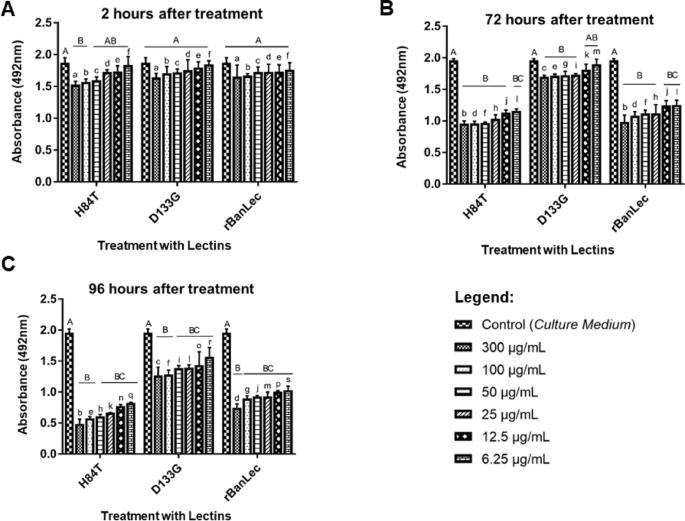
In this study, we conducted structural and comparative analyses of two recombinant banana lectins, rBanLec-like and H84T-BanLec, using both in silico and in vitro approaches. Sequence alignment showed 91.5% identity between the lectins, with differences in 12 amino acids. Structural modeling and secondary structure analysis indicated a high degree of structural similarity, with a root mean square deviation (RMSD) of 0.382 Å, suggesting that the sequence modifications did not lead to significant structural changes. Molecular docking experiments demonstrated a strong affinity of both lectins for mannose, with rBanLec-like exhibiting a lower binding free energy (− 6.6 kcal/mol) compared to H84T-BanLec (− 4.5 kcal/mol). Molecular dynamics simulations confirmed the stability of both proteins, although rBanLec-like displayed greater conformational flexibility. Expression in Escherichia coli showed successful production of both lectins, but rBanLec-like was detected in both soluble and insoluble fractions, whereas H84T-BanLec was exclusively obtained in the soluble fraction. Both lectins significantly inhibited the growth of colorectal adenocarcinoma cells by 62.6% and 76%, respectively. These findings contribute to the structural and functional understanding of banana lectins, highlighting their potential for biotechnological and therapeutic applications.
期刊介绍:
The Protein Journal (formerly the Journal of Protein Chemistry) publishes original research work on all aspects of proteins and peptides. These include studies concerned with covalent or three-dimensional structure determination (X-ray, NMR, cryoEM, EPR/ESR, optical methods, etc.), computational aspects of protein structure and function, protein folding and misfolding, assembly, genetics, evolution, proteomics, molecular biology, protein engineering, protein nanotechnology, protein purification and analysis and peptide synthesis, as well as the elucidation and interpretation of the molecular bases of biological activities of proteins and peptides. We accept original research papers, reviews, mini-reviews, hypotheses, opinion papers, and letters to the editor.

 求助内容:
求助内容: 应助结果提醒方式:

 京公网安备 11010802042870号


