Francisco Tustumi, Amanda Park, Eric Toshiyuki Nakamura, Thaís Cabral de Melo Viana, Elis Nogara Lisboa, Rodrigo Moisés de Almeida Leite, Sergio Eduardo Alonso Araujo, Pedro Luiz Serrano Usón, Kaique Flávio Xavier Cardoso Filardi
{"title":"家族性腺瘤性息肉病化学预防的安全性和有效性:系统回顾和荟萃分析。","authors":"Francisco Tustumi, Amanda Park, Eric Toshiyuki Nakamura, Thaís Cabral de Melo Viana, Elis Nogara Lisboa, Rodrigo Moisés de Almeida Leite, Sergio Eduardo Alonso Araujo, Pedro Luiz Serrano Usón, Kaique Flávio Xavier Cardoso Filardi","doi":"10.3393/ac.2025.01018.0145","DOIUrl":null,"url":null,"abstract":"<p><strong>Purpose: </strong>Familial adenomatous polyposis is a hereditary condition that predisposes individuals to colorectal cancer. This study aimed to evaluate the efficacy and safety of pharmacological therapies for reducing polyp number, burden, and size in individuals with familial adenomatous polyposis.</p><p><strong>Methods: </strong>A systematic search was conducted in PubMed, Embase, Web of Science, and Cochrane. Randomized trials assessing the effects of pharmacological interventions on polyp number, polyp burden, and polyp size were included, and adverse events were also analyzed.</p><p><strong>Results: </strong>Sixteen studies (n=985) met the inclusion criteria. The mean participant age was 38±8.3 years, with a mean follow-up of 14.6±15.8 months. Of these studies, 62.5% focused on colorectal polyps, 18.8% on rectal polyps, 18.8% on duodenal polyps, and 12.5% addressed both colorectal and duodenal polyps. Pharmacological interventions were associated with a modest but statistically significant reduction in the number of polyps (Hedges g, -0.57; 95% confidence interval [CI], -1.08 to -0.05) and in average polyp size (Hedges g, -0.26; 95% CI, -0.49 to -0.04). However, no significant reduction in overall polyp burden was observed (Hedges g, -1.07; 95% CI, -2.21 to 0.06). In subgroup analyses, nonselective cyclooxygenase inhibitors produced a large reduction in polyp burden (Hedges g, -2.72; 95% CI, -3.28 to -2.16), while metformin also demonstrated benefit in a single study (Hedges g, -1.06; 95% CI, -1.86 to -0.27). Adverse events were generally infrequent and comparable to placebo.</p><p><strong>Conclusion: </strong>Chemopreventive interventions may reduce polyp number, burden, and size, and they appear to have a favorable safety profile.</p>","PeriodicalId":8267,"journal":{"name":"Annals of Coloproctology","volume":"42 1","pages":"34-46"},"PeriodicalIF":2.1000,"publicationDate":"2026-02-01","publicationTypes":"Journal Article","fieldsOfStudy":null,"isOpenAccess":false,"openAccessPdf":"https://www.ncbi.nlm.nih.gov/pmc/articles/PMC12971174/pdf/","citationCount":"0","resultStr":"{\"title\":\"Safety and efficacy of chemoprevention for familial adenomatous polyposis: a systematic review and meta-analysis.\",\"authors\":\"Francisco Tustumi, Amanda Park, Eric Toshiyuki Nakamura, Thaís Cabral de Melo Viana, Elis Nogara Lisboa, Rodrigo Moisés de Almeida Leite, Sergio Eduardo Alonso Araujo, Pedro Luiz Serrano Usón, Kaique Flávio Xavier Cardoso Filardi\",\"doi\":\"10.3393/ac.2025.01018.0145\",\"DOIUrl\":null,\"url\":null,\"abstract\":\"<p><strong>Purpose: </strong>Familial adenomatous polyposis is a hereditary condition that predisposes individuals to colorectal cancer. This study aimed to evaluate the efficacy and safety of pharmacological therapies for reducing polyp number, burden, and size in individuals with familial adenomatous polyposis.</p><p><strong>Methods: </strong>A systematic search was conducted in PubMed, Embase, Web of Science, and Cochrane. Randomized trials assessing the effects of pharmacological interventions on polyp number, polyp burden, and polyp size were included, and adverse events were also analyzed.</p><p><strong>Results: </strong>Sixteen studies (n=985) met the inclusion criteria. The mean participant age was 38±8.3 years, with a mean follow-up of 14.6±15.8 months. Of these studies, 62.5% focused on colorectal polyps, 18.8% on rectal polyps, 18.8% on duodenal polyps, and 12.5% addressed both colorectal and duodenal polyps. Pharmacological interventions were associated with a modest but statistically significant reduction in the number of polyps (Hedges g, -0.57; 95% confidence interval [CI], -1.08 to -0.05) and in average polyp size (Hedges g, -0.26; 95% CI, -0.49 to -0.04). However, no significant reduction in overall polyp burden was observed (Hedges g, -1.07; 95% CI, -2.21 to 0.06). In subgroup analyses, nonselective cyclooxygenase inhibitors produced a large reduction in polyp burden (Hedges g, -2.72; 95% CI, -3.28 to -2.16), while metformin also demonstrated benefit in a single study (Hedges g, -1.06; 95% CI, -1.86 to -0.27). Adverse events were generally infrequent and comparable to placebo.</p><p><strong>Conclusion: </strong>Chemopreventive interventions may reduce polyp number, burden, and size, and they appear to have a favorable safety profile.</p>\",\"PeriodicalId\":8267,\"journal\":{\"name\":\"Annals of Coloproctology\",\"volume\":\"42 1\",\"pages\":\"34-46\"},\"PeriodicalIF\":2.1000,\"publicationDate\":\"2026-02-01\",\"publicationTypes\":\"Journal Article\",\"fieldsOfStudy\":null,\"isOpenAccess\":false,\"openAccessPdf\":\"https://www.ncbi.nlm.nih.gov/pmc/articles/PMC12971174/pdf/\",\"citationCount\":\"0\",\"resultStr\":null,\"platform\":\"Semanticscholar\",\"paperid\":null,\"PeriodicalName\":\"Annals of Coloproctology\",\"FirstCategoryId\":\"1085\",\"ListUrlMain\":\"https://doi.org/10.3393/ac.2025.01018.0145\",\"RegionNum\":0,\"RegionCategory\":null,\"ArticlePicture\":[],\"TitleCN\":null,\"AbstractTextCN\":null,\"PMCID\":null,\"EPubDate\":\"2026/2/25 0:00:00\",\"PubModel\":\"Epub\",\"JCR\":\"Q2\",\"JCRName\":\"GASTROENTEROLOGY & HEPATOLOGY\",\"Score\":null,\"Total\":0}","platform":"Semanticscholar","paperid":null,"PeriodicalName":"Annals of Coloproctology","FirstCategoryId":"1085","ListUrlMain":"https://doi.org/10.3393/ac.2025.01018.0145","RegionNum":0,"RegionCategory":null,"ArticlePicture":[],"TitleCN":null,"AbstractTextCN":null,"PMCID":null,"EPubDate":"2026/2/25 0:00:00","PubModel":"Epub","JCR":"Q2","JCRName":"GASTROENTEROLOGY & HEPATOLOGY","Score":null,"Total":0}
Safety and efficacy of chemoprevention for familial adenomatous polyposis: a systematic review and meta-analysis.
Purpose: Familial adenomatous polyposis is a hereditary condition that predisposes individuals to colorectal cancer. This study aimed to evaluate the efficacy and safety of pharmacological therapies for reducing polyp number, burden, and size in individuals with familial adenomatous polyposis.
Methods: A systematic search was conducted in PubMed, Embase, Web of Science, and Cochrane. Randomized trials assessing the effects of pharmacological interventions on polyp number, polyp burden, and polyp size were included, and adverse events were also analyzed.
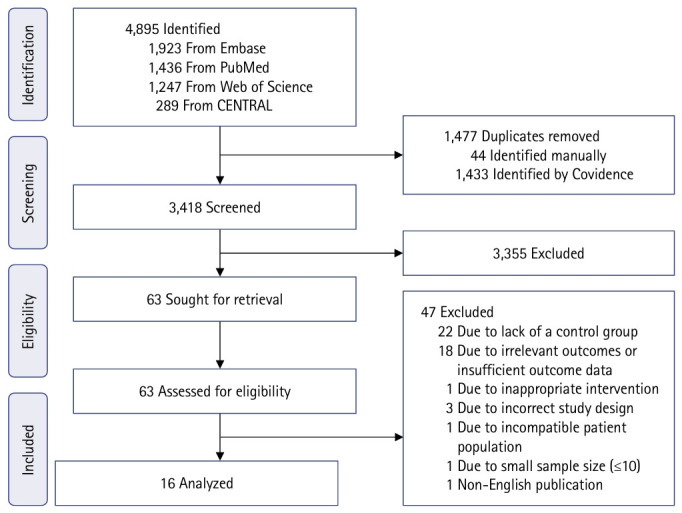
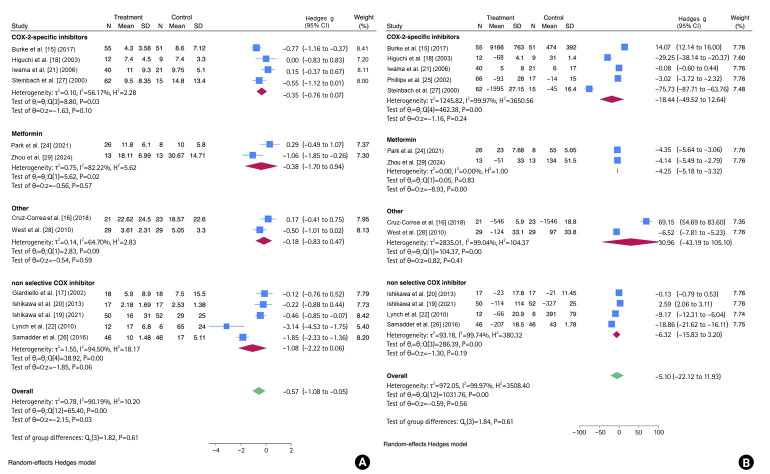
Results: Sixteen studies (n=985) met the inclusion criteria. The mean participant age was 38±8.3 years, with a mean follow-up of 14.6±15.8 months. Of these studies, 62.5% focused on colorectal polyps, 18.8% on rectal polyps, 18.8% on duodenal polyps, and 12.5% addressed both colorectal and duodenal polyps. Pharmacological interventions were associated with a modest but statistically significant reduction in the number of polyps (Hedges g, -0.57; 95% confidence interval [CI], -1.08 to -0.05) and in average polyp size (Hedges g, -0.26; 95% CI, -0.49 to -0.04). However, no significant reduction in overall polyp burden was observed (Hedges g, -1.07; 95% CI, -2.21 to 0.06). In subgroup analyses, nonselective cyclooxygenase inhibitors produced a large reduction in polyp burden (Hedges g, -2.72; 95% CI, -3.28 to -2.16), while metformin also demonstrated benefit in a single study (Hedges g, -1.06; 95% CI, -1.86 to -0.27). Adverse events were generally infrequent and comparable to placebo.
Conclusion: Chemopreventive interventions may reduce polyp number, burden, and size, and they appear to have a favorable safety profile.



 求助内容:
求助内容: 应助结果提醒方式:

 京公网安备 11010802042870号


