Yu-Hsun Chen, Chih-Chien Wu, Chien-Chou Su, Pei-Ting Lee, Yi-Chia Su
{"title":"一线西妥昔单抗或贝伐单抗治疗KRAS野生型转移性结直肠癌后原发肿瘤切除对生存率的影响,随后使用trifluridine/tipiracil或reorafenib治疗。","authors":"Yu-Hsun Chen, Chih-Chien Wu, Chien-Chou Su, Pei-Ting Lee, Yi-Chia Su","doi":"10.3393/ac.2025.00759.0108","DOIUrl":null,"url":null,"abstract":"<p><strong>Purpose: </strong>The optimal sequencing of targeted therapies and the role of primary tumor resection (PTR) in KRAS wild-type metastatic colorectal cancer (mCRC) remain unclear. This study compared survival outcomes in patients treated with first-line cetuximab plus FOLFIRI (folinic acid, 5-fluorouracil, and irinotecan) versus bevacizumab plus FOLFIRI, followed by second-line oxaliplatin-based chemotherapy and later-line trifluridine/tipiracil or regorafenib.</p><p><strong>Methods: </strong>This retrospective cohort study used Taiwan's National Health Insurance Research Database and the Taiwan Cancer Registry. Patients diagnosed with mCRC between 2013 and 2019 were included if they received first-line cetuximab or bevacizumab plus FOLFIRI, followed by later-line trifluridine/tipiracil or regorafenib. Patients were stratified by PTR status. Primary endpoints were overall survival and survival during trifluridine/tipiracil or regorafenib treatment. Secondary endpoints included time to treatment discontinuation (TTD) and TTD during trifluridine/tipiracil or regorafenib therapy. Stabilized inverse probability of treatment weighting was used for adjustment.</p><p><strong>Results: </strong>Among 559 patients, 278 were assigned to the non-PTR group and 281 to the PTR group. In the non-PTR group, the cetuximab cohort demonstrated significantly longer survival during trifluridine/tipiracil or regorafenib therapy (6.2 months vs. 4.9 months; hazard ratio [HR], 0.72) and longer TTD1 (the interval between initiation of first-line therapy and the start of second-line chemotherapy; 11.8 months vs. 9.5 months; HR, 0.67) than the bevacizumab cohort. Survival differences between regimens were less pronounced among patients who underwent PTR.</p><p><strong>Conclusion: </strong>First-line cetuximab plus FOLFIRI may confer a survival advantage over bevacizumab in patients with KRAS wild-type mCRC without PTR, including during later-line therapy with trifluridine/tipiracil or regorafenib, whereas bevacizumab appears to provide more consistent benefits in those with PTR.</p>","PeriodicalId":8267,"journal":{"name":"Annals of Coloproctology","volume":"42 1","pages":"127-140"},"PeriodicalIF":2.1000,"publicationDate":"2026-02-01","publicationTypes":"Journal Article","fieldsOfStudy":null,"isOpenAccess":false,"openAccessPdf":"https://www.ncbi.nlm.nih.gov/pmc/articles/PMC12971170/pdf/","citationCount":"0","resultStr":"{\"title\":\"Effectiveness of primary tumor resection for survival after first-line cetuximab or bevacizumab in KRAS wild-type metastatic colorectal cancer treated with subsequent trifluridine/tipiracil or regorafenib.\",\"authors\":\"Yu-Hsun Chen, Chih-Chien Wu, Chien-Chou Su, Pei-Ting Lee, Yi-Chia Su\",\"doi\":\"10.3393/ac.2025.00759.0108\",\"DOIUrl\":null,\"url\":null,\"abstract\":\"<p><strong>Purpose: </strong>The optimal sequencing of targeted therapies and the role of primary tumor resection (PTR) in KRAS wild-type metastatic colorectal cancer (mCRC) remain unclear. This study compared survival outcomes in patients treated with first-line cetuximab plus FOLFIRI (folinic acid, 5-fluorouracil, and irinotecan) versus bevacizumab plus FOLFIRI, followed by second-line oxaliplatin-based chemotherapy and later-line trifluridine/tipiracil or regorafenib.</p><p><strong>Methods: </strong>This retrospective cohort study used Taiwan's National Health Insurance Research Database and the Taiwan Cancer Registry. Patients diagnosed with mCRC between 2013 and 2019 were included if they received first-line cetuximab or bevacizumab plus FOLFIRI, followed by later-line trifluridine/tipiracil or regorafenib. Patients were stratified by PTR status. Primary endpoints were overall survival and survival during trifluridine/tipiracil or regorafenib treatment. Secondary endpoints included time to treatment discontinuation (TTD) and TTD during trifluridine/tipiracil or regorafenib therapy. Stabilized inverse probability of treatment weighting was used for adjustment.</p><p><strong>Results: </strong>Among 559 patients, 278 were assigned to the non-PTR group and 281 to the PTR group. In the non-PTR group, the cetuximab cohort demonstrated significantly longer survival during trifluridine/tipiracil or regorafenib therapy (6.2 months vs. 4.9 months; hazard ratio [HR], 0.72) and longer TTD1 (the interval between initiation of first-line therapy and the start of second-line chemotherapy; 11.8 months vs. 9.5 months; HR, 0.67) than the bevacizumab cohort. Survival differences between regimens were less pronounced among patients who underwent PTR.</p><p><strong>Conclusion: </strong>First-line cetuximab plus FOLFIRI may confer a survival advantage over bevacizumab in patients with KRAS wild-type mCRC without PTR, including during later-line therapy with trifluridine/tipiracil or regorafenib, whereas bevacizumab appears to provide more consistent benefits in those with PTR.</p>\",\"PeriodicalId\":8267,\"journal\":{\"name\":\"Annals of Coloproctology\",\"volume\":\"42 1\",\"pages\":\"127-140\"},\"PeriodicalIF\":2.1000,\"publicationDate\":\"2026-02-01\",\"publicationTypes\":\"Journal Article\",\"fieldsOfStudy\":null,\"isOpenAccess\":false,\"openAccessPdf\":\"https://www.ncbi.nlm.nih.gov/pmc/articles/PMC12971170/pdf/\",\"citationCount\":\"0\",\"resultStr\":null,\"platform\":\"Semanticscholar\",\"paperid\":null,\"PeriodicalName\":\"Annals of Coloproctology\",\"FirstCategoryId\":\"1085\",\"ListUrlMain\":\"https://doi.org/10.3393/ac.2025.00759.0108\",\"RegionNum\":0,\"RegionCategory\":null,\"ArticlePicture\":[],\"TitleCN\":null,\"AbstractTextCN\":null,\"PMCID\":null,\"EPubDate\":\"2026/2/27 0:00:00\",\"PubModel\":\"Epub\",\"JCR\":\"Q2\",\"JCRName\":\"GASTROENTEROLOGY & HEPATOLOGY\",\"Score\":null,\"Total\":0}","platform":"Semanticscholar","paperid":null,"PeriodicalName":"Annals of Coloproctology","FirstCategoryId":"1085","ListUrlMain":"https://doi.org/10.3393/ac.2025.00759.0108","RegionNum":0,"RegionCategory":null,"ArticlePicture":[],"TitleCN":null,"AbstractTextCN":null,"PMCID":null,"EPubDate":"2026/2/27 0:00:00","PubModel":"Epub","JCR":"Q2","JCRName":"GASTROENTEROLOGY & HEPATOLOGY","Score":null,"Total":0}
Effectiveness of primary tumor resection for survival after first-line cetuximab or bevacizumab in KRAS wild-type metastatic colorectal cancer treated with subsequent trifluridine/tipiracil or regorafenib.
Purpose: The optimal sequencing of targeted therapies and the role of primary tumor resection (PTR) in KRAS wild-type metastatic colorectal cancer (mCRC) remain unclear. This study compared survival outcomes in patients treated with first-line cetuximab plus FOLFIRI (folinic acid, 5-fluorouracil, and irinotecan) versus bevacizumab plus FOLFIRI, followed by second-line oxaliplatin-based chemotherapy and later-line trifluridine/tipiracil or regorafenib.
Methods: This retrospective cohort study used Taiwan's National Health Insurance Research Database and the Taiwan Cancer Registry. Patients diagnosed with mCRC between 2013 and 2019 were included if they received first-line cetuximab or bevacizumab plus FOLFIRI, followed by later-line trifluridine/tipiracil or regorafenib. Patients were stratified by PTR status. Primary endpoints were overall survival and survival during trifluridine/tipiracil or regorafenib treatment. Secondary endpoints included time to treatment discontinuation (TTD) and TTD during trifluridine/tipiracil or regorafenib therapy. Stabilized inverse probability of treatment weighting was used for adjustment.
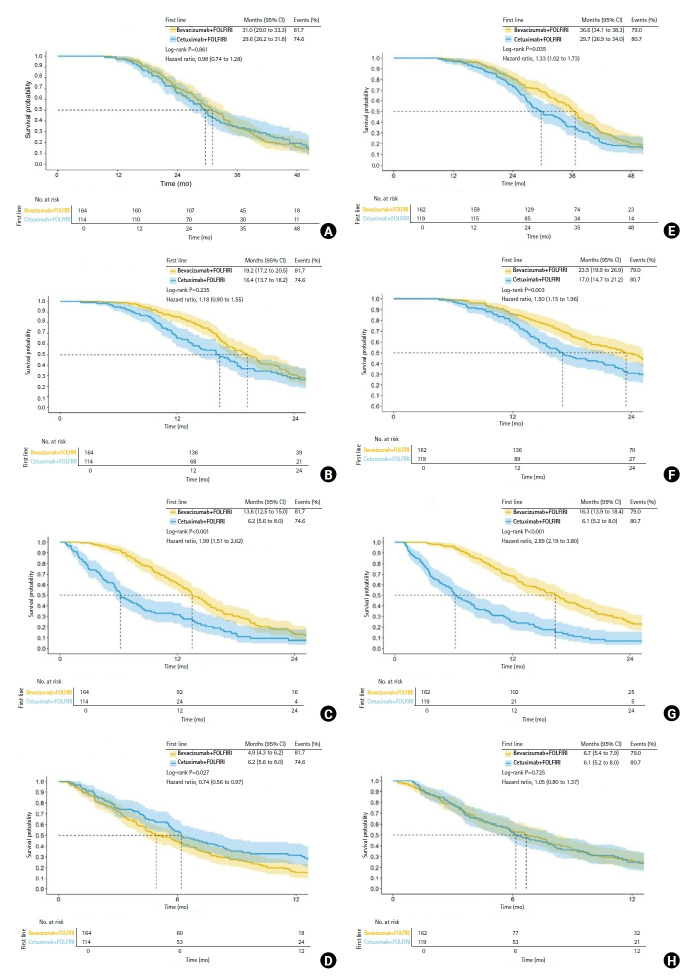
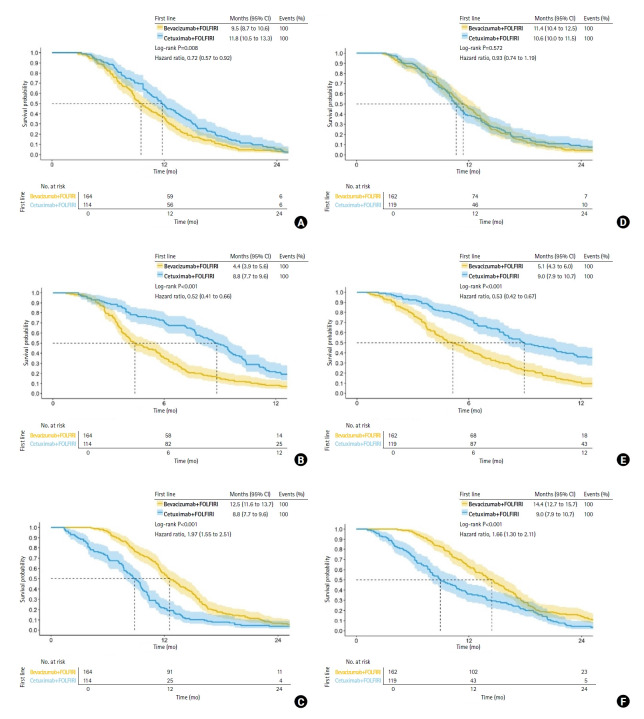
Results: Among 559 patients, 278 were assigned to the non-PTR group and 281 to the PTR group. In the non-PTR group, the cetuximab cohort demonstrated significantly longer survival during trifluridine/tipiracil or regorafenib therapy (6.2 months vs. 4.9 months; hazard ratio [HR], 0.72) and longer TTD1 (the interval between initiation of first-line therapy and the start of second-line chemotherapy; 11.8 months vs. 9.5 months; HR, 0.67) than the bevacizumab cohort. Survival differences between regimens were less pronounced among patients who underwent PTR.
Conclusion: First-line cetuximab plus FOLFIRI may confer a survival advantage over bevacizumab in patients with KRAS wild-type mCRC without PTR, including during later-line therapy with trifluridine/tipiracil or regorafenib, whereas bevacizumab appears to provide more consistent benefits in those with PTR.



 求助内容:
求助内容: 应助结果提醒方式:

 京公网安备 11010802042870号


