Paolo Taurisano , Ester Cornacchia , Maria Fara De Caro , Vittorio Fusco , Toni Ibrahim , Anna Ragno , Francesco Salonne , Giulia Paparella , Marta Betti , Serena Penpa , Maura Rossi , Rossella Hakim , Michela Pierini , Camillo Porta , Stella D’Oronzo
{"title":"COVID-19大流行对实体恶性肿瘤和骨转移患者的社会心理影响(PsyCO-B):一项多中心前瞻性观察研究","authors":"Paolo Taurisano , Ester Cornacchia , Maria Fara De Caro , Vittorio Fusco , Toni Ibrahim , Anna Ragno , Francesco Salonne , Giulia Paparella , Marta Betti , Serena Penpa , Maura Rossi , Rossella Hakim , Michela Pierini , Camillo Porta , Stella D’Oronzo","doi":"10.1016/j.jbo.2026.100744","DOIUrl":null,"url":null,"abstract":"<div><h3>Background</h3><div>COVID-19 pandemic dramatically changed our daily habits. Patients with cancer, particularly those with bone metastases (BM), were among the most concerned individuals, due to both their clinical condition and social distancing.</div></div><div><h3>Objectives</h3><div>This study aimed to explore psychosocial effects of the pandemic on patients with BM, investigating the role of clinical severity, psychological symptoms, coping strategies, and perceived traumatic impact.</div></div><div><h3>Methods</h3><div>Six questionnaires were administered to patients with BM from three Institutions: Hospital Anxiety-Depression Scale, WHO Quality of Life-BREF, Attitude Toward Seeking Professional Psychological Help, Brief Illness Perception Questionnaire, Brief COPE, and Impact Event Scale-Revised (IES-R). Clinical, pathological, and socio-demographic data were collected and analyzed using descriptive statistics. Clinical severity was estimated by applying a specific prognostic model. Statistical analyses included correlations, linear regressions and mediation analyses.</div></div><div><h3>Results</h3><div>Clinical severity was significantly associated with depressive symptoms whereas the perceived traumatic impact of the COVID-19 pandemic was strongly associated with anxiety, the use of specific coping strategies (social support, avoidance and religiosity) and greater openness to psychological support. Mediation analysis showed that the IES-R mediates the relationship between subjective perception of illness and anxiety.</div></div><div><h3>Conclusions</h3><div>During the pandemic, depressive symptoms in patients with BM were mainly related to their specific clinical condition, whereas those associated with anxiety were mostly due to the experience of pandemic-associated trauma. The psychological impact of the pandemic influenced coping strategies and the request for support, regardless of the disease severity. These findings highlight the importance of psycho-oncological support focused on the patient’s experience and clinical condition.</div></div>","PeriodicalId":48806,"journal":{"name":"Journal of Bone Oncology","volume":"57 ","pages":"Article 100744"},"PeriodicalIF":3.5000,"publicationDate":"2026-04-01","publicationTypes":"Journal Article","fieldsOfStudy":null,"isOpenAccess":false,"openAccessPdf":"","citationCount":"0","resultStr":"{\"title\":\"Psychosocial impact of COVID-19 pandemic on patients with solid malignancies and bone metastases (PsyCO-B): a multicentre prospective observational study\",\"authors\":\"Paolo Taurisano , Ester Cornacchia , Maria Fara De Caro , Vittorio Fusco , Toni Ibrahim , Anna Ragno , Francesco Salonne , Giulia Paparella , Marta Betti , Serena Penpa , Maura Rossi , Rossella Hakim , Michela Pierini , Camillo Porta , Stella D’Oronzo\",\"doi\":\"10.1016/j.jbo.2026.100744\",\"DOIUrl\":null,\"url\":null,\"abstract\":\"<div><h3>Background</h3><div>COVID-19 pandemic dramatically changed our daily habits. Patients with cancer, particularly those with bone metastases (BM), were among the most concerned individuals, due to both their clinical condition and social distancing.</div></div><div><h3>Objectives</h3><div>This study aimed to explore psychosocial effects of the pandemic on patients with BM, investigating the role of clinical severity, psychological symptoms, coping strategies, and perceived traumatic impact.</div></div><div><h3>Methods</h3><div>Six questionnaires were administered to patients with BM from three Institutions: Hospital Anxiety-Depression Scale, WHO Quality of Life-BREF, Attitude Toward Seeking Professional Psychological Help, Brief Illness Perception Questionnaire, Brief COPE, and Impact Event Scale-Revised (IES-R). Clinical, pathological, and socio-demographic data were collected and analyzed using descriptive statistics. Clinical severity was estimated by applying a specific prognostic model. Statistical analyses included correlations, linear regressions and mediation analyses.</div></div><div><h3>Results</h3><div>Clinical severity was significantly associated with depressive symptoms whereas the perceived traumatic impact of the COVID-19 pandemic was strongly associated with anxiety, the use of specific coping strategies (social support, avoidance and religiosity) and greater openness to psychological support. Mediation analysis showed that the IES-R mediates the relationship between subjective perception of illness and anxiety.</div></div><div><h3>Conclusions</h3><div>During the pandemic, depressive symptoms in patients with BM were mainly related to their specific clinical condition, whereas those associated with anxiety were mostly due to the experience of pandemic-associated trauma. The psychological impact of the pandemic influenced coping strategies and the request for support, regardless of the disease severity. These findings highlight the importance of psycho-oncological support focused on the patient’s experience and clinical condition.</div></div>\",\"PeriodicalId\":48806,\"journal\":{\"name\":\"Journal of Bone Oncology\",\"volume\":\"57 \",\"pages\":\"Article 100744\"},\"PeriodicalIF\":3.5000,\"publicationDate\":\"2026-04-01\",\"publicationTypes\":\"Journal Article\",\"fieldsOfStudy\":null,\"isOpenAccess\":false,\"openAccessPdf\":\"\",\"citationCount\":\"0\",\"resultStr\":null,\"platform\":\"Semanticscholar\",\"paperid\":null,\"PeriodicalName\":\"Journal of Bone Oncology\",\"FirstCategoryId\":\"3\",\"ListUrlMain\":\"https://www.sciencedirect.com/science/article/pii/S2212137426000060\",\"RegionNum\":2,\"RegionCategory\":\"医学\",\"ArticlePicture\":[],\"TitleCN\":null,\"AbstractTextCN\":null,\"PMCID\":null,\"EPubDate\":\"2026/1/28 0:00:00\",\"PubModel\":\"Epub\",\"JCR\":\"Q2\",\"JCRName\":\"Medicine\",\"Score\":null,\"Total\":0}","platform":"Semanticscholar","paperid":null,"PeriodicalName":"Journal of Bone Oncology","FirstCategoryId":"3","ListUrlMain":"https://www.sciencedirect.com/science/article/pii/S2212137426000060","RegionNum":2,"RegionCategory":"医学","ArticlePicture":[],"TitleCN":null,"AbstractTextCN":null,"PMCID":null,"EPubDate":"2026/1/28 0:00:00","PubModel":"Epub","JCR":"Q2","JCRName":"Medicine","Score":null,"Total":0}
Psychosocial impact of COVID-19 pandemic on patients with solid malignancies and bone metastases (PsyCO-B): a multicentre prospective observational study
Background
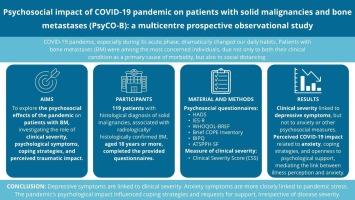
COVID-19 pandemic dramatically changed our daily habits. Patients with cancer, particularly those with bone metastases (BM), were among the most concerned individuals, due to both their clinical condition and social distancing.
Objectives
This study aimed to explore psychosocial effects of the pandemic on patients with BM, investigating the role of clinical severity, psychological symptoms, coping strategies, and perceived traumatic impact.
Methods
Six questionnaires were administered to patients with BM from three Institutions: Hospital Anxiety-Depression Scale, WHO Quality of Life-BREF, Attitude Toward Seeking Professional Psychological Help, Brief Illness Perception Questionnaire, Brief COPE, and Impact Event Scale-Revised (IES-R). Clinical, pathological, and socio-demographic data were collected and analyzed using descriptive statistics. Clinical severity was estimated by applying a specific prognostic model. Statistical analyses included correlations, linear regressions and mediation analyses.
Results
Clinical severity was significantly associated with depressive symptoms whereas the perceived traumatic impact of the COVID-19 pandemic was strongly associated with anxiety, the use of specific coping strategies (social support, avoidance and religiosity) and greater openness to psychological support. Mediation analysis showed that the IES-R mediates the relationship between subjective perception of illness and anxiety.
Conclusions
During the pandemic, depressive symptoms in patients with BM were mainly related to their specific clinical condition, whereas those associated with anxiety were mostly due to the experience of pandemic-associated trauma. The psychological impact of the pandemic influenced coping strategies and the request for support, regardless of the disease severity. These findings highlight the importance of psycho-oncological support focused on the patient’s experience and clinical condition.
期刊介绍:
The Journal of Bone Oncology is a peer-reviewed international journal aimed at presenting basic, translational and clinical high-quality research related to bone and cancer.
As the first journal dedicated to cancer induced bone diseases, JBO welcomes original research articles, review articles, editorials and opinion pieces. Case reports will only be considered in exceptional circumstances and only when accompanied by a comprehensive review of the subject.
The areas covered by the journal include:
Bone metastases (pathophysiology, epidemiology, diagnostics, clinical features, prevention, treatment)
Preclinical models of metastasis
Bone microenvironment in cancer (stem cell, bone cell and cancer interactions)
Bone targeted therapy (pharmacology, therapeutic targets, drug development, clinical trials, side-effects, outcome research, health economics)
Cancer treatment induced bone loss (epidemiology, pathophysiology, prevention and management)
Bone imaging (clinical and animal, skeletal interventional radiology)
Bone biomarkers (clinical and translational applications)
Radiotherapy and radio-isotopes
Skeletal complications
Bone pain (mechanisms and management)
Orthopaedic cancer surgery
Primary bone tumours
Clinical guidelines
Multidisciplinary care
Keywords: bisphosphonate, bone, breast cancer, cancer, CTIBL, denosumab, metastasis, myeloma, osteoblast, osteoclast, osteooncology, osteo-oncology, prostate cancer, skeleton, tumour.