{"title":"机器学习与腹主动脉瘤:血管内动脉瘤修复后预测和预后的新范式。","authors":"Toshiya Nishibe, Tsuyoshi Iwasa, Shoji Fukuda, Tomohiro Nakajima, Shinichiro Shimura, Masayasu Nishibe, Alan Dardik","doi":"10.3400/avd.ra.25-00120","DOIUrl":null,"url":null,"abstract":"<p><p>Artificial intelligence (AI) and machine learning (ML) are transforming vascular surgery by enabling precise risk stratification, individualized treatment planning, and improved prognostic prediction. In abdominal aortic aneurysm (AAA) management, ML algorithms integrate complex clinical and imaging data to estimate survival, guide procedural decisions, and identify key factors influencing aneurysm remodeling. These models outperform traditional statistical approaches by capturing nonlinear interactions among variables such as nutritional status, immune function, and anatomical features. Despite these advances, challenges remain. Many studies rely on single-center datasets, raising concerns about overfitting and limited generalizability. The use of black-box models can hinder clinical trust due to limited interpretability. However, recent developments in multicenter data collection and explainable AI techniques are improving model robustness and transparency. As these tools continue to evolve, ML is poised to contribute meaningfully to precision vascular care. By supporting more individualized and data-informed decision-making, ML has the potential to enhance long-term outcomes and guide the future of AAA management after endovascular aneurysm repair.</p>","PeriodicalId":7995,"journal":{"name":"Annals of vascular diseases","volume":"19 1","pages":""},"PeriodicalIF":0.6000,"publicationDate":"2026-01-01","publicationTypes":"Journal Article","fieldsOfStudy":null,"isOpenAccess":false,"openAccessPdf":"https://www.ncbi.nlm.nih.gov/pmc/articles/PMC12826844/pdf/","citationCount":"0","resultStr":"{\"title\":\"Machine Learning and Abdominal Aortic Aneurysm: A New Paradigm in Prediction and Prognosis after Endovascular Aneurysm Repair.\",\"authors\":\"Toshiya Nishibe, Tsuyoshi Iwasa, Shoji Fukuda, Tomohiro Nakajima, Shinichiro Shimura, Masayasu Nishibe, Alan Dardik\",\"doi\":\"10.3400/avd.ra.25-00120\",\"DOIUrl\":null,\"url\":null,\"abstract\":\"<p><p>Artificial intelligence (AI) and machine learning (ML) are transforming vascular surgery by enabling precise risk stratification, individualized treatment planning, and improved prognostic prediction. In abdominal aortic aneurysm (AAA) management, ML algorithms integrate complex clinical and imaging data to estimate survival, guide procedural decisions, and identify key factors influencing aneurysm remodeling. These models outperform traditional statistical approaches by capturing nonlinear interactions among variables such as nutritional status, immune function, and anatomical features. Despite these advances, challenges remain. Many studies rely on single-center datasets, raising concerns about overfitting and limited generalizability. The use of black-box models can hinder clinical trust due to limited interpretability. However, recent developments in multicenter data collection and explainable AI techniques are improving model robustness and transparency. As these tools continue to evolve, ML is poised to contribute meaningfully to precision vascular care. By supporting more individualized and data-informed decision-making, ML has the potential to enhance long-term outcomes and guide the future of AAA management after endovascular aneurysm repair.</p>\",\"PeriodicalId\":7995,\"journal\":{\"name\":\"Annals of vascular diseases\",\"volume\":\"19 1\",\"pages\":\"\"},\"PeriodicalIF\":0.6000,\"publicationDate\":\"2026-01-01\",\"publicationTypes\":\"Journal Article\",\"fieldsOfStudy\":null,\"isOpenAccess\":false,\"openAccessPdf\":\"https://www.ncbi.nlm.nih.gov/pmc/articles/PMC12826844/pdf/\",\"citationCount\":\"0\",\"resultStr\":null,\"platform\":\"Semanticscholar\",\"paperid\":null,\"PeriodicalName\":\"Annals of vascular diseases\",\"FirstCategoryId\":\"1085\",\"ListUrlMain\":\"https://doi.org/10.3400/avd.ra.25-00120\",\"RegionNum\":0,\"RegionCategory\":null,\"ArticlePicture\":[],\"TitleCN\":null,\"AbstractTextCN\":null,\"PMCID\":null,\"EPubDate\":\"2026/1/20 0:00:00\",\"PubModel\":\"Epub\",\"JCR\":\"Q4\",\"JCRName\":\"PERIPHERAL VASCULAR DISEASE\",\"Score\":null,\"Total\":0}","platform":"Semanticscholar","paperid":null,"PeriodicalName":"Annals of vascular diseases","FirstCategoryId":"1085","ListUrlMain":"https://doi.org/10.3400/avd.ra.25-00120","RegionNum":0,"RegionCategory":null,"ArticlePicture":[],"TitleCN":null,"AbstractTextCN":null,"PMCID":null,"EPubDate":"2026/1/20 0:00:00","PubModel":"Epub","JCR":"Q4","JCRName":"PERIPHERAL VASCULAR DISEASE","Score":null,"Total":0}
Machine Learning and Abdominal Aortic Aneurysm: A New Paradigm in Prediction and Prognosis after Endovascular Aneurysm Repair.
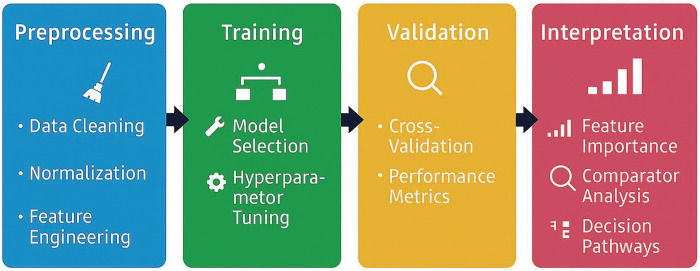
Artificial intelligence (AI) and machine learning (ML) are transforming vascular surgery by enabling precise risk stratification, individualized treatment planning, and improved prognostic prediction. In abdominal aortic aneurysm (AAA) management, ML algorithms integrate complex clinical and imaging data to estimate survival, guide procedural decisions, and identify key factors influencing aneurysm remodeling. These models outperform traditional statistical approaches by capturing nonlinear interactions among variables such as nutritional status, immune function, and anatomical features. Despite these advances, challenges remain. Many studies rely on single-center datasets, raising concerns about overfitting and limited generalizability. The use of black-box models can hinder clinical trust due to limited interpretability. However, recent developments in multicenter data collection and explainable AI techniques are improving model robustness and transparency. As these tools continue to evolve, ML is poised to contribute meaningfully to precision vascular care. By supporting more individualized and data-informed decision-making, ML has the potential to enhance long-term outcomes and guide the future of AAA management after endovascular aneurysm repair.



 求助内容:
求助内容: 应助结果提醒方式:

 京公网安备 11010802042870号


