Mohtashim Lohani , Nizar Ahmad Khamjan , Sajad Ahmad Dar , Farrukh Aqil , Saif Khan , Arshad Jawed , Saba Beigh , Iffat Zareen Ahmad
{"title":"维生素D受体突变的结构和功能见解:多态性诱导抗性的计算机研究","authors":"Mohtashim Lohani , Nizar Ahmad Khamjan , Sajad Ahmad Dar , Farrukh Aqil , Saif Khan , Arshad Jawed , Saba Beigh , Iffat Zareen Ahmad","doi":"10.1016/j.bpc.2026.107579","DOIUrl":null,"url":null,"abstract":"<div><div>Vitamin D is critical for calcium homeostasis, bone health, and immune regulation via the Vitamin D Receptor. Mutations in the ligand-binding domain and DNA-binding domain can disrupt ligand interactions, causing biologically active metabolite of vitamin D [1α,25-dihydroxyvitamin D3 (calcitriol)] resistance and clinical complications such as hereditary rickets and immune dysregulation. This study explored the structural and functional effects of VDR missense mutations using computational approaches. An AlphaFold-generated VDR model incorporated selected mutations from 503 reported variants, of which 62 were likely pathogenic. Ten LBD mutations were analyzed. Molecular docking assessed Vitamin D3 binding, while molecular dynamics simulations, Root Mean Square Deviation, Radius of Gyration, and Principal Component Analysis evaluated structural stability. CASTp analyses identified key residues in the binding pocket, and downstream non-genomic pathways were assessed to interpret functional effects. Mutations R → H and R → L at position 274, and H → Q at position 305, exhibited minimal RMSD and Rg fluctuations, indicating stable protein conformations. Docking revealed reduced binding affinities (−8.9, −8.8, −9.0 kcal/mol) relative to wild-type (−9.9 kcal/mol), suggesting altered ligand-binding geometry. Other mutations showed greater structural deviations, indicating potential impairment of receptor function. Functional analysis suggested disruption of signaling essential for calcium homeostasis, bone mineralization, and immune regulation. These results demonstrate that missense mutations in the VDR LBD compromise Vitamin D3 binding and receptor stability, contributing to resistance and related skeletal and immune abnormalities. Computational modeling offers a framework to identify pathogenic variants and guide therapeutic strategies, including small molecules, peptide therapies, CRISPR-Cas9 editing, or Vitamin D analogs to restore receptor function and improve clinical outcomes.</div></div>","PeriodicalId":8979,"journal":{"name":"Biophysical chemistry","volume":"331 ","pages":"Article 107579"},"PeriodicalIF":2.2000,"publicationDate":"2026-04-01","publicationTypes":"Journal Article","fieldsOfStudy":null,"isOpenAccess":false,"openAccessPdf":"","citationCount":"0","resultStr":"{\"title\":\"Structural and functional insights into Vitamin D receptor mutations: An in-silico investigation of polymorphism-induced resistance\",\"authors\":\"Mohtashim Lohani , Nizar Ahmad Khamjan , Sajad Ahmad Dar , Farrukh Aqil , Saif Khan , Arshad Jawed , Saba Beigh , Iffat Zareen Ahmad\",\"doi\":\"10.1016/j.bpc.2026.107579\",\"DOIUrl\":null,\"url\":null,\"abstract\":\"<div><div>Vitamin D is critical for calcium homeostasis, bone health, and immune regulation via the Vitamin D Receptor. Mutations in the ligand-binding domain and DNA-binding domain can disrupt ligand interactions, causing biologically active metabolite of vitamin D [1α,25-dihydroxyvitamin D3 (calcitriol)] resistance and clinical complications such as hereditary rickets and immune dysregulation. This study explored the structural and functional effects of VDR missense mutations using computational approaches. An AlphaFold-generated VDR model incorporated selected mutations from 503 reported variants, of which 62 were likely pathogenic. Ten LBD mutations were analyzed. Molecular docking assessed Vitamin D3 binding, while molecular dynamics simulations, Root Mean Square Deviation, Radius of Gyration, and Principal Component Analysis evaluated structural stability. CASTp analyses identified key residues in the binding pocket, and downstream non-genomic pathways were assessed to interpret functional effects. Mutations R → H and R → L at position 274, and H → Q at position 305, exhibited minimal RMSD and Rg fluctuations, indicating stable protein conformations. Docking revealed reduced binding affinities (−8.9, −8.8, −9.0 kcal/mol) relative to wild-type (−9.9 kcal/mol), suggesting altered ligand-binding geometry. Other mutations showed greater structural deviations, indicating potential impairment of receptor function. Functional analysis suggested disruption of signaling essential for calcium homeostasis, bone mineralization, and immune regulation. These results demonstrate that missense mutations in the VDR LBD compromise Vitamin D3 binding and receptor stability, contributing to resistance and related skeletal and immune abnormalities. Computational modeling offers a framework to identify pathogenic variants and guide therapeutic strategies, including small molecules, peptide therapies, CRISPR-Cas9 editing, or Vitamin D analogs to restore receptor function and improve clinical outcomes.</div></div>\",\"PeriodicalId\":8979,\"journal\":{\"name\":\"Biophysical chemistry\",\"volume\":\"331 \",\"pages\":\"Article 107579\"},\"PeriodicalIF\":2.2000,\"publicationDate\":\"2026-04-01\",\"publicationTypes\":\"Journal Article\",\"fieldsOfStudy\":null,\"isOpenAccess\":false,\"openAccessPdf\":\"\",\"citationCount\":\"0\",\"resultStr\":null,\"platform\":\"Semanticscholar\",\"paperid\":null,\"PeriodicalName\":\"Biophysical chemistry\",\"FirstCategoryId\":\"99\",\"ListUrlMain\":\"https://www.sciencedirect.com/science/article/pii/S0301462226000128\",\"RegionNum\":3,\"RegionCategory\":\"生物学\",\"ArticlePicture\":[],\"TitleCN\":null,\"AbstractTextCN\":null,\"PMCID\":null,\"EPubDate\":\"2026/1/14 0:00:00\",\"PubModel\":\"Epub\",\"JCR\":\"Q2\",\"JCRName\":\"BIOCHEMISTRY & MOLECULAR BIOLOGY\",\"Score\":null,\"Total\":0}","platform":"Semanticscholar","paperid":null,"PeriodicalName":"Biophysical chemistry","FirstCategoryId":"99","ListUrlMain":"https://www.sciencedirect.com/science/article/pii/S0301462226000128","RegionNum":3,"RegionCategory":"生物学","ArticlePicture":[],"TitleCN":null,"AbstractTextCN":null,"PMCID":null,"EPubDate":"2026/1/14 0:00:00","PubModel":"Epub","JCR":"Q2","JCRName":"BIOCHEMISTRY & MOLECULAR BIOLOGY","Score":null,"Total":0}
Structural and functional insights into Vitamin D receptor mutations: An in-silico investigation of polymorphism-induced resistance
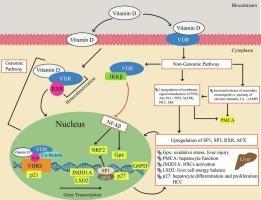
Vitamin D is critical for calcium homeostasis, bone health, and immune regulation via the Vitamin D Receptor. Mutations in the ligand-binding domain and DNA-binding domain can disrupt ligand interactions, causing biologically active metabolite of vitamin D [1α,25-dihydroxyvitamin D3 (calcitriol)] resistance and clinical complications such as hereditary rickets and immune dysregulation. This study explored the structural and functional effects of VDR missense mutations using computational approaches. An AlphaFold-generated VDR model incorporated selected mutations from 503 reported variants, of which 62 were likely pathogenic. Ten LBD mutations were analyzed. Molecular docking assessed Vitamin D3 binding, while molecular dynamics simulations, Root Mean Square Deviation, Radius of Gyration, and Principal Component Analysis evaluated structural stability. CASTp analyses identified key residues in the binding pocket, and downstream non-genomic pathways were assessed to interpret functional effects. Mutations R → H and R → L at position 274, and H → Q at position 305, exhibited minimal RMSD and Rg fluctuations, indicating stable protein conformations. Docking revealed reduced binding affinities (−8.9, −8.8, −9.0 kcal/mol) relative to wild-type (−9.9 kcal/mol), suggesting altered ligand-binding geometry. Other mutations showed greater structural deviations, indicating potential impairment of receptor function. Functional analysis suggested disruption of signaling essential for calcium homeostasis, bone mineralization, and immune regulation. These results demonstrate that missense mutations in the VDR LBD compromise Vitamin D3 binding and receptor stability, contributing to resistance and related skeletal and immune abnormalities. Computational modeling offers a framework to identify pathogenic variants and guide therapeutic strategies, including small molecules, peptide therapies, CRISPR-Cas9 editing, or Vitamin D analogs to restore receptor function and improve clinical outcomes.
期刊介绍:
Biophysical Chemistry publishes original work and reviews in the areas of chemistry and physics directly impacting biological phenomena. Quantitative analysis of the properties of biological macromolecules, biologically active molecules, macromolecular assemblies and cell components in terms of kinetics, thermodynamics, spatio-temporal organization, NMR and X-ray structural biology, as well as single-molecule detection represent a major focus of the journal. Theoretical and computational treatments of biomacromolecular systems, macromolecular interactions, regulatory control and systems biology are also of interest to the journal.