Chen Liu, Ye-Qi Wu, Kai-Qi Wang, Ya Wen, Qiu-Shuang Li, Xiao-Min Chen, Ding Tang, Hong-Gen Du, Shao Chen
{"title":"脊柱推拿治疗中重度青少年特发性脊柱侧凸:一项随机对照试验。","authors":"Chen Liu, Ye-Qi Wu, Kai-Qi Wang, Ya Wen, Qiu-Shuang Li, Xiao-Min Chen, Ding Tang, Hong-Gen Du, Shao Chen","doi":"10.1007/s11655-025-4228-8","DOIUrl":null,"url":null,"abstract":"<p><strong>Objective: </strong>To investigate the role of spinal manipulative therapy (SMT) in preventing progression and reducing the need for surgery in moderate-to-severe adolescent idiopathic scoliosis (AIS).</p><p><strong>Methods: </strong>This randomized controlled clinical trial was conducted at the First Affiliated Hospital of Zhejiang Chinese Medical University between January 1, 2022, and December 31, 2023. Overall, 118 AIS patients were randomly divided into 2 groups by simple randomization: one receiving SMT combined with brace treatment (SMTB group, 59 participants), SMT was given twice weekly, brace was worn for 23 h per day) and the other receiving brace treatment alone (BA group, 59 participants, brace was worn for 23 h per day). The primary outcome measure was the success rate after 12-month treatment. The secondary outcomes related to scoliosis, including the Cobb angle, angle trunk rotation (ATR), and Scoliosis Research Society-22 (SRS-22) score were measured. All the above indicators were subjected to subgroup analysis based on the degree of scoliosis (moderate and severe). Adverse events were observed and recorded.</p><p><strong>Results: </strong>Modified intention-to-treat analyses included 112 participants (SMTB group and BA group each had 56 participants, 101 girls and 11 boys; 15.11 ± 1.69 years). The success rate was significantly higher in the SMTB group [78.6% (44/56)] than in the BA group [51.8% (29/56), P<0.01]. Among the secondary outcomes, SMTB group was more effective than BA group in reducing the Cobb angle (difference, -3.93; 95% confidence interval [CI], -6.11 to -1.74, P<0.05); SMTB group showed a greater reduction in ATR compared to BA group (difference, -2.34; 95% CI, -3.46, -1.22, P<0.05) and demonstrated superior efficacy to BA in improving SRS-22 score (difference, 6.57; 95% CI, 4.55 to 8.59, P<0.05). Subgroup analysis showed that SMT had similar efficacy in the treatment of moderate and severe AIS. Safety analyses did not differ significantly between the two groups (P>0.05).</p><p><strong>Conclusion: </strong>SMT appears to be safe and beneficial for moderate-to-severe AIS. (Trial registration No. NCT06648005).</p>","PeriodicalId":10005,"journal":{"name":"Chinese Journal of Integrative Medicine","volume":" ","pages":"387-395"},"PeriodicalIF":2.5000,"publicationDate":"2026-05-01","publicationTypes":"Journal Article","fieldsOfStudy":null,"isOpenAccess":false,"openAccessPdf":"","citationCount":"0","resultStr":"{\"title\":\"Spinal Manipulative Therapy for Moderate-to-Severe Adolescent Idiopathic Scoliosis: A Randomized Controlled Trial.\",\"authors\":\"Chen Liu, Ye-Qi Wu, Kai-Qi Wang, Ya Wen, Qiu-Shuang Li, Xiao-Min Chen, Ding Tang, Hong-Gen Du, Shao Chen\",\"doi\":\"10.1007/s11655-025-4228-8\",\"DOIUrl\":null,\"url\":null,\"abstract\":\"<p><strong>Objective: </strong>To investigate the role of spinal manipulative therapy (SMT) in preventing progression and reducing the need for surgery in moderate-to-severe adolescent idiopathic scoliosis (AIS).</p><p><strong>Methods: </strong>This randomized controlled clinical trial was conducted at the First Affiliated Hospital of Zhejiang Chinese Medical University between January 1, 2022, and December 31, 2023. Overall, 118 AIS patients were randomly divided into 2 groups by simple randomization: one receiving SMT combined with brace treatment (SMTB group, 59 participants), SMT was given twice weekly, brace was worn for 23 h per day) and the other receiving brace treatment alone (BA group, 59 participants, brace was worn for 23 h per day). The primary outcome measure was the success rate after 12-month treatment. The secondary outcomes related to scoliosis, including the Cobb angle, angle trunk rotation (ATR), and Scoliosis Research Society-22 (SRS-22) score were measured. All the above indicators were subjected to subgroup analysis based on the degree of scoliosis (moderate and severe). Adverse events were observed and recorded.</p><p><strong>Results: </strong>Modified intention-to-treat analyses included 112 participants (SMTB group and BA group each had 56 participants, 101 girls and 11 boys; 15.11 ± 1.69 years). The success rate was significantly higher in the SMTB group [78.6% (44/56)] than in the BA group [51.8% (29/56), P<0.01]. Among the secondary outcomes, SMTB group was more effective than BA group in reducing the Cobb angle (difference, -3.93; 95% confidence interval [CI], -6.11 to -1.74, P<0.05); SMTB group showed a greater reduction in ATR compared to BA group (difference, -2.34; 95% CI, -3.46, -1.22, P<0.05) and demonstrated superior efficacy to BA in improving SRS-22 score (difference, 6.57; 95% CI, 4.55 to 8.59, P<0.05). Subgroup analysis showed that SMT had similar efficacy in the treatment of moderate and severe AIS. Safety analyses did not differ significantly between the two groups (P>0.05).</p><p><strong>Conclusion: </strong>SMT appears to be safe and beneficial for moderate-to-severe AIS. (Trial registration No. NCT06648005).</p>\",\"PeriodicalId\":10005,\"journal\":{\"name\":\"Chinese Journal of Integrative Medicine\",\"volume\":\" \",\"pages\":\"387-395\"},\"PeriodicalIF\":2.5000,\"publicationDate\":\"2026-05-01\",\"publicationTypes\":\"Journal Article\",\"fieldsOfStudy\":null,\"isOpenAccess\":false,\"openAccessPdf\":\"\",\"citationCount\":\"0\",\"resultStr\":null,\"platform\":\"Semanticscholar\",\"paperid\":null,\"PeriodicalName\":\"Chinese Journal of Integrative Medicine\",\"FirstCategoryId\":\"3\",\"ListUrlMain\":\"https://doi.org/10.1007/s11655-025-4228-8\",\"RegionNum\":3,\"RegionCategory\":\"医学\",\"ArticlePicture\":[],\"TitleCN\":null,\"AbstractTextCN\":null,\"PMCID\":null,\"EPubDate\":\"2025/12/22 0:00:00\",\"PubModel\":\"Epub\",\"JCR\":\"Q2\",\"JCRName\":\"INTEGRATIVE & COMPLEMENTARY MEDICINE\",\"Score\":null,\"Total\":0}","platform":"Semanticscholar","paperid":null,"PeriodicalName":"Chinese Journal of Integrative Medicine","FirstCategoryId":"3","ListUrlMain":"https://doi.org/10.1007/s11655-025-4228-8","RegionNum":3,"RegionCategory":"医学","ArticlePicture":[],"TitleCN":null,"AbstractTextCN":null,"PMCID":null,"EPubDate":"2025/12/22 0:00:00","PubModel":"Epub","JCR":"Q2","JCRName":"INTEGRATIVE & COMPLEMENTARY MEDICINE","Score":null,"Total":0}
Spinal Manipulative Therapy for Moderate-to-Severe Adolescent Idiopathic Scoliosis: A Randomized Controlled Trial.
Objective: To investigate the role of spinal manipulative therapy (SMT) in preventing progression and reducing the need for surgery in moderate-to-severe adolescent idiopathic scoliosis (AIS).
Methods: This randomized controlled clinical trial was conducted at the First Affiliated Hospital of Zhejiang Chinese Medical University between January 1, 2022, and December 31, 2023. Overall, 118 AIS patients were randomly divided into 2 groups by simple randomization: one receiving SMT combined with brace treatment (SMTB group, 59 participants), SMT was given twice weekly, brace was worn for 23 h per day) and the other receiving brace treatment alone (BA group, 59 participants, brace was worn for 23 h per day). The primary outcome measure was the success rate after 12-month treatment. The secondary outcomes related to scoliosis, including the Cobb angle, angle trunk rotation (ATR), and Scoliosis Research Society-22 (SRS-22) score were measured. All the above indicators were subjected to subgroup analysis based on the degree of scoliosis (moderate and severe). Adverse events were observed and recorded.
Results: Modified intention-to-treat analyses included 112 participants (SMTB group and BA group each had 56 participants, 101 girls and 11 boys; 15.11 ± 1.69 years). The success rate was significantly higher in the SMTB group [78.6% (44/56)] than in the BA group [51.8% (29/56), P<0.01]. Among the secondary outcomes, SMTB group was more effective than BA group in reducing the Cobb angle (difference, -3.93; 95% confidence interval [CI], -6.11 to -1.74, P<0.05); SMTB group showed a greater reduction in ATR compared to BA group (difference, -2.34; 95% CI, -3.46, -1.22, P<0.05) and demonstrated superior efficacy to BA in improving SRS-22 score (difference, 6.57; 95% CI, 4.55 to 8.59, P<0.05). Subgroup analysis showed that SMT had similar efficacy in the treatment of moderate and severe AIS. Safety analyses did not differ significantly between the two groups (P>0.05).
Conclusion: SMT appears to be safe and beneficial for moderate-to-severe AIS. (Trial registration No. NCT06648005).
期刊介绍:
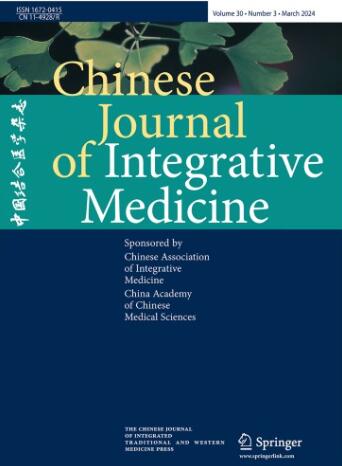
Chinese Journal of Integrative Medicine seeks to promote international communication and exchange on integrative medicine as well as complementary and alternative medicine (CAM) and provide a rapid forum for the dissemination of scientific articles focusing on the latest developments and trends as well as experiences and achievements on integrative medicine or CAM in clinical practice, scientific research, education and healthcare.

 求助内容:
求助内容: 应助结果提醒方式:

 京公网安备 11010802042870号


