Maarja Soomann, Seraina Prader, Philipp K A Agyeman, Geraldine Blanchard-Rohner, Michael Buettcher, Christian R Kahlert, Nicole Ritz, Aikaterini Theodoropoulou, Jana Pachlopnik Schmid, Johannes Trück
{"title":"通过新生儿筛查检测非scid t细胞淋巴减少症的瑞士婴儿的自然史:一项队列研究。","authors":"Maarja Soomann, Seraina Prader, Philipp K A Agyeman, Geraldine Blanchard-Rohner, Michael Buettcher, Christian R Kahlert, Nicole Ritz, Aikaterini Theodoropoulou, Jana Pachlopnik Schmid, Johannes Trück","doi":"10.1007/s10875-025-01945-4","DOIUrl":null,"url":null,"abstract":"<p><strong>Background: </strong>Newborn screening (NBS) by quantification of T-cell receptor excision circles (TREC) identifies a considerable number of infants with T-cell lymphopenia (TCL) other than severe combined immunodeficiency (SCID). While some of these children have well-defined inborn errors of immunity (IEI), many lack a clear genetic diagnosis, complicating their management and causing prognostic uncertainty.</p><p><strong>Objective: </strong>To characterize the natural history of non-SCID TCL detected through NBS in Swiss infants between 2019 and 2023.</p><p><strong>Methods: </strong>Clinical, genetic and laboratory data from all non-SCID TCL cases were extracted from the national NBS registry and analyzed.</p><p><strong>Results: </strong>Out of 435 985 screened infants, 42 patients were identified with non-SCID, non-congenital athymia TCL, without an obvious secondary cause. A clear genetic diagnosis of IEI was established in 20 (48%) patients. Infants with confirmed IEI had significantly lower total T-cell, CD4 + T-cell and recent thymic emigrant (RTE) counts on initial lymphocyte phenotyping. In contrast, those with an unclear genetic diagnosis despite full investigations demonstrated faster normalization of total T-cell counts (hazard ratio 5.2, 95% CI 1.9 to 14.5, p = 0.001). All infants with initial CD4 + T-cell < 0.3 × 10<sup>9</sup>/L showed minimal recovery of T-cell counts and remained on long-term prophylactic measures. All infants with an unclear genetic diagnosis despite investigations were able to discontinue prophylaxis at median age 6 months without experiencing opportunistic or severe infections.</p><p><strong>Conclusion: </strong>Infants with non-SCID TCL identified by NBS represent a heterogenous group, ranging from severe, persistent TCL to mild, transient lymphopenia. Management should be tailored based on individual immunological and genetic profiles.</p>","PeriodicalId":15531,"journal":{"name":"Journal of Clinical Immunology","volume":"45 1","pages":"166"},"PeriodicalIF":4.1000,"publicationDate":"2025-11-25","publicationTypes":"Journal Article","fieldsOfStudy":null,"isOpenAccess":false,"openAccessPdf":"https://www.ncbi.nlm.nih.gov/pmc/articles/PMC12647285/pdf/","citationCount":"0","resultStr":"{\"title\":\"Natural History of Swiss Infants with Non-SCID T-cell Lymphopenia Detected by Newborn Screening: A Cohort Study.\",\"authors\":\"Maarja Soomann, Seraina Prader, Philipp K A Agyeman, Geraldine Blanchard-Rohner, Michael Buettcher, Christian R Kahlert, Nicole Ritz, Aikaterini Theodoropoulou, Jana Pachlopnik Schmid, Johannes Trück\",\"doi\":\"10.1007/s10875-025-01945-4\",\"DOIUrl\":null,\"url\":null,\"abstract\":\"<p><strong>Background: </strong>Newborn screening (NBS) by quantification of T-cell receptor excision circles (TREC) identifies a considerable number of infants with T-cell lymphopenia (TCL) other than severe combined immunodeficiency (SCID). While some of these children have well-defined inborn errors of immunity (IEI), many lack a clear genetic diagnosis, complicating their management and causing prognostic uncertainty.</p><p><strong>Objective: </strong>To characterize the natural history of non-SCID TCL detected through NBS in Swiss infants between 2019 and 2023.</p><p><strong>Methods: </strong>Clinical, genetic and laboratory data from all non-SCID TCL cases were extracted from the national NBS registry and analyzed.</p><p><strong>Results: </strong>Out of 435 985 screened infants, 42 patients were identified with non-SCID, non-congenital athymia TCL, without an obvious secondary cause. A clear genetic diagnosis of IEI was established in 20 (48%) patients. Infants with confirmed IEI had significantly lower total T-cell, CD4 + T-cell and recent thymic emigrant (RTE) counts on initial lymphocyte phenotyping. In contrast, those with an unclear genetic diagnosis despite full investigations demonstrated faster normalization of total T-cell counts (hazard ratio 5.2, 95% CI 1.9 to 14.5, p = 0.001). All infants with initial CD4 + T-cell < 0.3 × 10<sup>9</sup>/L showed minimal recovery of T-cell counts and remained on long-term prophylactic measures. All infants with an unclear genetic diagnosis despite investigations were able to discontinue prophylaxis at median age 6 months without experiencing opportunistic or severe infections.</p><p><strong>Conclusion: </strong>Infants with non-SCID TCL identified by NBS represent a heterogenous group, ranging from severe, persistent TCL to mild, transient lymphopenia. Management should be tailored based on individual immunological and genetic profiles.</p>\",\"PeriodicalId\":15531,\"journal\":{\"name\":\"Journal of Clinical Immunology\",\"volume\":\"45 1\",\"pages\":\"166\"},\"PeriodicalIF\":4.1000,\"publicationDate\":\"2025-11-25\",\"publicationTypes\":\"Journal Article\",\"fieldsOfStudy\":null,\"isOpenAccess\":false,\"openAccessPdf\":\"https://www.ncbi.nlm.nih.gov/pmc/articles/PMC12647285/pdf/\",\"citationCount\":\"0\",\"resultStr\":null,\"platform\":\"Semanticscholar\",\"paperid\":null,\"PeriodicalName\":\"Journal of Clinical Immunology\",\"FirstCategoryId\":\"3\",\"ListUrlMain\":\"https://doi.org/10.1007/s10875-025-01945-4\",\"RegionNum\":2,\"RegionCategory\":\"医学\",\"ArticlePicture\":[],\"TitleCN\":null,\"AbstractTextCN\":null,\"PMCID\":null,\"EPubDate\":\"\",\"PubModel\":\"\",\"JCR\":\"Q1\",\"JCRName\":\"IMMUNOLOGY\",\"Score\":null,\"Total\":0}","platform":"Semanticscholar","paperid":null,"PeriodicalName":"Journal of Clinical Immunology","FirstCategoryId":"3","ListUrlMain":"https://doi.org/10.1007/s10875-025-01945-4","RegionNum":2,"RegionCategory":"医学","ArticlePicture":[],"TitleCN":null,"AbstractTextCN":null,"PMCID":null,"EPubDate":"","PubModel":"","JCR":"Q1","JCRName":"IMMUNOLOGY","Score":null,"Total":0}
引用次数: 0
摘要
背景:新生儿筛查(NBS)通过量化t细胞受体切除圈(TREC)识别出相当数量的t细胞淋巴减少症(TCL)婴儿,而不是严重联合免疫缺陷症(SCID)。虽然其中一些儿童有明确的先天性免疫缺陷(IEI),但许多儿童缺乏明确的遗传诊断,使其管理复杂化并导致预后不确定性。目的:分析2019年至2023年瑞士婴儿NBS检测的非scid TCL的自然病史。方法:从全国NBS登记处提取所有非scid TCL病例的临床、遗传和实验室资料进行分析。结果:在435 985名筛查的婴儿中,有42例患者被确定为非scid,非先天性胸腺功能不全TCL,没有明显的继发原因。20例(48%)患者明确诊断为IEI。确诊为IEI的婴儿在初始淋巴细胞表型上的总t细胞、CD4 + t细胞和近期胸腺迁移(RTE)计数明显降低。相比之下,尽管进行了全面调查,但基因诊断不明确的患者,其总t细胞计数正常化速度更快(风险比5.2,95% CI 1.9 ~ 14.5, p = 0.001)。所有初始CD4 + t细胞9/L的婴儿显示t细胞计数恢复最小,并继续采取长期预防措施。尽管进行了调查,但所有基因诊断不明确的婴儿都能够在中位年龄6个月时停止预防,而没有发生机会性感染或严重感染。结论:NBS鉴定的非scid TCL患儿是一个异质性群体,从严重的持续性TCL到轻度的短暂性淋巴细胞减少。管理应根据个人免疫和遗传概况进行调整。
Natural History of Swiss Infants with Non-SCID T-cell Lymphopenia Detected by Newborn Screening: A Cohort Study.
Background: Newborn screening (NBS) by quantification of T-cell receptor excision circles (TREC) identifies a considerable number of infants with T-cell lymphopenia (TCL) other than severe combined immunodeficiency (SCID). While some of these children have well-defined inborn errors of immunity (IEI), many lack a clear genetic diagnosis, complicating their management and causing prognostic uncertainty.
Objective: To characterize the natural history of non-SCID TCL detected through NBS in Swiss infants between 2019 and 2023.
Methods: Clinical, genetic and laboratory data from all non-SCID TCL cases were extracted from the national NBS registry and analyzed.
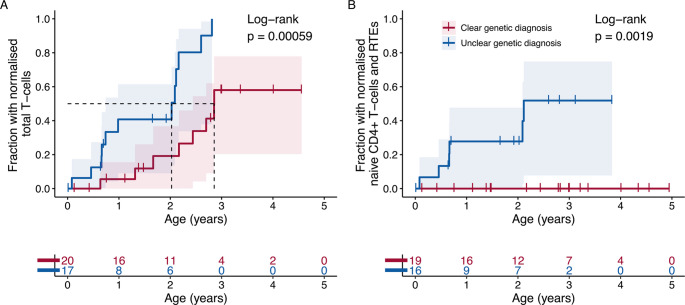
Results: Out of 435 985 screened infants, 42 patients were identified with non-SCID, non-congenital athymia TCL, without an obvious secondary cause. A clear genetic diagnosis of IEI was established in 20 (48%) patients. Infants with confirmed IEI had significantly lower total T-cell, CD4 + T-cell and recent thymic emigrant (RTE) counts on initial lymphocyte phenotyping. In contrast, those with an unclear genetic diagnosis despite full investigations demonstrated faster normalization of total T-cell counts (hazard ratio 5.2, 95% CI 1.9 to 14.5, p = 0.001). All infants with initial CD4 + T-cell < 0.3 × 10⁹/L showed minimal recovery of T-cell counts and remained on long-term prophylactic measures. All infants with an unclear genetic diagnosis despite investigations were able to discontinue prophylaxis at median age 6 months without experiencing opportunistic or severe infections.
Conclusion: Infants with non-SCID TCL identified by NBS represent a heterogenous group, ranging from severe, persistent TCL to mild, transient lymphopenia. Management should be tailored based on individual immunological and genetic profiles.
期刊介绍:
The Journal of Clinical Immunology publishes impactful papers in the realm of human immunology, delving into the diagnosis, pathogenesis, prognosis, or treatment of human diseases. The journal places particular emphasis on primary immunodeficiencies and related diseases, encompassing inborn errors of immunity in a broad sense, their underlying genotypes, and diverse phenotypes. These phenotypes include infection, malignancy, allergy, auto-inflammation, and autoimmunity. We welcome a broad spectrum of studies in this domain, spanning genetic discovery, clinical description, immunologic assessment, diagnostic approaches, prognosis evaluation, and treatment interventions. Case reports are considered if they are genuinely original and accompanied by a concise review of the relevant medical literature, illustrating how the novel case study advances the field. The instructions to authors provide detailed guidance on the four categories of papers accepted by the journal.



 求助内容:
 应助结果提醒方式:


 京公网安备 11010802042870号


