Marco Zeppieri, Roberta Amato, Daniela Catania, Mutali Musa, Alessandro Avitabile, Fabiana D'Esposito, Caterina Gagliano, Matteo Capobianco, Simonetta Gaia Nicolosi
{"title":"通过听觉生物反馈利用视觉神经可塑性——视网膜、视神经和皮质视觉损伤的功能和电生理增益:一项前瞻性先导研究。","authors":"Marco Zeppieri, Roberta Amato, Daniela Catania, Mutali Musa, Alessandro Avitabile, Fabiana D'Esposito, Caterina Gagliano, Matteo Capobianco, Simonetta Gaia Nicolosi","doi":"10.3390/clinpract15090170","DOIUrl":null,"url":null,"abstract":"<p><p><b>Background:</b> This prospective pilot study included four participants with chronic visual impairment and assessed functional and electrophysiological recovery following visual evoked potential (VEP)-guided auditory biofeedback across diverse etiologies. Low vision affects more than two billion people worldwide and imposes a sustained personal and socioeconomic burden. Conventional rehabilitation emphasizes optical aids and environmental modification without directly stimulating the visual pathway. Emerging evidence indicates that auditory biofeedback based on real-time cortical activity can leverage adult neuroplasticity. <b>Methods:</b> Four men (mean age 58 ± 12 years) with chronic visual impairment attributable to occipital stroke, stage IV macular hole, end-stage open-angle glaucoma, or diabetic maculopathy completed ten 10-min monocular sessions with the Retimax Vision Trainer over three weeks (15 Hz pattern reversal, 90% contrast). Primary end points were best corrected visual acuity (BCVA, ETDRS letters) and P100 amplitude/latency. Fixation stability was recorded with MAIA microperimetry when feasible. A focused PubMed review (2010-2025) mapped current evidence and research gaps. <b>Results:</b> Median BCVA improved by seven letters (IQR 0-15); three of eight eyes gained ≥ 10 letters and none lost vision. Mean P100 amplitude increased from 1.0 ± 1.2 µV to 3.0 ± 1.1 µV, while latency shortened by 3.9 ms. Electrophysiological improvement paralleled behavioural gain irrespective of lesion site. No adverse events occurred. <b>Conclusions:</b> A concise course of VEP-guided auditory biofeedback produced concordant functional and neurophysiological gains across retinal, optic nerve, and cortical pathologies. These pilot data support integration of closed-loop biofeedback into routine low vision care and justify larger sham-controlled trials.</p>","PeriodicalId":45306,"journal":{"name":"Clinics and Practice","volume":"15 9","pages":""},"PeriodicalIF":2.2000,"publicationDate":"2025-09-17","publicationTypes":"Journal Article","fieldsOfStudy":null,"isOpenAccess":false,"openAccessPdf":"https://www.ncbi.nlm.nih.gov/pmc/articles/PMC12468727/pdf/","citationCount":"0","resultStr":"{\"title\":\"Harnessing Visual Neuroplasticity Through Auditory Biofeedback-Functional and Electrophysiological Gains Across Retinal, Optic-Nerve, and Cortical Visual Impairment: A Prospective Pilot Study.\",\"authors\":\"Marco Zeppieri, Roberta Amato, Daniela Catania, Mutali Musa, Alessandro Avitabile, Fabiana D'Esposito, Caterina Gagliano, Matteo Capobianco, Simonetta Gaia Nicolosi\",\"doi\":\"10.3390/clinpract15090170\",\"DOIUrl\":null,\"url\":null,\"abstract\":\"<p><p><b>Background:</b> This prospective pilot study included four participants with chronic visual impairment and assessed functional and electrophysiological recovery following visual evoked potential (VEP)-guided auditory biofeedback across diverse etiologies. Low vision affects more than two billion people worldwide and imposes a sustained personal and socioeconomic burden. Conventional rehabilitation emphasizes optical aids and environmental modification without directly stimulating the visual pathway. Emerging evidence indicates that auditory biofeedback based on real-time cortical activity can leverage adult neuroplasticity. <b>Methods:</b> Four men (mean age 58 ± 12 years) with chronic visual impairment attributable to occipital stroke, stage IV macular hole, end-stage open-angle glaucoma, or diabetic maculopathy completed ten 10-min monocular sessions with the Retimax Vision Trainer over three weeks (15 Hz pattern reversal, 90% contrast). Primary end points were best corrected visual acuity (BCVA, ETDRS letters) and P100 amplitude/latency. Fixation stability was recorded with MAIA microperimetry when feasible. A focused PubMed review (2010-2025) mapped current evidence and research gaps. <b>Results:</b> Median BCVA improved by seven letters (IQR 0-15); three of eight eyes gained ≥ 10 letters and none lost vision. Mean P100 amplitude increased from 1.0 ± 1.2 µV to 3.0 ± 1.1 µV, while latency shortened by 3.9 ms. Electrophysiological improvement paralleled behavioural gain irrespective of lesion site. No adverse events occurred. <b>Conclusions:</b> A concise course of VEP-guided auditory biofeedback produced concordant functional and neurophysiological gains across retinal, optic nerve, and cortical pathologies. These pilot data support integration of closed-loop biofeedback into routine low vision care and justify larger sham-controlled trials.</p>\",\"PeriodicalId\":45306,\"journal\":{\"name\":\"Clinics and Practice\",\"volume\":\"15 9\",\"pages\":\"\"},\"PeriodicalIF\":2.2000,\"publicationDate\":\"2025-09-17\",\"publicationTypes\":\"Journal Article\",\"fieldsOfStudy\":null,\"isOpenAccess\":false,\"openAccessPdf\":\"https://www.ncbi.nlm.nih.gov/pmc/articles/PMC12468727/pdf/\",\"citationCount\":\"0\",\"resultStr\":null,\"platform\":\"Semanticscholar\",\"paperid\":null,\"PeriodicalName\":\"Clinics and Practice\",\"FirstCategoryId\":\"1085\",\"ListUrlMain\":\"https://doi.org/10.3390/clinpract15090170\",\"RegionNum\":0,\"RegionCategory\":null,\"ArticlePicture\":[],\"TitleCN\":null,\"AbstractTextCN\":null,\"PMCID\":null,\"EPubDate\":\"\",\"PubModel\":\"\",\"JCR\":\"Q2\",\"JCRName\":\"MEDICINE, GENERAL & INTERNAL\",\"Score\":null,\"Total\":0}","platform":"Semanticscholar","paperid":null,"PeriodicalName":"Clinics and Practice","FirstCategoryId":"1085","ListUrlMain":"https://doi.org/10.3390/clinpract15090170","RegionNum":0,"RegionCategory":null,"ArticlePicture":[],"TitleCN":null,"AbstractTextCN":null,"PMCID":null,"EPubDate":"","PubModel":"","JCR":"Q2","JCRName":"MEDICINE, GENERAL & INTERNAL","Score":null,"Total":0}
Harnessing Visual Neuroplasticity Through Auditory Biofeedback-Functional and Electrophysiological Gains Across Retinal, Optic-Nerve, and Cortical Visual Impairment: A Prospective Pilot Study.
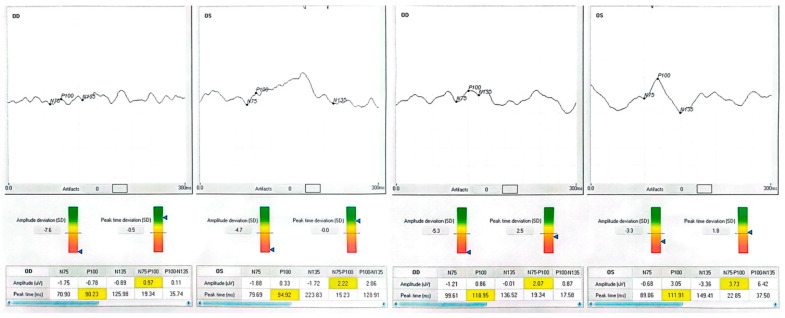
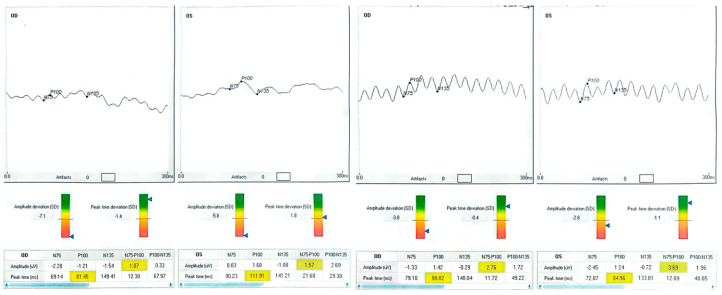
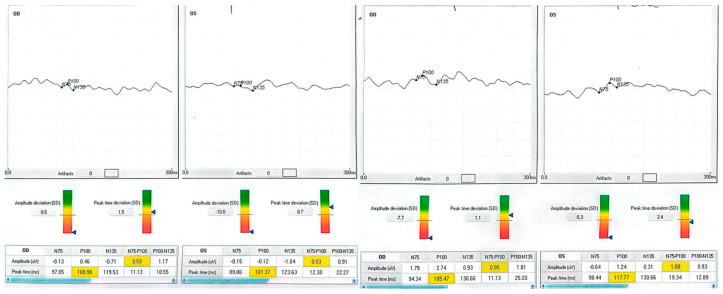
Background: This prospective pilot study included four participants with chronic visual impairment and assessed functional and electrophysiological recovery following visual evoked potential (VEP)-guided auditory biofeedback across diverse etiologies. Low vision affects more than two billion people worldwide and imposes a sustained personal and socioeconomic burden. Conventional rehabilitation emphasizes optical aids and environmental modification without directly stimulating the visual pathway. Emerging evidence indicates that auditory biofeedback based on real-time cortical activity can leverage adult neuroplasticity. Methods: Four men (mean age 58 ± 12 years) with chronic visual impairment attributable to occipital stroke, stage IV macular hole, end-stage open-angle glaucoma, or diabetic maculopathy completed ten 10-min monocular sessions with the Retimax Vision Trainer over three weeks (15 Hz pattern reversal, 90% contrast). Primary end points were best corrected visual acuity (BCVA, ETDRS letters) and P100 amplitude/latency. Fixation stability was recorded with MAIA microperimetry when feasible. A focused PubMed review (2010-2025) mapped current evidence and research gaps. Results: Median BCVA improved by seven letters (IQR 0-15); three of eight eyes gained ≥ 10 letters and none lost vision. Mean P100 amplitude increased from 1.0 ± 1.2 µV to 3.0 ± 1.1 µV, while latency shortened by 3.9 ms. Electrophysiological improvement paralleled behavioural gain irrespective of lesion site. No adverse events occurred. Conclusions: A concise course of VEP-guided auditory biofeedback produced concordant functional and neurophysiological gains across retinal, optic nerve, and cortical pathologies. These pilot data support integration of closed-loop biofeedback into routine low vision care and justify larger sham-controlled trials.


 求助内容:
求助内容: 应助结果提醒方式:

 京公网安备 11010802042870号

