{"title":"CAMP 阴性的无乳链球菌菌株表现出 CAMP 因子编码基因 cfb 的染色体完全或部分缺失。","authors":"Xixi Lai, Meihong Chen, Jianwei Wang, Junjun Wang, Hui Lv, Haihua Xie, Wenjuan He, Dongjie Chen, Yi Huang, Pengwei Cai, Lilan Zheng","doi":"10.1128/spectrum.03257-24","DOIUrl":null,"url":null,"abstract":"<p><p>Universal antepartum group B streptococcus (GBS) screening and intrapartum antibiotic prophylaxis (IAP) have effectively reduced early-onset GBS infections. However, GBS strains with chromosomal deletions affecting the <i>cfb</i> gene may produce false negatives in both the CAMP test and <i>cfb</i>-based molecular diagnostics, potentially increasing the risk of neonatal infections. Vaginal swabs were collected from pregnant women at 35-37 weeks of gestation in our hospital and cultured on agar. Suspected GBS strains were initially identified using the CAMP test and then confirmed with the VITEK-2 system. CAMP-negative GBS strains underwent additional testing by qPCR, 16S rDNA, serotyping, and multilocus sequence typing (MLST). PCR for the <i>cfb</i> gene and whole-genome sequencing were performed on CAMP-negative strains. From 5,794 samples, 526 (9.1%) GBS strains, including 19 (3.6%) CAMP-negative strains and 2 strains from the same patient, were isolated. All 19 CAMP-negative strains were serotypes III and ST862. Among these strains, only one strain was <i>cfb</i> positive by qPCR, whereas all tested positive with a multitarget qPCR kit for <i>cfb</i> and <i>cps</i>. PCR amplification upstream of the <i>cfb</i> gene produced a specific band in strain PP669713 only, suggesting N-terminal <i>cfb</i> gene retention in PP669713 and complete <i>cfb</i> loss in the other strains. Whole-genome sequencing confirmed a chromosomal deletion in PP669713. Antibiotic susceptibility testing revealed no resistance to penicillin. However, CAMP-positive strains presented a greater prevalence of resistance to ciprofloxacin, and levofloxacin than CAMP-negative strains did. Our study highlights the potential risk of missed GBS detection using CAMP tests and <i>cfb</i>-targeted molecular assays.</p><p><strong>Importance: </strong>Our work makes several novel contributions to the field. (i) We report the first documented case of a C-terminal deletion of the <i>cfb</i> gene in a CAMP-negative GBS strain, demonstrating that both N-terminal and C-terminal regions are essential for cohemolytic activity. (ii) Our findings reveal that CAMP-negative GBS strains (3.6% of isolates) are more prevalent than previously recognized, with most cases resulting from complete chromosomal deletions of the <i>cfb</i> gene. (iii) We provide evidence that single-target molecular assays targeting only the <i>cfb</i> gene may miss GBS detection, highlighting the necessity for multi-target approaches in clinical diagnostics. (iv) We demonstrate a unique antibiotic resistance pattern in CAMP-negative strains, showing significantly lower resistance to certain antibiotics compared to CAMP-positive strains.</p>","PeriodicalId":18670,"journal":{"name":"Microbiology spectrum","volume":" ","pages":"e0325724"},"PeriodicalIF":3.8000,"publicationDate":"2025-05-06","publicationTypes":"Journal Article","fieldsOfStudy":null,"isOpenAccess":false,"openAccessPdf":"https://www.ncbi.nlm.nih.gov/pmc/articles/PMC12054153/pdf/","citationCount":"0","resultStr":"{\"title\":\"CAMP-negative <i>Streptococcus agalactiae</i> strains exhibited complete or partial chromosomal deletions of the CAMP-factor encoding gene <i>cfb</i>.\",\"authors\":\"Xixi Lai, Meihong Chen, Jianwei Wang, Junjun Wang, Hui Lv, Haihua Xie, Wenjuan He, Dongjie Chen, Yi Huang, Pengwei Cai, Lilan Zheng\",\"doi\":\"10.1128/spectrum.03257-24\",\"DOIUrl\":null,\"url\":null,\"abstract\":\"<p><p>Universal antepartum group B streptococcus (GBS) screening and intrapartum antibiotic prophylaxis (IAP) have effectively reduced early-onset GBS infections. However, GBS strains with chromosomal deletions affecting the <i>cfb</i> gene may produce false negatives in both the CAMP test and <i>cfb</i>-based molecular diagnostics, potentially increasing the risk of neonatal infections. Vaginal swabs were collected from pregnant women at 35-37 weeks of gestation in our hospital and cultured on agar. Suspected GBS strains were initially identified using the CAMP test and then confirmed with the VITEK-2 system. CAMP-negative GBS strains underwent additional testing by qPCR, 16S rDNA, serotyping, and multilocus sequence typing (MLST). PCR for the <i>cfb</i> gene and whole-genome sequencing were performed on CAMP-negative strains. From 5,794 samples, 526 (9.1%) GBS strains, including 19 (3.6%) CAMP-negative strains and 2 strains from the same patient, were isolated. All 19 CAMP-negative strains were serotypes III and ST862. Among these strains, only one strain was <i>cfb</i> positive by qPCR, whereas all tested positive with a multitarget qPCR kit for <i>cfb</i> and <i>cps</i>. PCR amplification upstream of the <i>cfb</i> gene produced a specific band in strain PP669713 only, suggesting N-terminal <i>cfb</i> gene retention in PP669713 and complete <i>cfb</i> loss in the other strains. Whole-genome sequencing confirmed a chromosomal deletion in PP669713. Antibiotic susceptibility testing revealed no resistance to penicillin. However, CAMP-positive strains presented a greater prevalence of resistance to ciprofloxacin, and levofloxacin than CAMP-negative strains did. Our study highlights the potential risk of missed GBS detection using CAMP tests and <i>cfb</i>-targeted molecular assays.</p><p><strong>Importance: </strong>Our work makes several novel contributions to the field. (i) We report the first documented case of a C-terminal deletion of the <i>cfb</i> gene in a CAMP-negative GBS strain, demonstrating that both N-terminal and C-terminal regions are essential for cohemolytic activity. (ii) Our findings reveal that CAMP-negative GBS strains (3.6% of isolates) are more prevalent than previously recognized, with most cases resulting from complete chromosomal deletions of the <i>cfb</i> gene. (iii) We provide evidence that single-target molecular assays targeting only the <i>cfb</i> gene may miss GBS detection, highlighting the necessity for multi-target approaches in clinical diagnostics. (iv) We demonstrate a unique antibiotic resistance pattern in CAMP-negative strains, showing significantly lower resistance to certain antibiotics compared to CAMP-positive strains.</p>\",\"PeriodicalId\":18670,\"journal\":{\"name\":\"Microbiology spectrum\",\"volume\":\" \",\"pages\":\"e0325724\"},\"PeriodicalIF\":3.8000,\"publicationDate\":\"2025-05-06\",\"publicationTypes\":\"Journal Article\",\"fieldsOfStudy\":null,\"isOpenAccess\":false,\"openAccessPdf\":\"https://www.ncbi.nlm.nih.gov/pmc/articles/PMC12054153/pdf/\",\"citationCount\":\"0\",\"resultStr\":null,\"platform\":\"Semanticscholar\",\"paperid\":null,\"PeriodicalName\":\"Microbiology spectrum\",\"FirstCategoryId\":\"99\",\"ListUrlMain\":\"https://doi.org/10.1128/spectrum.03257-24\",\"RegionNum\":2,\"RegionCategory\":\"生物学\",\"ArticlePicture\":[],\"TitleCN\":null,\"AbstractTextCN\":null,\"PMCID\":null,\"EPubDate\":\"2025/4/9 0:00:00\",\"PubModel\":\"Epub\",\"JCR\":\"Q2\",\"JCRName\":\"MICROBIOLOGY\",\"Score\":null,\"Total\":0}","platform":"Semanticscholar","paperid":null,"PeriodicalName":"Microbiology spectrum","FirstCategoryId":"99","ListUrlMain":"https://doi.org/10.1128/spectrum.03257-24","RegionNum":2,"RegionCategory":"生物学","ArticlePicture":[],"TitleCN":null,"AbstractTextCN":null,"PMCID":null,"EPubDate":"2025/4/9 0:00:00","PubModel":"Epub","JCR":"Q2","JCRName":"MICROBIOLOGY","Score":null,"Total":0}
CAMP-negative Streptococcus agalactiae strains exhibited complete or partial chromosomal deletions of the CAMP-factor encoding gene cfb.
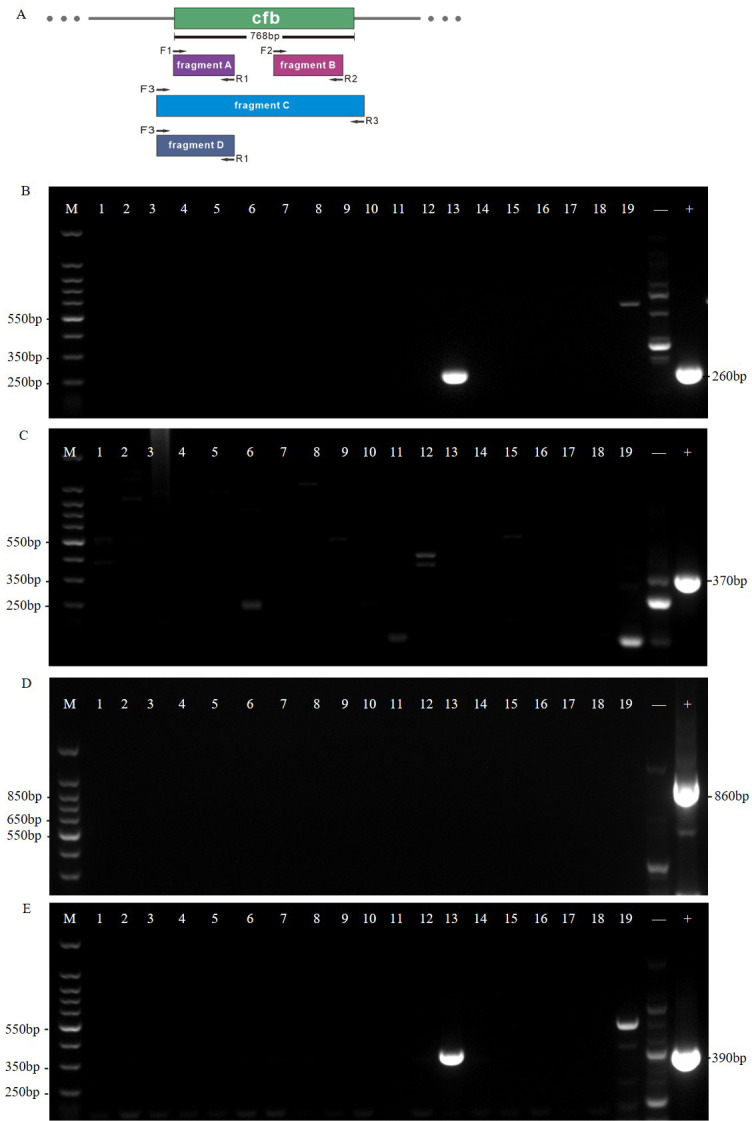
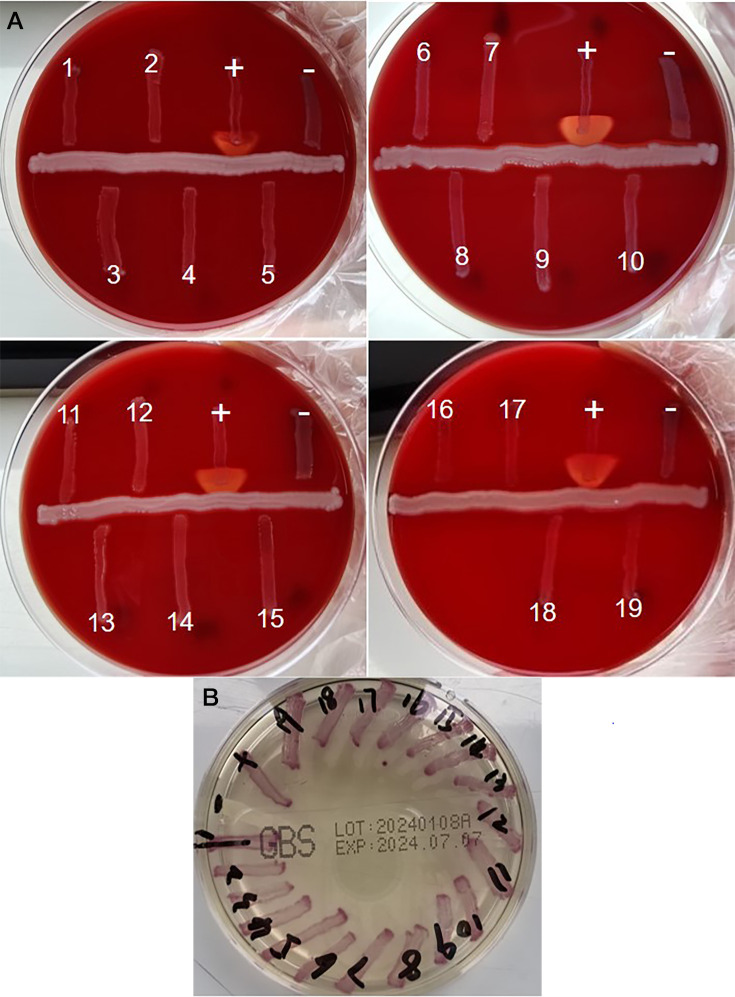
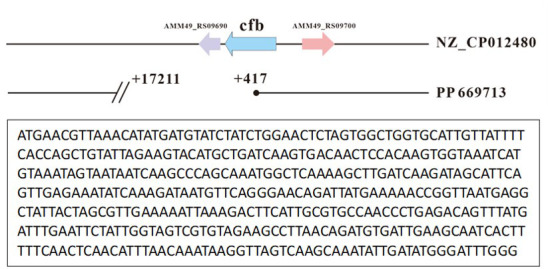
Universal antepartum group B streptococcus (GBS) screening and intrapartum antibiotic prophylaxis (IAP) have effectively reduced early-onset GBS infections. However, GBS strains with chromosomal deletions affecting the cfb gene may produce false negatives in both the CAMP test and cfb-based molecular diagnostics, potentially increasing the risk of neonatal infections. Vaginal swabs were collected from pregnant women at 35-37 weeks of gestation in our hospital and cultured on agar. Suspected GBS strains were initially identified using the CAMP test and then confirmed with the VITEK-2 system. CAMP-negative GBS strains underwent additional testing by qPCR, 16S rDNA, serotyping, and multilocus sequence typing (MLST). PCR for the cfb gene and whole-genome sequencing were performed on CAMP-negative strains. From 5,794 samples, 526 (9.1%) GBS strains, including 19 (3.6%) CAMP-negative strains and 2 strains from the same patient, were isolated. All 19 CAMP-negative strains were serotypes III and ST862. Among these strains, only one strain was cfb positive by qPCR, whereas all tested positive with a multitarget qPCR kit for cfb and cps. PCR amplification upstream of the cfb gene produced a specific band in strain PP669713 only, suggesting N-terminal cfb gene retention in PP669713 and complete cfb loss in the other strains. Whole-genome sequencing confirmed a chromosomal deletion in PP669713. Antibiotic susceptibility testing revealed no resistance to penicillin. However, CAMP-positive strains presented a greater prevalence of resistance to ciprofloxacin, and levofloxacin than CAMP-negative strains did. Our study highlights the potential risk of missed GBS detection using CAMP tests and cfb-targeted molecular assays.
Importance: Our work makes several novel contributions to the field. (i) We report the first documented case of a C-terminal deletion of the cfb gene in a CAMP-negative GBS strain, demonstrating that both N-terminal and C-terminal regions are essential for cohemolytic activity. (ii) Our findings reveal that CAMP-negative GBS strains (3.6% of isolates) are more prevalent than previously recognized, with most cases resulting from complete chromosomal deletions of the cfb gene. (iii) We provide evidence that single-target molecular assays targeting only the cfb gene may miss GBS detection, highlighting the necessity for multi-target approaches in clinical diagnostics. (iv) We demonstrate a unique antibiotic resistance pattern in CAMP-negative strains, showing significantly lower resistance to certain antibiotics compared to CAMP-positive strains.
期刊介绍:
Microbiology Spectrum publishes commissioned review articles on topics in microbiology representing ten content areas: Archaea; Food Microbiology; Bacterial Genetics, Cell Biology, and Physiology; Clinical Microbiology; Environmental Microbiology and Ecology; Eukaryotic Microbes; Genomics, Computational, and Synthetic Microbiology; Immunology; Pathogenesis; and Virology. Reviews are interrelated, with each review linking to other related content. A large board of Microbiology Spectrum editors aids in the development of topics for potential reviews and in the identification of an editor, or editors, who shepherd each collection.

 求助内容:
求助内容: 应助结果提醒方式:

 京公网安备 11010802042870号


