Yashpal Ramakrishnaiah , Nenad Macesic , Geoffrey I. Webb , Anton Y. Peleg , Sonika Tyagi
{"title":"EHR-ML:用于设计带有电子健康记录的机器学习应用程序的数据驱动框架。","authors":"Yashpal Ramakrishnaiah , Nenad Macesic , Geoffrey I. Webb , Anton Y. Peleg , Sonika Tyagi","doi":"10.1016/j.ijmedinf.2025.105816","DOIUrl":null,"url":null,"abstract":"<div><h3>Objective</h3><div>The healthcare landscape is experiencing a transformation with the integration of Artificial Intelligence (AI) into traditional analytic workflows. However, its integration faces challenges resulting in a crisis of generalisability. Key obstacles include; 1) Insufficient consideration of local contextual factors, such as institution-specific data formats, practices, and protocols, which can lead to variability in clinical practices across different institutions. 2) ad-hoc data preparation and design of machine learning strategies. 3) manual subjective adjustment of design parameters resulting in sub-optimal performance. 4) EHR specific challenges regarding data biases affecting the model outcomes and unique intermittent temporal nature of the data necessitating specialised handling 5) lack of cross-institutional data validations.</div></div><div><h3>Methods</h3><div>To address these challenges, EHR-ML, provides an easy to use structured framework for designing optimum machine learning applications in a data-driven manner. The framework supports ingestion of local institutional electronic health records (EHRs) and process standardisation. The study design and parameter optimisation is done in a fully data-driven evidence-based approach. It seamlessly integrating with existing quality control tools. To handle the unique characteristics of the EHR data, it offers customisable ensemble models. It enables the acquisition of EHR data from diverse systems and harmonise them into common formats following international standards.</div></div><div><h3>Results</h3><div>The effectiveness of the EHR-ML is demonstrated through a series of case studies. These studies highlight its capability to develop high-performance models in a fully automated manner, consistently surpassing the performance of traditional methodologies. Furthermore, they exhibited strong generalisability across diverse healthcare settings.</div></div><div><h3>Discussion and Conclusion</h3><div>EHR-ML enhances the clinical relevance and accuracy of predictive models by incorporating local context into machine learning applications. Additionally, by providing an user-friendly fully-automated framework, it facilitates rapid hypothesis testing aimed to generate localised biomedical knowledge.</div></div>","PeriodicalId":54950,"journal":{"name":"International Journal of Medical Informatics","volume":"196 ","pages":"Article 105816"},"PeriodicalIF":4.1000,"publicationDate":"2025-04-01","publicationTypes":"Journal Article","fieldsOfStudy":null,"isOpenAccess":false,"openAccessPdf":"","citationCount":"0","resultStr":"{\"title\":\"EHR-ML: A data-driven framework for designing machine learning applications with electronic health records\",\"authors\":\"Yashpal Ramakrishnaiah , Nenad Macesic , Geoffrey I. Webb , Anton Y. Peleg , Sonika Tyagi\",\"doi\":\"10.1016/j.ijmedinf.2025.105816\",\"DOIUrl\":null,\"url\":null,\"abstract\":\"<div><h3>Objective</h3><div>The healthcare landscape is experiencing a transformation with the integration of Artificial Intelligence (AI) into traditional analytic workflows. However, its integration faces challenges resulting in a crisis of generalisability. Key obstacles include; 1) Insufficient consideration of local contextual factors, such as institution-specific data formats, practices, and protocols, which can lead to variability in clinical practices across different institutions. 2) ad-hoc data preparation and design of machine learning strategies. 3) manual subjective adjustment of design parameters resulting in sub-optimal performance. 4) EHR specific challenges regarding data biases affecting the model outcomes and unique intermittent temporal nature of the data necessitating specialised handling 5) lack of cross-institutional data validations.</div></div><div><h3>Methods</h3><div>To address these challenges, EHR-ML, provides an easy to use structured framework for designing optimum machine learning applications in a data-driven manner. The framework supports ingestion of local institutional electronic health records (EHRs) and process standardisation. The study design and parameter optimisation is done in a fully data-driven evidence-based approach. It seamlessly integrating with existing quality control tools. To handle the unique characteristics of the EHR data, it offers customisable ensemble models. It enables the acquisition of EHR data from diverse systems and harmonise them into common formats following international standards.</div></div><div><h3>Results</h3><div>The effectiveness of the EHR-ML is demonstrated through a series of case studies. These studies highlight its capability to develop high-performance models in a fully automated manner, consistently surpassing the performance of traditional methodologies. Furthermore, they exhibited strong generalisability across diverse healthcare settings.</div></div><div><h3>Discussion and Conclusion</h3><div>EHR-ML enhances the clinical relevance and accuracy of predictive models by incorporating local context into machine learning applications. Additionally, by providing an user-friendly fully-automated framework, it facilitates rapid hypothesis testing aimed to generate localised biomedical knowledge.</div></div>\",\"PeriodicalId\":54950,\"journal\":{\"name\":\"International Journal of Medical Informatics\",\"volume\":\"196 \",\"pages\":\"Article 105816\"},\"PeriodicalIF\":4.1000,\"publicationDate\":\"2025-04-01\",\"publicationTypes\":\"Journal Article\",\"fieldsOfStudy\":null,\"isOpenAccess\":false,\"openAccessPdf\":\"\",\"citationCount\":\"0\",\"resultStr\":null,\"platform\":\"Semanticscholar\",\"paperid\":null,\"PeriodicalName\":\"International Journal of Medical Informatics\",\"FirstCategoryId\":\"3\",\"ListUrlMain\":\"https://www.sciencedirect.com/science/article/pii/S1386505625000334\",\"RegionNum\":2,\"RegionCategory\":\"医学\",\"ArticlePicture\":[],\"TitleCN\":null,\"AbstractTextCN\":null,\"PMCID\":null,\"EPubDate\":\"2025/1/28 0:00:00\",\"PubModel\":\"Epub\",\"JCR\":\"Q2\",\"JCRName\":\"COMPUTER SCIENCE, INFORMATION SYSTEMS\",\"Score\":null,\"Total\":0}","platform":"Semanticscholar","paperid":null,"PeriodicalName":"International Journal of Medical Informatics","FirstCategoryId":"3","ListUrlMain":"https://www.sciencedirect.com/science/article/pii/S1386505625000334","RegionNum":2,"RegionCategory":"医学","ArticlePicture":[],"TitleCN":null,"AbstractTextCN":null,"PMCID":null,"EPubDate":"2025/1/28 0:00:00","PubModel":"Epub","JCR":"Q2","JCRName":"COMPUTER SCIENCE, INFORMATION SYSTEMS","Score":null,"Total":0}
EHR-ML: A data-driven framework for designing machine learning applications with electronic health records
Objective
The healthcare landscape is experiencing a transformation with the integration of Artificial Intelligence (AI) into traditional analytic workflows. However, its integration faces challenges resulting in a crisis of generalisability. Key obstacles include; 1) Insufficient consideration of local contextual factors, such as institution-specific data formats, practices, and protocols, which can lead to variability in clinical practices across different institutions. 2) ad-hoc data preparation and design of machine learning strategies. 3) manual subjective adjustment of design parameters resulting in sub-optimal performance. 4) EHR specific challenges regarding data biases affecting the model outcomes and unique intermittent temporal nature of the data necessitating specialised handling 5) lack of cross-institutional data validations.
Methods
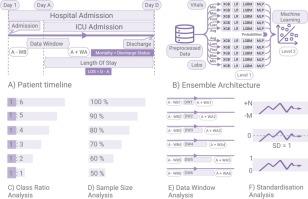
To address these challenges, EHR-ML, provides an easy to use structured framework for designing optimum machine learning applications in a data-driven manner. The framework supports ingestion of local institutional electronic health records (EHRs) and process standardisation. The study design and parameter optimisation is done in a fully data-driven evidence-based approach. It seamlessly integrating with existing quality control tools. To handle the unique characteristics of the EHR data, it offers customisable ensemble models. It enables the acquisition of EHR data from diverse systems and harmonise them into common formats following international standards.
Results
The effectiveness of the EHR-ML is demonstrated through a series of case studies. These studies highlight its capability to develop high-performance models in a fully automated manner, consistently surpassing the performance of traditional methodologies. Furthermore, they exhibited strong generalisability across diverse healthcare settings.
Discussion and Conclusion
EHR-ML enhances the clinical relevance and accuracy of predictive models by incorporating local context into machine learning applications. Additionally, by providing an user-friendly fully-automated framework, it facilitates rapid hypothesis testing aimed to generate localised biomedical knowledge.
期刊介绍:
International Journal of Medical Informatics provides an international medium for dissemination of original results and interpretative reviews concerning the field of medical informatics. The Journal emphasizes the evaluation of systems in healthcare settings.
The scope of journal covers:
Information systems, including national or international registration systems, hospital information systems, departmental and/or physician''s office systems, document handling systems, electronic medical record systems, standardization, systems integration etc.;
Computer-aided medical decision support systems using heuristic, algorithmic and/or statistical methods as exemplified in decision theory, protocol development, artificial intelligence, etc.
Educational computer based programs pertaining to medical informatics or medicine in general;
Organizational, economic, social, clinical impact, ethical and cost-benefit aspects of IT applications in health care.