
Rapid Detection of Glycerol and Butanol in Fermentation Broth Using Near-Infrared Spectroscopy
引用次数: 0
Abstract
: In this paper, to improve the control and optimization of the bio-fermentation process, rapid and non-destructive detection of glycerol and butanol was studied. To this end, 80 samples of glycerol and butanol were scanned and analyzed by means of near-infrared spectroscopy. Furthermore, in order to improve the predictive ability of the model, five quantitative calibration methods, namely, the partial least squares method, interval partial least squares method, forward interval partial least squares method, backward interval partial least squares method, and minimum forward interval method were used to establish the near-infrared detection model for glycerol and butanol content. The models were then analyzed and compared. The results showed that the model established by means of the backward interval partial least squares method was effective, and the correlation coefficients of the single component solution of glycerol and butanol were 0.99932 (glycerol) and 0.98843 (butanol), respectively. To measure the content of glycerol and butanol in the glycerol fermentation broth, a monitoring platform for glycerol and butanol concentrations was established. The correlation coefficients were found to be 0.99074 (glycerol) and 0.99261 (butanol), respectively. The results show that the NIR rapid detection model demonstrates excellent performance with regards to accuracy and rapidity and provides a new detection method for the rapid detection of glycerol and butanol in the fermentation industry.近红外光谱法快速检测发酵液中的甘油和丁醇
为了改进生物发酵过程的控制和优化,本文对甘油和丁醇的快速无损检测进行了研究。为此,通过近红外光谱对80个甘油和丁醇样品进行了扫描和分析。此外,为了提高模型的预测能力,采用了五种定量校准方法,即偏最小二乘法、区间偏最小二乘法,前向区间偏最小二乘方法、后向区间偏最小平方方法,采用最小正向区间法建立了甘油和丁醇含量的近红外检测模型。然后对模型进行分析和比较。结果表明,采用后向区间偏最小二乘法建立的模型是有效的,甘油和丁醇的单组分溶液的相关系数分别为0.99932(甘油)和0.98843(丁醇)。为了测量甘油发酵液中甘油和丁醇的含量,建立了甘油和丁醇浓度监测平台。相关系数分别为0.99074(甘油)和0.99261(丁醇)。结果表明,近红外快速检测模型在准确性和快速性方面表现出优异的性能,为发酵工业中甘油和丁醇的快速检测提供了一种新的检测方法。
本文章由计算机程序翻译,如有差异,请以英文原文为准。
求助全文
约1分钟内获得全文
求助全文
来源期刊
自引率
0.00%
发文量
5536
期刊介绍:
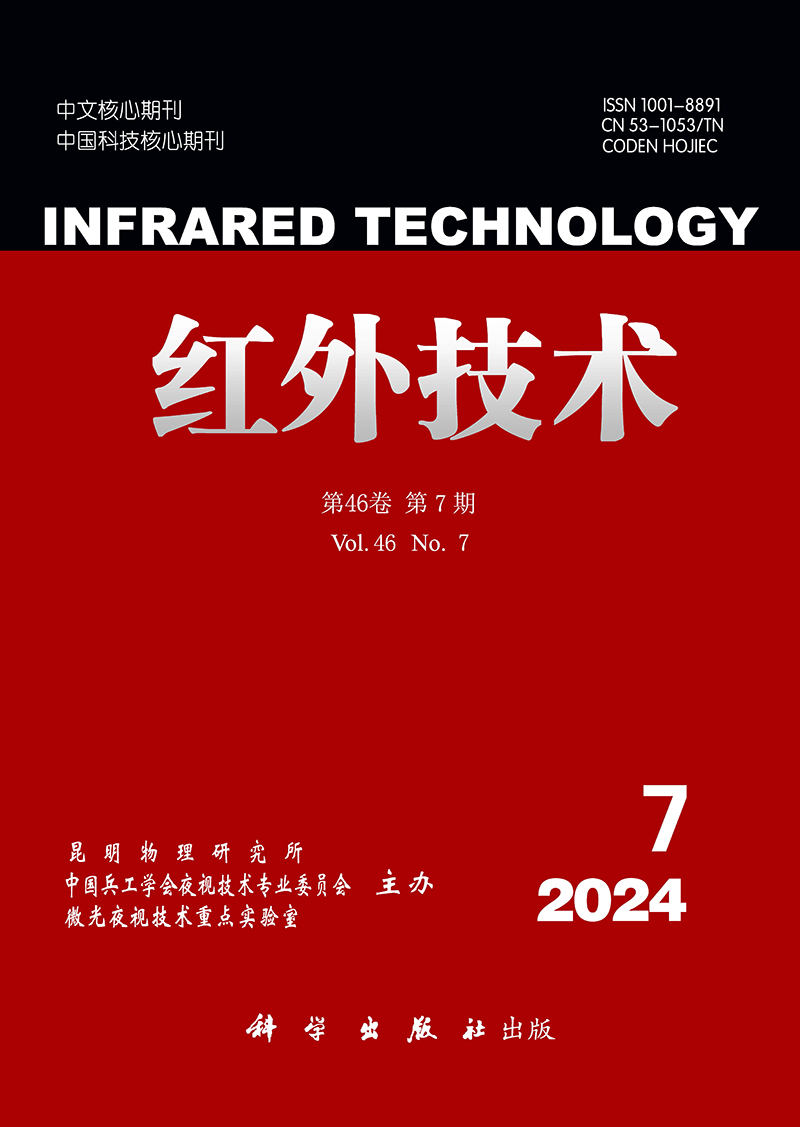
Infrared technology is one of the earliest photoelectronic journals in China.Infrared Technology is published by Science Press, and it is a single monthly technical journal.
Infrared Technology is a professional and academic journal based on scientific research, which comprehensively reflects the research progress of infrared technology at home and abroad and its application in national defense, industry, agriculture and national economy.After years of efforts, INFRARED Technology has become the core journal of Chinese, The core journal of Chinese science and technology, and the source journal of Chinese Science citation database.
 求助内容:
 应助结果提醒方式:


 京公网安备 11010802042870号


