
Analysis on the advantages and shortcomings of the capacity of the new infectious diseases control and prevention in Wuhan
引用次数: 0
Abstract
Based on the systematic evaluation of the capacity of the new infectious diseases control and prevention of the 32 provincial capital cities and municipalities with independent planning, the advantages and shortcomings of Wuhan could be described as follows: (1) The legal framework for epidemic prevention has been established, but the effective actions have not been carried. (2) With an organizational basis for responding to the epidemic, a coordination mechanism has not been effectively established. (3) The management mechanism has been improved, but responsibilities among different departments were not clear enough. (4) The disease reporting system has been running well, the capacity of the incidence trend forecasting and early warning was still needed to be enhanced. (5) The insufficiency of public health service delivery was observed owing to a lack of financial investment. It is not too late for each city in China to resolve the problems and strengthen the capacity of the new infectious diseases control and prevention, so that we could combat the disease epidemic more effectively. Key words: the new infectious diseases control and prevention; capacity evaluation; advantages; shortcomings; Wuhan武汉市新型传染病防控能力优势与不足分析
通过对32个有独立规划的省会城市和直辖市的新型传染病防控能力进行系统评价,武汉市的优势和不足主要表现在:(1)疫情防控的法律框架已经建立,但尚未采取有效行动。(2)应对疫情的组织基础尚未建立有效的协调机制。(3)管理机制完善,但各部门职责不明确。(4)疾病报告系统运行良好,发病趋势预测和预警能力有待加强。(5)由于缺乏财政投资,公共保健服务提供不足。中国各城市解决问题,加强新型传染病防控能力建设,现在还为时不晚,才能更有效地抗击疫情。关键词:新型传染病预防控制;能力评估;优势;缺点;武汉
本文章由计算机程序翻译,如有差异,请以英文原文为准。
求助全文
约1分钟内获得全文
求助全文
来源期刊
CiteScore
0.40
自引率
0.00%
发文量
10697
期刊介绍:
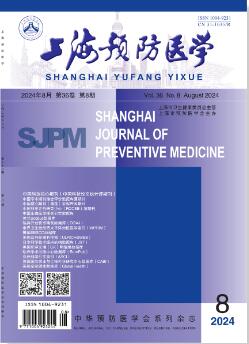
Shanghai Journal of Preventive Medicine(SJPM) sponsored by Shanghai Preventive Medicine Association,ISSN 1004-9231, CN 31-1635/R , was founded in October 1989. Over the past 33 years, the Journal has been “a mentor for preventive health care professionals and an important link between professionals”. It is a platform to exchange academic achievements and information, to encourage the development of new technology, to combine theory with practice, popularization with improvement in the fields of preventive medicine, public health and safety, maternity care, health education, health supervision and community health work.
SJPM has been accepted by many leading databases home and abroad, including:
Directory of Open Access Journals (DOAJ)
CAB Abstracts, CABI
Global Health, CABI
Japan Science and Technology Agency, Chinese Bibliographic (JST China) Database
Western Pacific Region Index Medicus of WHO (WPRIM)
Chemical Abstracts (CA), American Chemical Society
Ulrich's Periodicals Directory(Ulrichsweb)
ICI World of Journals Database
Chinese Academic Journal Comprehensive Evaluation Database
Chinese Core Journal (Selection) Database
Chinese Periodical Full-text Database (CJFD)
Chinese Science and Technology Periodical Database
Wanfang Data - Digital Journal Group
China National Knowledge Infrastructure
Weipu Information Network, etc.
 求助内容:
 应助结果提醒方式:


 京公网安备 11010802042870号


