María Del Pilar Gamarra Samaniego, Carmelo J Blanquicett, Roger V Araujo Castillo, Julio C Chavez, Brady Ernesto Beltrán Garate
{"title":"Selected Domains within a Comprehensive Geriatric Assessment in Older Patients with Non-Hodgkin Lymphoma are Highly Associated with Frailty.","authors":"María Del Pilar Gamarra Samaniego, Carmelo J Blanquicett, Roger V Araujo Castillo, Julio C Chavez, Brady Ernesto Beltrán Garate","doi":"10.1007/s44228-022-00005-7","DOIUrl":null,"url":null,"abstract":"<p><strong>Background: </strong>The incidence of Non-Hodgkin Lymphoma (NHL) is increasing, particularly among older patients who tend to have worse outcomes and can be predisposed to increased toxicities and less treatment tolerance. Therefore, a thorough pre-treatment assessment is essential. A comprehensive geriatric assessment (CGA) can be used to evaluate the older patient considering chemotherapy and is the preferred evaluation tool. However, a formal CGA is laborious, complex and time-consuming.</p><p><strong>Objectives: </strong>To characterize older adults with NHL and determine the CGA variables with the greatest association to frailty in order to propose a more simplified assessment.</p><p><strong>Methods: </strong>We performed a cross-sectional study using data collected from CGAs in NHL patients > 65 years admitted to our oncology service, from September 2015 to August 2017. Our evaluation parameters included: polypharmacy, a screening tool of older people's prescriptions (STOPP), the Lawton scale, Barthel index, Katz index, gait speed, a Timed Up and Go (TUG) test, a Mini-Mental state examination (MMSE), the Yesavage and Gijon scales, a Mini-nutritional assessment (MNA), a Geriatric Syndromes assessment, and a Cumulative Illness Rating Scale-Geriatric (CIRS-G). The formal CGA was comprised of nine domains; frailty was defined as an impairment in > 2 domains. Each parameter was individually compared with frailty, and the results were used to build different multivariate models using logistic regression analyses to obtain the variables with the highest frailty association.</p><p><strong>Results: </strong>A total of 253 patients were included. Their median age was 75.4 years (range 65-92), and 62.1% had > 1 impaired domain, with 39.9% considered frail. Bivariate analysis showed strong associations with age > 85 and all the geriatric parameters except for STOPP. Our final multivariate analysis resulted in 5 domains (the use of > 5 medications, a Lawton < 7, TUG > 20, Yesavage > 5, and the presence of at least one geriatric syndrome) being significantly associated with frailty and performing similarly to a CGA.</p><p><strong>Conclusion: </strong>In our population of older NHL patients, an abbreviated evaluation based of only five domains, polypharmacy, TUG, Lawton scale, Yesavage scale and the presence of at least one geriatric syndrome, had similar performance to a formal CGA in determining frailty.</p>","PeriodicalId":10368,"journal":{"name":"Clinical Hematology International","volume":"4 1-2","pages":"35-43"},"PeriodicalIF":0.0000,"publicationDate":"2022-05-11","publicationTypes":"Journal Article","fieldsOfStudy":null,"isOpenAccess":false,"openAccessPdf":"https://www.ncbi.nlm.nih.gov/pmc/articles/PMC9358790/pdf/","citationCount":"0","resultStr":null,"platform":"Semanticscholar","paperid":null,"PeriodicalName":"Clinical Hematology International","FirstCategoryId":"1085","ListUrlMain":"https://doi.org/10.1007/s44228-022-00005-7","RegionNum":0,"RegionCategory":null,"ArticlePicture":[],"TitleCN":null,"AbstractTextCN":null,"PMCID":null,"EPubDate":"2022/6/1 0:00:00","PubModel":"eCollection","JCR":"","JCRName":"","Score":null,"Total":0}
引用次数: 0
Abstract
Background: The incidence of Non-Hodgkin Lymphoma (NHL) is increasing, particularly among older patients who tend to have worse outcomes and can be predisposed to increased toxicities and less treatment tolerance. Therefore, a thorough pre-treatment assessment is essential. A comprehensive geriatric assessment (CGA) can be used to evaluate the older patient considering chemotherapy and is the preferred evaluation tool. However, a formal CGA is laborious, complex and time-consuming.
Objectives: To characterize older adults with NHL and determine the CGA variables with the greatest association to frailty in order to propose a more simplified assessment.
Methods: We performed a cross-sectional study using data collected from CGAs in NHL patients > 65 years admitted to our oncology service, from September 2015 to August 2017. Our evaluation parameters included: polypharmacy, a screening tool of older people's prescriptions (STOPP), the Lawton scale, Barthel index, Katz index, gait speed, a Timed Up and Go (TUG) test, a Mini-Mental state examination (MMSE), the Yesavage and Gijon scales, a Mini-nutritional assessment (MNA), a Geriatric Syndromes assessment, and a Cumulative Illness Rating Scale-Geriatric (CIRS-G). The formal CGA was comprised of nine domains; frailty was defined as an impairment in > 2 domains. Each parameter was individually compared with frailty, and the results were used to build different multivariate models using logistic regression analyses to obtain the variables with the highest frailty association.
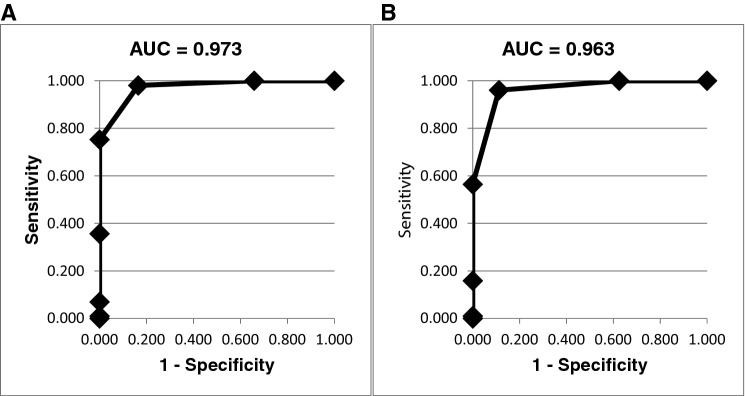
Results: A total of 253 patients were included. Their median age was 75.4 years (range 65-92), and 62.1% had > 1 impaired domain, with 39.9% considered frail. Bivariate analysis showed strong associations with age > 85 and all the geriatric parameters except for STOPP. Our final multivariate analysis resulted in 5 domains (the use of > 5 medications, a Lawton < 7, TUG > 20, Yesavage > 5, and the presence of at least one geriatric syndrome) being significantly associated with frailty and performing similarly to a CGA.
Conclusion: In our population of older NHL patients, an abbreviated evaluation based of only five domains, polypharmacy, TUG, Lawton scale, Yesavage scale and the presence of at least one geriatric syndrome, had similar performance to a formal CGA in determining frailty.
背景:非霍奇金淋巴瘤(NHL)的发病率正在增加,特别是在老年患者中,他们往往有较差的结局,可能倾向于增加毒性和较低的治疗耐受性。因此,彻底的治疗前评估是必不可少的。综合老年评估(comprehensive geriatric assessment, CGA)可用于评估考虑化疗的老年患者,是首选的评估工具。然而,正式的CGA是费力、复杂和耗时的。目的:分析老年人NHL的特征,确定与衰弱关系最大的CGA变量,以提出更简化的评估方法。方法:我们对2015年9月至2017年8月在我们肿瘤科就诊的年龄在60至65岁之间的NHL患者的CGAs数据进行了横断面研究。我们的评估参数包括:综合用药、老年人处方筛选工具(STOPP)、Lawton量表、Barthel指数、Katz指数、步态速度、Timed Up and Go (TUG)测试、迷你精神状态检查(MMSE)、Yesavage和Gijon量表、迷你营养评估(MNA)、老年综合征评估和老年累积疾病评定量表(CIRS-G)。正式的CGA由9个域组成;衰弱被定义为>2结构域的损伤。将各参数分别与脆弱性进行比较,并利用结果建立不同的多变量模型,采用logistic回归分析,获得脆弱性相关性最高的变量。结果:共纳入253例患者。他们的中位年龄为75.4岁(65-92岁),62.1%的人有bbb1受损,39.9%的人虚弱。双变量分析显示,除STOPP外,与年龄bb0 ~ 85岁和所有老年参数有很强的相关性。我们最终的多变量分析结果显示,5个域(bbbb5药物的使用、Lawton 20、Yesavage bbbb5和至少一种老年综合征的存在)与虚弱显著相关,表现与CGA相似。结论:在我们的老年NHL患者人群中,仅基于五个域(polypharmacy、TUG、Lawton量表、Yesavage量表和至少存在一种老年综合征)的简化评估在确定衰弱方面与正式的CGA具有相似的效果。


 求助内容:
 应助结果提醒方式:


 京公网安备 11010802042870号


