{"title":"The insights into calcium ion selectivity provided by ancestral prokaryotic ion channels.","authors":"Katsumasa Irie","doi":"10.2142/biophysico.bppb-v18.033","DOIUrl":null,"url":null,"abstract":"<p><p>Prokaryotic channels play an important role in the structural biology of ion channels. At the end of the 20<sup>th</sup> century, the first structure of a prokaryotic ion channel was revealed. Subsequently, the reporting of structures of various prokaryotic ion channels have provided fundamental insights into the structure of ion channels of higher organisms. Voltage-dependent Ca<sup>2+</sup> channels (Cavs) are indispensable for coupling action potentials with Ca<sup>2+</sup> signaling. Similar to other proteins, Cavs were predicted to have a prokaryotic counterpart; however, it has taken more than 20 years for one to be identified. The homotetrameric channel obtained from <i>Meiothermus ruber</i> generates the calcium ion specific current, so it is named as CavMr. Its selectivity filter contains a smaller number of negatively charged residues than mutant Cavs generated from other prokaryotic channels. CavMr belonged to a different cluster of phylogenetic trees than canonical prokaryotic cation channels. The glycine residue of the CavMr selectivity filter is a determinant for calcium selectivity. This glycine residue is conserved among eukaryotic Cavs, suggesting that there is a universal mechanism for calcium selectivity. A family of homotetrameric channels has also been identified from eukaryotic unicellular algae, and the investigation of these channels can help to understand the mechanism for ion selection that is conserved from prokaryotes to eukaryotes.</p>","PeriodicalId":8976,"journal":{"name":"Biophysics and Physicobiology","volume":" ","pages":"274-283"},"PeriodicalIF":0.0000,"publicationDate":"2021-11-19","publicationTypes":"Journal Article","fieldsOfStudy":null,"isOpenAccess":false,"openAccessPdf":"https://ftp.ncbi.nlm.nih.gov/pub/pmc/oa_pdf/2c/6e/18_274.PMC8677417.pdf","citationCount":"3","resultStr":null,"platform":"Semanticscholar","paperid":null,"PeriodicalName":"Biophysics and Physicobiology","FirstCategoryId":"1085","ListUrlMain":"https://doi.org/10.2142/biophysico.bppb-v18.033","RegionNum":0,"RegionCategory":null,"ArticlePicture":[],"TitleCN":null,"AbstractTextCN":null,"PMCID":null,"EPubDate":"2021/1/1 0:00:00","PubModel":"eCollection","JCR":"","JCRName":"","Score":null,"Total":0}
引用次数: 3
Abstract
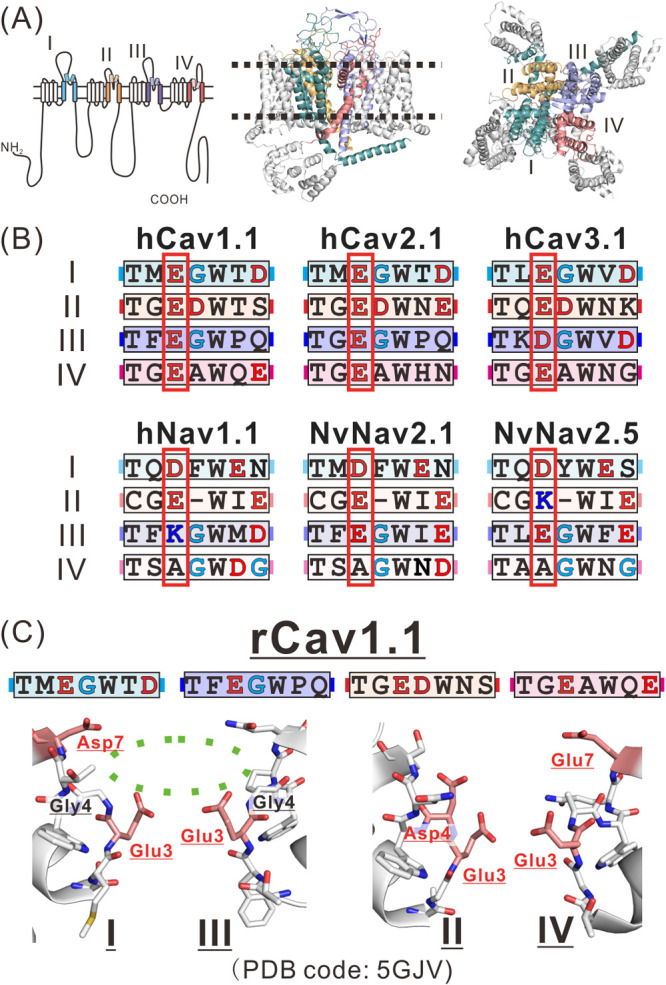
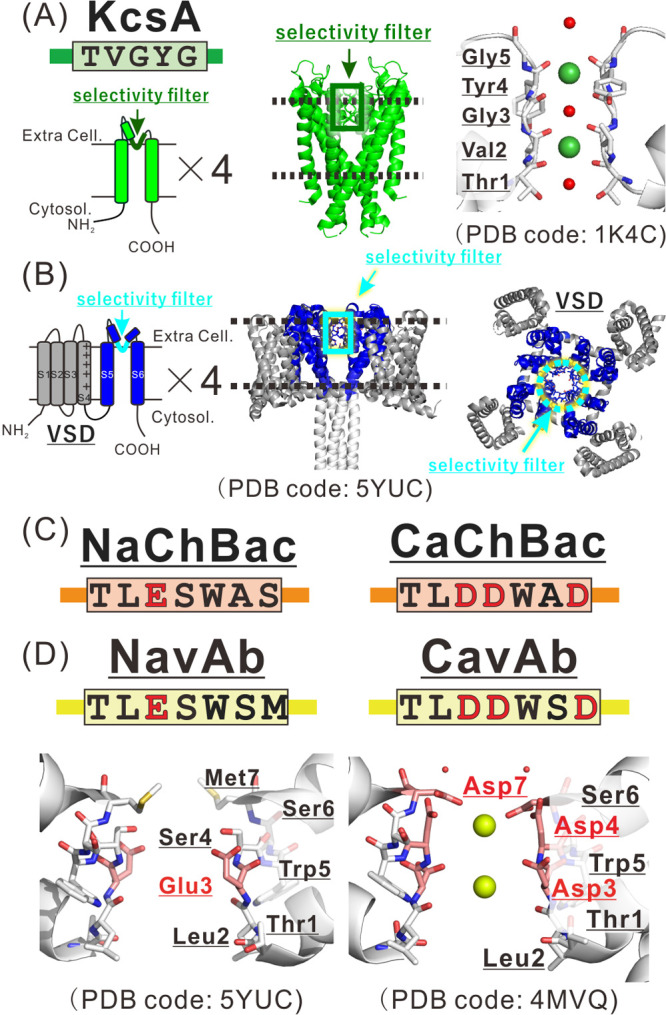
Prokaryotic channels play an important role in the structural biology of ion channels. At the end of the 20th century, the first structure of a prokaryotic ion channel was revealed. Subsequently, the reporting of structures of various prokaryotic ion channels have provided fundamental insights into the structure of ion channels of higher organisms. Voltage-dependent Ca2+ channels (Cavs) are indispensable for coupling action potentials with Ca2+ signaling. Similar to other proteins, Cavs were predicted to have a prokaryotic counterpart; however, it has taken more than 20 years for one to be identified. The homotetrameric channel obtained from Meiothermus ruber generates the calcium ion specific current, so it is named as CavMr. Its selectivity filter contains a smaller number of negatively charged residues than mutant Cavs generated from other prokaryotic channels. CavMr belonged to a different cluster of phylogenetic trees than canonical prokaryotic cation channels. The glycine residue of the CavMr selectivity filter is a determinant for calcium selectivity. This glycine residue is conserved among eukaryotic Cavs, suggesting that there is a universal mechanism for calcium selectivity. A family of homotetrameric channels has also been identified from eukaryotic unicellular algae, and the investigation of these channels can help to understand the mechanism for ion selection that is conserved from prokaryotes to eukaryotes.



 求助内容:
求助内容: 应助结果提醒方式:

 京公网安备 11010802042870号


