{"title":"Genomic Analysis of <i>Rhodococcus</i> sp. Br-6, a Bromate Reducing Bacterium Isolated From Soil in Chiba, Japan.","authors":"Kohei Ito, Masafumi Harada, Nobuyoshi Nakajima, Shigeki Yamamura, Masaru Tomita, Haruo Suzuki, Seigo Amachi","doi":"10.7150/jgen.27741","DOIUrl":null,"url":null,"abstract":"<p><p>Bromate is a byproduct of the ozone disinfection of drinking water. It is a genotoxic carcinogen and causes renal cell tumors in rats. Physicochemical removal of bromate is very difficult, making microbial reduction of bromate to bromide a promising approach to eliminate bromate from water. <i>Rhodococcus</i> sp. Br-6, isolated from soil, can efficiently reduce bromate by using acetate as an electron donor. We determined the draft genome sequence of <i>Rhodococcus</i> sp. Br-6 for the potential practical application of the bromate-reducing bacterium. Core genome phylogeny suggests that the Br-6 strain is most closely related to <i>R. equi</i>. The Br-6 genome contains genes encoding multiple isoforms of diaphorase, previously found to be involved in Br-6-mediated bromate reduction. The genes identified in the present study could be effective targets for experimental studies of microbial bromate reduction in the future.</p>","PeriodicalId":15834,"journal":{"name":"Journal of Genomics","volume":"6 ","pages":"122-126"},"PeriodicalIF":0.0000,"publicationDate":"2018-11-15","publicationTypes":"Journal Article","fieldsOfStudy":null,"isOpenAccess":false,"openAccessPdf":"https://sci-hub-pdf.com/10.7150/jgen.27741","citationCount":"0","resultStr":null,"platform":"Semanticscholar","paperid":null,"PeriodicalName":"Journal of Genomics","FirstCategoryId":"1085","ListUrlMain":"https://doi.org/10.7150/jgen.27741","RegionNum":0,"RegionCategory":null,"ArticlePicture":[],"TitleCN":null,"AbstractTextCN":null,"PMCID":null,"EPubDate":"2018/1/1 0:00:00","PubModel":"eCollection","JCR":"","JCRName":"","Score":null,"Total":0}
引用次数: 0
Abstract
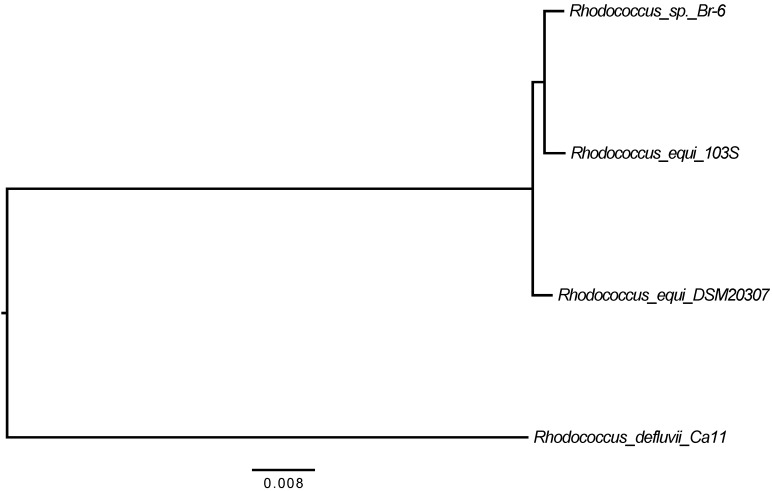
Bromate is a byproduct of the ozone disinfection of drinking water. It is a genotoxic carcinogen and causes renal cell tumors in rats. Physicochemical removal of bromate is very difficult, making microbial reduction of bromate to bromide a promising approach to eliminate bromate from water. Rhodococcus sp. Br-6, isolated from soil, can efficiently reduce bromate by using acetate as an electron donor. We determined the draft genome sequence of Rhodococcus sp. Br-6 for the potential practical application of the bromate-reducing bacterium. Core genome phylogeny suggests that the Br-6 strain is most closely related to R. equi. The Br-6 genome contains genes encoding multiple isoforms of diaphorase, previously found to be involved in Br-6-mediated bromate reduction. The genes identified in the present study could be effective targets for experimental studies of microbial bromate reduction in the future.
期刊介绍:
Journal of Genomics publishes papers of high quality in all areas of gene, genetics, genomics, proteomics, metabolomics, DNA/RNA, computational biology, bioinformatics, and other relevant areas of research and application. Articles published by the journal are rigorously peer-reviewed. Types of articles include: Research paper, Short research communication, Review or mini-reviews, Commentary, Database, Software.


 求助内容:
 应助结果提醒方式:


 京公网安备 11010802042870号


