{"title":"Levetiracetam restores GABAergic function and network homeostasis following Vps35 deficiency in excitatory neurons.","authors":"Zhi-Peng Liu, Daehoon Lee, Zhibing Tan, Anika Wu, Lin Mei, Wen-Cheng Xiong","doi":"10.1186/s40035-026-00585-x","DOIUrl":null,"url":null,"abstract":"<p><strong>Background: </strong>Alzheimer's disease (AD) and related dementias (ADRDs) remain incurable, partly due to their complex and poorly understood pathogenic mechanisms. Loss of vacuolar protein sorting-associated protein 35 (VPS35), a core component of the retromer complex, has been implicated in AD and ADRDs. While Vps35 deficiency is known to increase amyloidogenesis by regulating its cargo proteins, such as APP and BACE1, the precise mechanism by which VPS35 dysfunction leads to cognitive impairment remains elusive. While neuronal VPS35 regulates trafficking and functions of multiple synaptic membrane proteins, such as postsynaptic glutamatergic and GABAnergic receptors and pre-synaptic vesicle protein SV2A, and Levetiracetam (LEV), an antiepileptic drug that improves cognition, interacts with the SV2A, exactly how LEV enhances cognition is still a matter of debate.</p><p><strong>Methods: </strong>Given the abundant expression of VPS35 in pyramidal excitatory neurons, we generated a conditional knockout mouse model with Vps35 deletion from postnatal glutamatergic excitatory neurons (Vps35<sup>CaMKIIα</sup>) and characterized its phenotypes using a combination of behavioral assessments, and electrophysiological, biochemical, and immunohiotological analyses in the hippocampal CA1 region. A targeted pharmacological screen was conducted to evaluate the therapeutic potential of LEV.</p><p><strong>Results: </strong>Vps35 deletion did not disrupt the gross brain development but led to progressive cognitive decline beginning at three months of age. Electrophysiological analyses revealed earlier-onset hippocampal CA1 hyperexcitability, marked by depolarized resting membrane potentials and reduced Kir<sub>2.1</sub> expression. However, restoring Kir<sub>2.1</sub> to suppress hyperexcitability failed to rescue cognitive deficits. Instead, cognitive impairment was associated with weakened GABAergic transmission and disruption of the excitatory/inhibitory balance in the Schaffer collateral-CA1 circuit. Notably, LEV treatment diminished these deficits in mutant mice. Intriguingly, LEV increased the levels of retromer component, VPS26A, and multiple pre- and postsynaptic GABAergic proteins, in addition to SV2A, all of which were reduced in Vps35-deficient CA1 neurons.</p><p><strong>Conclusions: </strong>These findings identify VPS35 in excitatory neurons as a critical factor for inhibitory synapse maintenance and network homeostasis. This study also highlights LEV as a potential therapeutic strategy for ADRDs through the preservation of GABAergic synapses.</p>","PeriodicalId":23269,"journal":{"name":"Translational Neurodegeneration","volume":"15 1","pages":""},"PeriodicalIF":19.1000,"publicationDate":"2026-10-14","publicationTypes":"Journal Article","fieldsOfStudy":null,"isOpenAccess":false,"openAccessPdf":"https://www.ncbi.nlm.nih.gov/pmc/articles/PMC13662985/pdf/","citationCount":"0","resultStr":null,"platform":"Semanticscholar","paperid":null,"PeriodicalName":"Translational Neurodegeneration","FirstCategoryId":"3","ListUrlMain":"https://doi.org/10.1186/s40035-026-00585-x","RegionNum":1,"RegionCategory":"医学","ArticlePicture":[],"TitleCN":null,"AbstractTextCN":null,"PMCID":null,"EPubDate":"","PubModel":"","JCR":"Q1","JCRName":"NEUROSCIENCES","Score":null,"Total":0}
引用次数: 0
Abstract
Background: Alzheimer's disease (AD) and related dementias (ADRDs) remain incurable, partly due to their complex and poorly understood pathogenic mechanisms. Loss of vacuolar protein sorting-associated protein 35 (VPS35), a core component of the retromer complex, has been implicated in AD and ADRDs. While Vps35 deficiency is known to increase amyloidogenesis by regulating its cargo proteins, such as APP and BACE1, the precise mechanism by which VPS35 dysfunction leads to cognitive impairment remains elusive. While neuronal VPS35 regulates trafficking and functions of multiple synaptic membrane proteins, such as postsynaptic glutamatergic and GABAnergic receptors and pre-synaptic vesicle protein SV2A, and Levetiracetam (LEV), an antiepileptic drug that improves cognition, interacts with the SV2A, exactly how LEV enhances cognition is still a matter of debate.
Methods: Given the abundant expression of VPS35 in pyramidal excitatory neurons, we generated a conditional knockout mouse model with Vps35 deletion from postnatal glutamatergic excitatory neurons (Vps35CaMKIIα) and characterized its phenotypes using a combination of behavioral assessments, and electrophysiological, biochemical, and immunohiotological analyses in the hippocampal CA1 region. A targeted pharmacological screen was conducted to evaluate the therapeutic potential of LEV.
Results: Vps35 deletion did not disrupt the gross brain development but led to progressive cognitive decline beginning at three months of age. Electrophysiological analyses revealed earlier-onset hippocampal CA1 hyperexcitability, marked by depolarized resting membrane potentials and reduced Kir2.1 expression. However, restoring Kir2.1 to suppress hyperexcitability failed to rescue cognitive deficits. Instead, cognitive impairment was associated with weakened GABAergic transmission and disruption of the excitatory/inhibitory balance in the Schaffer collateral-CA1 circuit. Notably, LEV treatment diminished these deficits in mutant mice. Intriguingly, LEV increased the levels of retromer component, VPS26A, and multiple pre- and postsynaptic GABAergic proteins, in addition to SV2A, all of which were reduced in Vps35-deficient CA1 neurons.
Conclusions: These findings identify VPS35 in excitatory neurons as a critical factor for inhibitory synapse maintenance and network homeostasis. This study also highlights LEV as a potential therapeutic strategy for ADRDs through the preservation of GABAergic synapses.
期刊介绍:
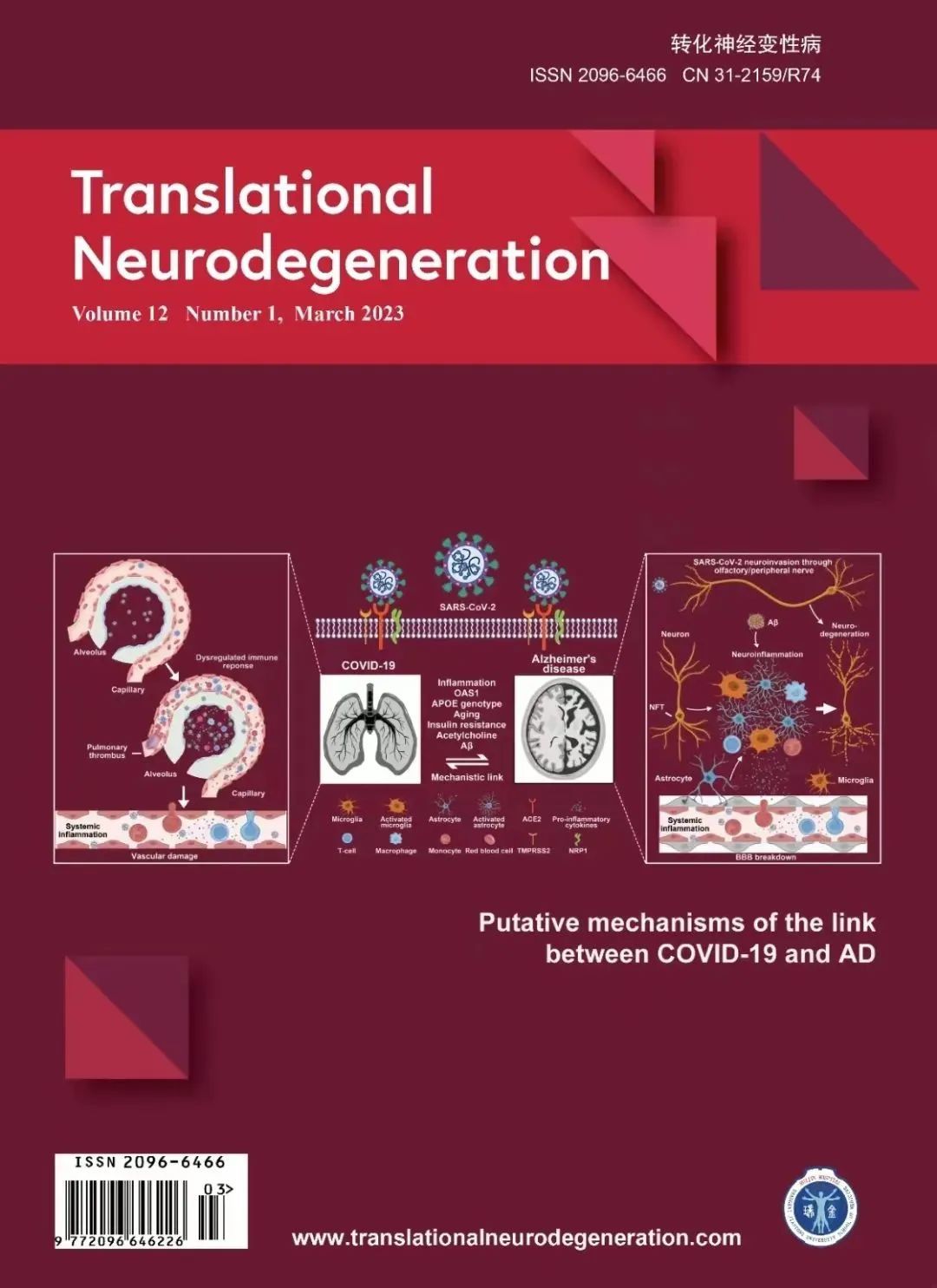
Translational Neurodegeneration, an open-access, peer-reviewed journal, addresses all aspects of neurodegenerative diseases. It serves as a prominent platform for research, therapeutics, and education, fostering discussions and insights across basic, translational, and clinical research domains. Covering Parkinson's disease, Alzheimer's disease, and other neurodegenerative conditions, it welcomes contributions on epidemiology, pathogenesis, diagnosis, prevention, drug development, rehabilitation, and drug delivery. Scientists, clinicians, and physician-scientists are encouraged to share their work in this specialized journal tailored to their fields.

 求助内容:
 应助结果提醒方式:


 京公网安备 11010802042870号


