{"title":"DNA-scaffolded catalysis for aliphatic alcohol oxidation in DEL synthesis.","authors":"Ethan M Hartman, Jeffrey D Martell","doi":"10.1039/d6sc05041g","DOIUrl":null,"url":null,"abstract":"<p><p>Compared to traditional methods for screening small molecule drug candidates, DNA-encoded libraries (DELs) offer greatly increased throughput by tethering each small molecule to unique DNA barcodes, allowing simultaneous screening of billions of small molecules in a single test-tube. Impressive advances have been made in adapting traditional organic reactions to be DNA-compatible, allowing for the synthesis of DELs with ever-expanding chemical diversity. Nonetheless, DNA is a fragile molecule that is damaged by many chemical reaction conditions, making these conditions incompatible with DEL synthesis. The fragility of DNA therefore necessitates the development of new platforms to accelerate the desired transformation of the tethered small molecules while minimizing damage to the DNA barcodes. Here, we report a DNA-scaffolded catalysis platform for high-yielding, high-selectivity transformations in the construction of DELs under mild conditions. Through DNA-scaffolding, the catalyst is brought in proximity to DNA-tethered small molecules, lowering the catalyst concentration needed and minimizing off-target DNA damage. We demonstrate the platform in the context of aliphatic alcohol oxidation, a transformation for which conventional reactions with free-floating catalysts cause oxidative DNA damage. We further demonstrate that the DNA-scaffolded DEL synthesis platform can be incorporated into existing DEL synthesis workflows. We anticipate that the DNA-scaffolded DEL synthesis platform will find broad utility in improving the DNA-compatibility of organic transformations and will expand the toolkit of DNA-compatible chemical reactions.</p>","PeriodicalId":9909,"journal":{"name":"Chemical Science","volume":" ","pages":""},"PeriodicalIF":8.1000,"publicationDate":"2026-10-07","publicationTypes":"Journal Article","fieldsOfStudy":null,"isOpenAccess":false,"openAccessPdf":"https://www.ncbi.nlm.nih.gov/pmc/articles/PMC13643529/pdf/","citationCount":"0","resultStr":null,"platform":"Semanticscholar","paperid":null,"PeriodicalName":"Chemical Science","FirstCategoryId":"92","ListUrlMain":"https://doi.org/10.1039/d6sc05041g","RegionNum":1,"RegionCategory":"化学","ArticlePicture":[],"TitleCN":null,"AbstractTextCN":null,"PMCID":null,"EPubDate":"","PubModel":"","JCR":"Q1","JCRName":"CHEMISTRY, MULTIDISCIPLINARY","Score":null,"Total":0}
引用次数: 0
Abstract
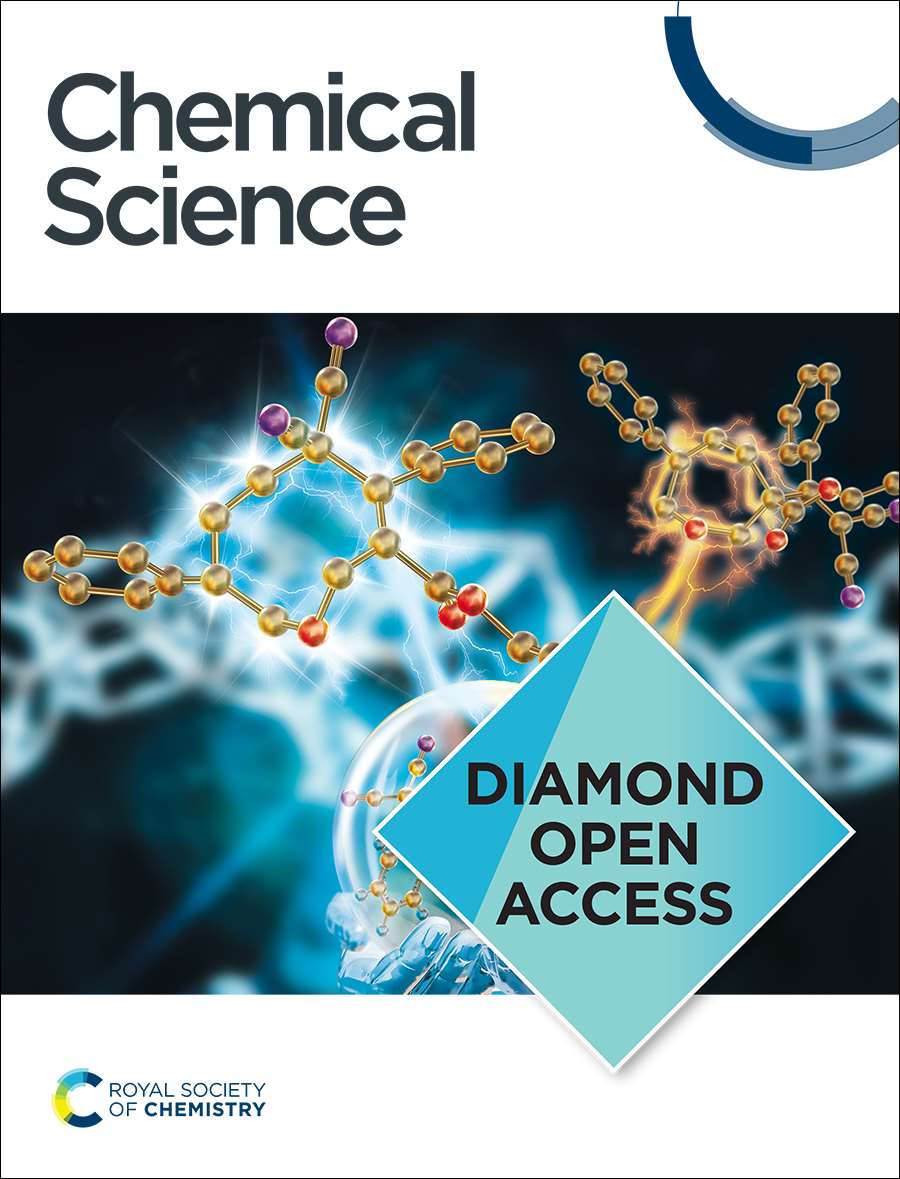
Compared to traditional methods for screening small molecule drug candidates, DNA-encoded libraries (DELs) offer greatly increased throughput by tethering each small molecule to unique DNA barcodes, allowing simultaneous screening of billions of small molecules in a single test-tube. Impressive advances have been made in adapting traditional organic reactions to be DNA-compatible, allowing for the synthesis of DELs with ever-expanding chemical diversity. Nonetheless, DNA is a fragile molecule that is damaged by many chemical reaction conditions, making these conditions incompatible with DEL synthesis. The fragility of DNA therefore necessitates the development of new platforms to accelerate the desired transformation of the tethered small molecules while minimizing damage to the DNA barcodes. Here, we report a DNA-scaffolded catalysis platform for high-yielding, high-selectivity transformations in the construction of DELs under mild conditions. Through DNA-scaffolding, the catalyst is brought in proximity to DNA-tethered small molecules, lowering the catalyst concentration needed and minimizing off-target DNA damage. We demonstrate the platform in the context of aliphatic alcohol oxidation, a transformation for which conventional reactions with free-floating catalysts cause oxidative DNA damage. We further demonstrate that the DNA-scaffolded DEL synthesis platform can be incorporated into existing DEL synthesis workflows. We anticipate that the DNA-scaffolded DEL synthesis platform will find broad utility in improving the DNA-compatibility of organic transformations and will expand the toolkit of DNA-compatible chemical reactions.
期刊介绍:
Chemical Science is a journal that encompasses various disciplines within the chemical sciences. Its scope includes publishing ground-breaking research with significant implications for its respective field, as well as appealing to a wider audience in related areas. To be considered for publication, articles must showcase innovative and original advances in their field of study and be presented in a manner that is understandable to scientists from diverse backgrounds. However, the journal generally does not publish highly specialized research.

 求助内容:
 应助结果提醒方式:


 京公网安备 11010802042870号


