
LCSM: A Local Chart-Based Statistical Model for Femoral Shape Analysis
IF 10.8
1区 工程技术
Q1 ENGINEERING, ELECTRICAL & ELECTRONIC
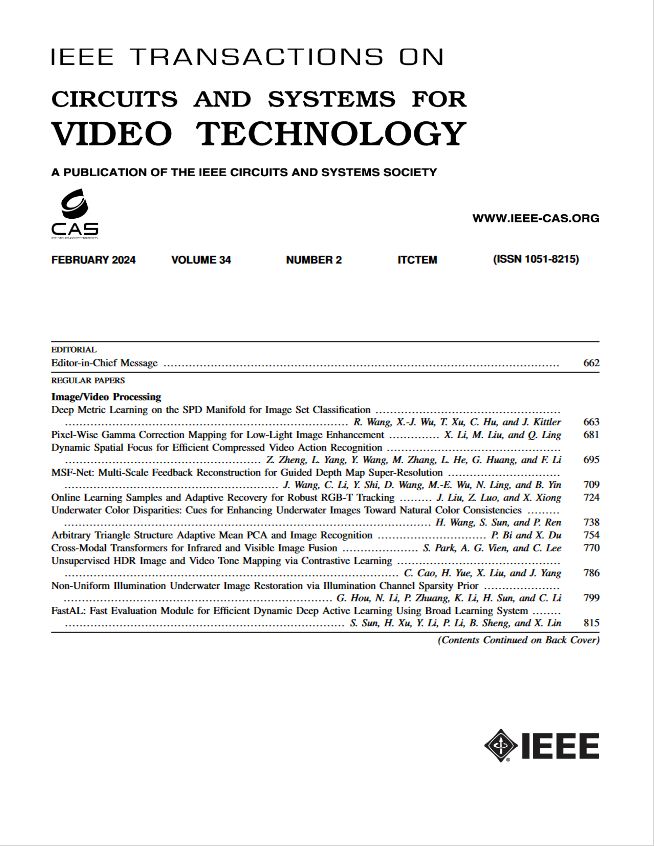
IEEE Transactions on Circuits and Systems for Video Technology
Pub Date : 2026-10-01
Epub Date: 2026-06-08
DOI:10.1109/TCSVT.2026.3701217
引用次数: 0
Abstract
Statistical shape modeling of the femur is vital for clinical applications, yet linear methods struggle with complex geometric variations. While recent chart-based generative models like ChartPointFlow excel at general point cloud reconstruction, their direct application to the nuanced domain of SSM is limited. To bridge this gap, we propose a novel framework that adapts and significantly extends the chart-based paradigm for robust statistical shape analysis. Our core contributions are threefold. First, we are applying this substructure-based generative approach to the statistical modeling of anatomical shapes, moving beyond reconstruction. Second, to overcome the limitations of baseline encoders in capturing intricate anatomical details, we design a Geometric-enhanced Dynamic Graph Convolutional encoder that integrates multi-level geometric feature encoding. Third, to better learn the statistical distribution across a population, we introduce a point-wise feature augmentation module, termed Fine Feature Mixture module, which enriches feature diversity and robustness by fusing fine-grained representations across different samples. Extensive reconstruction and generation experiments on a femur dataset demonstrate our framework’s superiority. Furthermore, evaluations on multiple ShapeNet categories validate its generalization and applicability to diverse 3D shape modeling tasks. Code will be available inLCSM:基于局部图的股骨形状分析统计模型
股骨的统计形状建模对临床应用至关重要,但线性方法与复杂的几何变化作斗争。虽然最近基于图表的生成模型(如ChartPointFlow)在一般点云重建方面表现出色,但它们在SSM精细领域的直接应用是有限的。为了弥补这一差距,我们提出了一个新的框架,该框架适应并显著扩展了基于图表的稳健统计形状分析范式。我们的核心贡献有三个方面。首先,我们将这种基于子结构的生成方法应用于解剖形状的统计建模,而不仅仅是重建。其次,为了克服基线编码器在捕获复杂解剖细节方面的局限性,我们设计了一种集成了多层次几何特征编码的几何增强动态图卷积编码器。第三,为了更好地了解总体的统计分布,我们引入了一个点特征增强模块,称为精细特征混合模块,该模块通过融合不同样本的细粒度表示来丰富特征多样性和鲁棒性。在股骨数据集上进行的大量重建和生成实验证明了我们的框架的优越性。此外,对多个ShapeNet类别的评估验证了其泛化和适用于各种三维形状建模任务。代码将在https://github.com/LujZhang/LCSM中提供
本文章由计算机程序翻译,如有差异,请以英文原文为准。
求助全文
约1分钟内获得全文
求助全文
来源期刊
CiteScore
13.80
自引率
27.40%
发文量
660
审稿时长
5 months
期刊介绍:
The IEEE Transactions on Circuits and Systems for Video Technology (TCSVT) is dedicated to covering all aspects of video technologies from a circuits and systems perspective. We encourage submissions of general, theoretical, and application-oriented papers related to image and video acquisition, representation, presentation, and display. Additionally, we welcome contributions in areas such as processing, filtering, and transforms; analysis and synthesis; learning and understanding; compression, transmission, communication, and networking; as well as storage, retrieval, indexing, and search. Furthermore, papers focusing on hardware and software design and implementation are highly valued. Join us in advancing the field of video technology through innovative research and insights.
 求助内容:
 应助结果提醒方式:


 京公网安备 11010802042870号


