
Time-Perception-Enhanced Video Grounding Framework With Density-Aware Position Encoding
IF 10.8
1区 工程技术
Q1 ENGINEERING, ELECTRICAL & ELECTRONIC
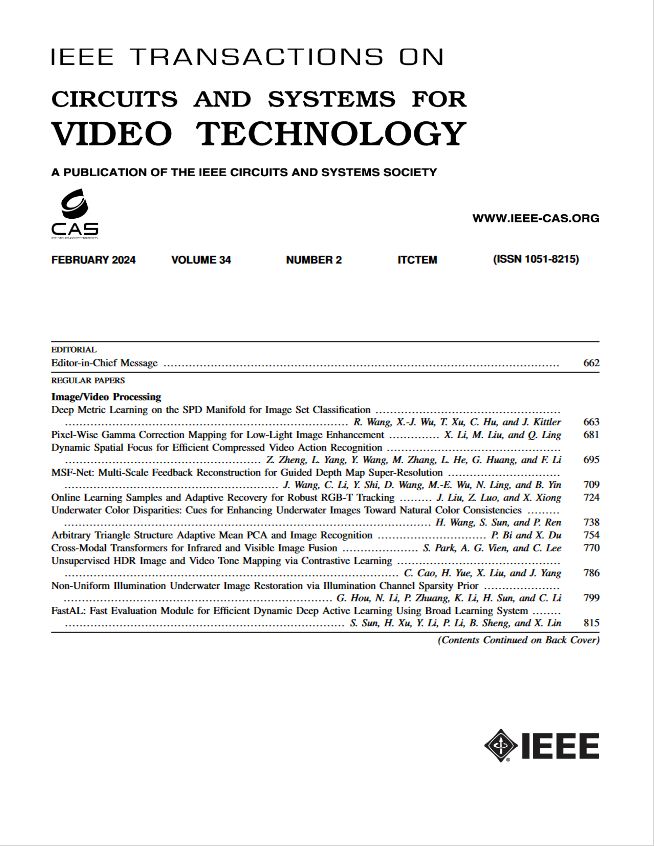
IEEE Transactions on Circuits and Systems for Video Technology
Pub Date : 2026-10-01
Epub Date: 2026-06-30
DOI:10.1109/TCSVT.2026.3708456
引用次数: 0
Abstract
Existing video-language large models (video-LLMs) have made notable progress in understanding global video content but still struggle to capture fine-grained temporal dynamics and accurately align visual events with textual descriptions. In this work, we introduce DAPE-VLLM (Density-Aware Position Encoding enhanced Video-Language Large Model), a time-perception enhanced video grounding framework that integrates density-aware position encoding with boundary perception, to address these limitations and bridge the temporal discrepancy between video and language modalities. We propose a suite of boundary-aware tasks that explicitly model event durations, locations, and transitions, enabling large language models to better understand temporal structure within videos. In addition, we develop a novel density-aware temporal encoding mechanism that dynamically adapts position representations to varying temporal information density, enhancing the model’s ability to localize events precisely across diverse video content. Extensive experiments across ActivityNet, Charades, and DiDeMo datasets demonstrate the effectiveness of our approach, yielding consistent performance improvements and achieving up to 11.2% relative gain in R@0.3. These results validate the importance of integrating density-aware modeling and boundary perception to advance fine-grained video grounding capabilities in large language models.具有密度感知位置编码的时间感知增强视频接地框架
现有的视频语言大型模型(video- llm)在理解全球视频内容方面取得了显著进展,但在捕捉细粒度的时间动态和准确地将视觉事件与文本描述对齐方面仍然存在困难。在这项工作中,我们引入了DAPE-VLLM(密度感知位置编码增强视频语言大模型),这是一个时间感知增强的视频基础框架,它集成了密度感知位置编码和边界感知,以解决这些限制并弥合视频和语言模式之间的时间差异。我们提出了一套边界感知任务,明确地对事件持续时间、位置和过渡进行建模,使大型语言模型能够更好地理解视频中的时间结构。此外,我们开发了一种新颖的密度感知时态编码机制,该机制动态地适应位置表示以变化的时态信息密度,增强了模型在不同视频内容中精确定位事件的能力。在ActivityNet、Charades和DiDeMo数据集上进行的大量实验证明了我们的方法的有效性,产生了一致的性能改进,并在R@0.3上实现了高达11.2%的相对增益。这些结果验证了集成密度感知建模和边界感知对于提高大型语言模型中细粒度视频接地能力的重要性。
本文章由计算机程序翻译,如有差异,请以英文原文为准。
求助全文
约1分钟内获得全文
求助全文
来源期刊
CiteScore
13.80
自引率
27.40%
发文量
660
审稿时长
5 months
期刊介绍:
The IEEE Transactions on Circuits and Systems for Video Technology (TCSVT) is dedicated to covering all aspects of video technologies from a circuits and systems perspective. We encourage submissions of general, theoretical, and application-oriented papers related to image and video acquisition, representation, presentation, and display. Additionally, we welcome contributions in areas such as processing, filtering, and transforms; analysis and synthesis; learning and understanding; compression, transmission, communication, and networking; as well as storage, retrieval, indexing, and search. Furthermore, papers focusing on hardware and software design and implementation are highly valued. Join us in advancing the field of video technology through innovative research and insights.
 求助内容:
 应助结果提醒方式:


 京公网安备 11010802042870号


