Ollie Pitts, Chiara Premuda, ZhiLing Yuan, Mattia Nigro, Till Othmer, Nikolas Johl, Arafa Aboelhassan, Safaa Eid, Sarah Hashem, Noha Khalil, Michael Behnke, Oto Melter, Pavel Drevinek, Rishi Dhillon, Irfan Shafiq, Nilüfer Acet-Öztürk, Ozge Aydin Guclu, Daniela Girelli, Jamie Duckers, Wang Chun Kwok, Stefano Aliberti, Andrea Gramegna, Stephanie Thee, Frederick Frost, Anand Shah
{"title":"International epidemiology of antimicrobial resistance in people living with chronic lung infection.","authors":"Ollie Pitts, Chiara Premuda, ZhiLing Yuan, Mattia Nigro, Till Othmer, Nikolas Johl, Arafa Aboelhassan, Safaa Eid, Sarah Hashem, Noha Khalil, Michael Behnke, Oto Melter, Pavel Drevinek, Rishi Dhillon, Irfan Shafiq, Nilüfer Acet-Öztürk, Ozge Aydin Guclu, Daniela Girelli, Jamie Duckers, Wang Chun Kwok, Stefano Aliberti, Andrea Gramegna, Stephanie Thee, Frederick Frost, Anand Shah","doi":"10.1136/thorax-2026-225527","DOIUrl":null,"url":null,"abstract":"<p><strong>Background: </strong>Antimicrobial resistance (AMR) is a global threat for people with chronic lung infection; however, international AMR epidemiology in bronchiectasis and cystic fibrosis (CF) is poorly characterised. In this study, we retrospectively analyse international longitudinal AMR epidemiology in bronchiectasis and CF.</p><p><strong>Methods: </strong>Microbiology data were analysed from 110 323 respiratory samples in 19 143 individuals with bronchiectasis or CF across 11 cities, eight countries, three continents between 2011 and 2024. Longitudinal AMR prevalence, multidrug-resistant (MDR) and extensively drug-resistant (XDR) prevalence and multiple antibiotic resistance (MAR) index were analysed by disease and country. Pilot analysis of concurrent/disjoint resistance in antimicrobial pairs and triplets in regional datasets was performed to inform combination or cyclical antimicrobial choice.</p><p><strong>Findings: </strong>Geographic AMR differences were noted across pathogens in bronchiectasis and CF with increased <i>Pseudomonas aeruginosa</i> resistance in central/southern Europe and increased <i>Klebsiella pneumoniae</i> resistance in Hong Kong. MDR burden was high in emergent pathogens <i>Escherichia coli</i> (CF: MDR 32.6%; XDR 12.4%; bronchiectasis: MDR 39.2%; XDR 4.9%) and <i>K. pneumoniae</i> (CF: MDR 22.7%; XDR 15.6%; bronchiectasis: MDR 13.4%; XDR 1.5%). A longitudinal rise in <i>P. aeruginosa</i> AMR was seen in bronchiectasis across four centres for antipseudomonal aminoglycosides (p<0.001; OR/year 1.44; 95% CI 1.24 to 1.67), fluoroquinolones (p=0.002; OR/year 1.13; 95% CI 1.05 to 1.23), cephalosporins (p=0.005; OR/year 1.17; 95% CI 1.05 to 1.30), penicillins with beta-lactamase inhibitor (p=0.02; OR/year 1.18; 95% CI 1.03 to 1.35) and carbapenems (p=0.048; OR/year 1.11; 95% CI 1.00 to 1.23). Rising longitudinal <i>K. pneumoniae</i> AMR was seen for cephalosporins (p=0.01; OR/year 1.32; 95% CI 1.06 to 1.65) and carbapenems (p=0.04; OR/year 1.64; 95% CI 1.03 to 2.62). A significant increase in AMR, as measured by the MAR index, was observed in individuals with residual culture-positive CF receiving triple cystic fibrosis transmembrane conductance regulator (CFTR) modulator therapy (p<0.001). Strong concurrent resistance was noted in bronchiectasis across regions with geographic variation in disjoint antimicrobial pair resistance.</p><p><strong>Conclusion: </strong>We show a significant increasing international AMR burden in bronchiectasis and CF, with geographic variation and persistence post-CFTR modulator therapy.</p>","PeriodicalId":23284,"journal":{"name":"Thorax","volume":" ","pages":""},"PeriodicalIF":9.1000,"publicationDate":"2026-09-21","publicationTypes":"Journal Article","fieldsOfStudy":null,"isOpenAccess":false,"openAccessPdf":"","citationCount":"0","resultStr":null,"platform":"Semanticscholar","paperid":null,"PeriodicalName":"Thorax","FirstCategoryId":"3","ListUrlMain":"https://doi.org/10.1136/thorax-2026-225527","RegionNum":1,"RegionCategory":"医学","ArticlePicture":[],"TitleCN":null,"AbstractTextCN":null,"PMCID":null,"EPubDate":"","PubModel":"","JCR":"Q1","JCRName":"RESPIRATORY SYSTEM","Score":null,"Total":0}
引用次数: 0
Abstract
Background: Antimicrobial resistance (AMR) is a global threat for people with chronic lung infection; however, international AMR epidemiology in bronchiectasis and cystic fibrosis (CF) is poorly characterised. In this study, we retrospectively analyse international longitudinal AMR epidemiology in bronchiectasis and CF.
Methods: Microbiology data were analysed from 110 323 respiratory samples in 19 143 individuals with bronchiectasis or CF across 11 cities, eight countries, three continents between 2011 and 2024. Longitudinal AMR prevalence, multidrug-resistant (MDR) and extensively drug-resistant (XDR) prevalence and multiple antibiotic resistance (MAR) index were analysed by disease and country. Pilot analysis of concurrent/disjoint resistance in antimicrobial pairs and triplets in regional datasets was performed to inform combination or cyclical antimicrobial choice.
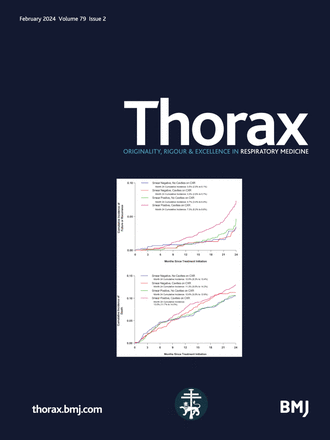
Findings: Geographic AMR differences were noted across pathogens in bronchiectasis and CF with increased Pseudomonas aeruginosa resistance in central/southern Europe and increased Klebsiella pneumoniae resistance in Hong Kong. MDR burden was high in emergent pathogens Escherichia coli (CF: MDR 32.6%; XDR 12.4%; bronchiectasis: MDR 39.2%; XDR 4.9%) and K. pneumoniae (CF: MDR 22.7%; XDR 15.6%; bronchiectasis: MDR 13.4%; XDR 1.5%). A longitudinal rise in P. aeruginosa AMR was seen in bronchiectasis across four centres for antipseudomonal aminoglycosides (p<0.001; OR/year 1.44; 95% CI 1.24 to 1.67), fluoroquinolones (p=0.002; OR/year 1.13; 95% CI 1.05 to 1.23), cephalosporins (p=0.005; OR/year 1.17; 95% CI 1.05 to 1.30), penicillins with beta-lactamase inhibitor (p=0.02; OR/year 1.18; 95% CI 1.03 to 1.35) and carbapenems (p=0.048; OR/year 1.11; 95% CI 1.00 to 1.23). Rising longitudinal K. pneumoniae AMR was seen for cephalosporins (p=0.01; OR/year 1.32; 95% CI 1.06 to 1.65) and carbapenems (p=0.04; OR/year 1.64; 95% CI 1.03 to 2.62). A significant increase in AMR, as measured by the MAR index, was observed in individuals with residual culture-positive CF receiving triple cystic fibrosis transmembrane conductance regulator (CFTR) modulator therapy (p<0.001). Strong concurrent resistance was noted in bronchiectasis across regions with geographic variation in disjoint antimicrobial pair resistance.
Conclusion: We show a significant increasing international AMR burden in bronchiectasis and CF, with geographic variation and persistence post-CFTR modulator therapy.
期刊介绍:
Thorax stands as one of the premier respiratory medicine journals globally, featuring clinical and experimental research articles spanning respiratory medicine, pediatrics, immunology, pharmacology, pathology, and surgery. The journal's mission is to publish noteworthy advancements in scientific understanding that are poised to influence clinical practice significantly. This encompasses articles delving into basic and translational mechanisms applicable to clinical material, covering areas such as cell and molecular biology, genetics, epidemiology, and immunology.

 求助内容:
 应助结果提醒方式:


 京公网安备 11010802042870号


