Nuria Aguilar, Sara Rozas, Pedro A. Marcos, Alfredo Bol, Santiago Aparicio
{"title":"Hydrophobic Natural Deep Eutectic Solvents for Sustainable CO2 Capture: Molecular Insights From Multiscale Modeling","authors":"Nuria Aguilar, Sara Rozas, Pedro A. Marcos, Alfredo Bol, Santiago Aparicio","doi":"10.1002/cphc.70569","DOIUrl":null,"url":null,"abstract":"<p>This research delves into the physicochemical properties and CO<sub>2</sub> capture ability of a hydrophobic natural deep eutectic solvent (HNADES) consisting of piperitone (PIP) and linoleic acid in a 1:1 molar ratio. Through a multiscale computational approach involving COSMO-RS calculations, quantum chemistry methods, and molecular dynamics simulations, we demonstrate that the considered system, via the development of strong hydrogen bonding interactions, both homo- and hetero-associations, and in parallel with nonpolar domains through van der Waals interactions, creates a suitable situation for CO<sub>2</sub> capture. The nonpolar domains provide space available for accommodating CO<sub>2</sub> molecules without interfering with the fluid's hydrogen bonding Gnetwork. Molecular dynamics simulations show that CO<sub>2</sub> molecules are adsorbed following a two-step mechanism: first, adsorption at the gas–liquid interface, and second, subsequent migration into the bulk liquid. Upon exposure to a simulated flue gas, the HNADES is significantly selective toward CO<sub>2</sub>, which permeates the fluid, with N<sub>2</sub> and O<sub>2</sub> molecules remaining predominantly, in the gas phase. The desorption of the adsorbed CO<sub>2</sub> is possible after a heating process, thus enabling sorption–desorption cycles for practical use. This sorbent has advantages of being eco-friendly, having zero vapor pressure, and low water solubility, which makes it an optimal candidate for being involved in sustainable carbon capture technologies.</p>","PeriodicalId":9819,"journal":{"name":"Chemphyschem","volume":"27 18","pages":""},"PeriodicalIF":2.4000,"publicationDate":"2026-09-21","publicationTypes":"Journal Article","fieldsOfStudy":null,"isOpenAccess":false,"openAccessPdf":"https://www.ncbi.nlm.nih.gov/pmc/articles/PMC13593400/pdf/","citationCount":"0","resultStr":null,"platform":"Semanticscholar","paperid":null,"PeriodicalName":"Chemphyschem","FirstCategoryId":"92","ListUrlMain":"https://onlinelibrary.wiley.com/doi/10.1002/cphc.70569","RegionNum":3,"RegionCategory":"化学","ArticlePicture":[],"TitleCN":null,"AbstractTextCN":null,"PMCID":null,"EPubDate":"","PubModel":"","JCR":"Q3","JCRName":"CHEMISTRY, PHYSICAL","Score":null,"Total":0}
引用次数: 0
Abstract
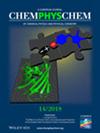
This research delves into the physicochemical properties and CO2 capture ability of a hydrophobic natural deep eutectic solvent (HNADES) consisting of piperitone (PIP) and linoleic acid in a 1:1 molar ratio. Through a multiscale computational approach involving COSMO-RS calculations, quantum chemistry methods, and molecular dynamics simulations, we demonstrate that the considered system, via the development of strong hydrogen bonding interactions, both homo- and hetero-associations, and in parallel with nonpolar domains through van der Waals interactions, creates a suitable situation for CO2 capture. The nonpolar domains provide space available for accommodating CO2 molecules without interfering with the fluid's hydrogen bonding Gnetwork. Molecular dynamics simulations show that CO2 molecules are adsorbed following a two-step mechanism: first, adsorption at the gas–liquid interface, and second, subsequent migration into the bulk liquid. Upon exposure to a simulated flue gas, the HNADES is significantly selective toward CO2, which permeates the fluid, with N2 and O2 molecules remaining predominantly, in the gas phase. The desorption of the adsorbed CO2 is possible after a heating process, thus enabling sorption–desorption cycles for practical use. This sorbent has advantages of being eco-friendly, having zero vapor pressure, and low water solubility, which makes it an optimal candidate for being involved in sustainable carbon capture technologies.
期刊介绍:
ChemPhysChem is one of the leading chemistry/physics interdisciplinary journals (ISI Impact Factor 2018: 3.077) for physical chemistry and chemical physics. It is published on behalf of Chemistry Europe, an association of 16 European chemical societies.
ChemPhysChem is an international source for important primary and critical secondary information across the whole field of physical chemistry and chemical physics. It integrates this wide and flourishing field ranging from Solid State and Soft-Matter Research, Electro- and Photochemistry, Femtochemistry and Nanotechnology, Complex Systems, Single-Molecule Research, Clusters and Colloids, Catalysis and Surface Science, Biophysics and Physical Biochemistry, Atmospheric and Environmental Chemistry, and many more topics. ChemPhysChem is peer-reviewed.

 求助内容:
 应助结果提醒方式:


 京公网安备 11010802042870号


