{"title":"[Interpretation of updated guidelines on diagnosis of hemangiomas and vascular anomalies].","authors":"Q Q Nie, Z D Ye, X X Fan","doi":"10.3760/cma.j.cn112139-20260626-00283","DOIUrl":null,"url":null,"abstract":"<p><p>The International Society for the Study of Vascular Anomalies (ISSVA) classification is an internationally accepted framework for the diagnosis and communication of vascular tumors and vascular malformations. Since the tumor-versus-malformation dichotomy was established in 1996, the classification underwent major revisions in 2014 and 2018. In June 2025, the ISSVA Classification Group published an updated classification in the Journal of Vascular Anomalies and positioned it as a continuously updated \"living document\", representing the most substantial revision to date. Key updates include: at the top level, the new category \"potentially unique vascular anomaly\" replaces the former \"provisionally unclassified vascular anomalies\"; a two-tier structure comprising a landing page and a full classification table is introduced, together with an independent glossary; for vascular malformations, vessel type (simple versus combined) is no longer the primary organizing criterion, and the classification is now organized by flow velocity (fast-flow versus slow-flow) together with developmental anomalies of named vessels; and molecular genetic information has been systematically incorporated. Using the 2018 version as a reference, this article reviews the key updates of the 2025 version and interprets them in the context of advances in molecular genetics, targeted therapy, and the practice of vascular anomaly diagnosis and treatment in China, aiming to provide a reference for standardized diagnosis, multidisciplinary communication, and individualized treatment decisions.</p>","PeriodicalId":60685,"journal":{"name":"中华外科杂志","volume":"64 11","pages":"1177-1183"},"PeriodicalIF":0.0000,"publicationDate":"2026-09-21","publicationTypes":"Journal Article","fieldsOfStudy":null,"isOpenAccess":false,"openAccessPdf":"","citationCount":"0","resultStr":null,"platform":"Semanticscholar","paperid":null,"PeriodicalName":"中华外科杂志","FirstCategoryId":"3","ListUrlMain":"https://doi.org/10.3760/cma.j.cn112139-20260626-00283","RegionNum":0,"RegionCategory":null,"ArticlePicture":[],"TitleCN":null,"AbstractTextCN":null,"PMCID":null,"EPubDate":"","PubModel":"","JCR":"","JCRName":"","Score":null,"Total":0}
引用次数: 0
Abstract
The International Society for the Study of Vascular Anomalies (ISSVA) classification is an internationally accepted framework for the diagnosis and communication of vascular tumors and vascular malformations. Since the tumor-versus-malformation dichotomy was established in 1996, the classification underwent major revisions in 2014 and 2018. In June 2025, the ISSVA Classification Group published an updated classification in the Journal of Vascular Anomalies and positioned it as a continuously updated "living document", representing the most substantial revision to date. Key updates include: at the top level, the new category "potentially unique vascular anomaly" replaces the former "provisionally unclassified vascular anomalies"; a two-tier structure comprising a landing page and a full classification table is introduced, together with an independent glossary; for vascular malformations, vessel type (simple versus combined) is no longer the primary organizing criterion, and the classification is now organized by flow velocity (fast-flow versus slow-flow) together with developmental anomalies of named vessels; and molecular genetic information has been systematically incorporated. Using the 2018 version as a reference, this article reviews the key updates of the 2025 version and interprets them in the context of advances in molecular genetics, targeted therapy, and the practice of vascular anomaly diagnosis and treatment in China, aiming to provide a reference for standardized diagnosis, multidisciplinary communication, and individualized treatment decisions.
期刊介绍:
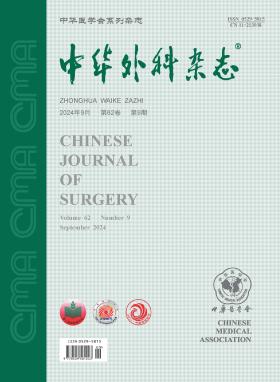
Chinese Journal of Surgery|Chin J Surg (monthly) is a high-level medical science and technology journal approved by the General Administration of Press and Publication of the People's Republic of China, under the supervision of the China Association for Science and Technology, and organised by the Chinese Medical Association for domestic and international public circulation. It was founded in January 1951, and is published on the basis of the Journal of Chinese Surgery. The Journal is aimed at senior and intermediate surgeons and related researchers, mainly reporting the leading scientific research results and clinical experience in the field of surgery, as well as the basic theoretical research that has a guiding effect on the clinical work of surgery.
Chinese Journal of Surgery|Chin J Surg is committed to reflecting the major research progress in the field of surgery in China and promoting academic exchanges at home and abroad. The main columns include thesis, meta-analysis, review, expert forum, synthesis, case report, diagnosis and treatment experience, technical exchange, clinical case discussion, academic controversy, and special lectures, etc. The journal has been accepted by the National Academy of Medicine of the United States. The journal has been included in many famous databases at home and abroad, such as the Biomedical Analysis and Online Retrieval System (MEDLINE) of the U.S. National Library of Medicine.

 求助内容:
 应助结果提醒方式:


 京公网安备 11010802042870号


