Elena Pasho, Alberto Catanese, Edor Kabashi, Sorana Ciura
{"title":"What can we learn on ALS pathophysiology from iPSC-derived motor neurons harbouring TARBDP mutations: a systematic review.","authors":"Elena Pasho, Alberto Catanese, Edor Kabashi, Sorana Ciura","doi":"10.1186/s40035-026-00580-2","DOIUrl":null,"url":null,"abstract":"<p><p>The degenerating motor neurons of amyotrophic lateral sclerosis (ALS) patients are characterized by the accumulation of cytoplasmic aggregates, specifically enriched in ubiquitinated TDP-43. Expressed mainly in the nucleus and partially in the cytoplasm to execute its role in RNA metabolism, the exact mechanisms that bring TDP-43 to aggregate in disease have yet to be described. Unfolding these processes could bring us closer to effective drug development that is drastically lacking in the ALS research field. Induced pluripotent stem cells (iPSCs) offer a promising platform for studying ALS pathogenesis directly in the relevant human genetic backgrounds of ALS patients. Since 2012, more than 30 published studies have investigated altered cellular and subcellular features in iPSC-derived motor neurons from ALS patients harbouring mutations in the TARDBP gene (encoding for TDP-43 protein). However, there are discrepancies in the obtained results, which call into question the relevance of this model for ALS disease modelling and its use for drug development efforts. Thus, there is a need in the field for a clear and detailed layout and summary of all the published data on ALS modelling using TARDBP mutant iPSC-derived motor neurons. In this systematic review, we analyse all phenotypic assessments that have been done on iPSC-derived motor neurons derived from TARDBP ALS patients on the morphology, functionality and the viability of these cells. We also analyse if this model recapitulates ALS pathology in vitro by comparing studies that looked at TDP-43 and neurofilament aggregation, as well as stress granule dynamics. Importantly, we compare the technical details of all the discussed studies, such as differentiation protocol, age and purity of the used motor neurons and quantification method, in order to discuss how all of these parameters affect the observed phenotypes. Lastly, we also expand our review to all other different cell types that have been differentiated from TARDBP iPSCs, highlighting non-cell autonomous mechanisms of TDP-43-ALS pathophysiology. By integrating findings across studies, this review identifies commonalities and discrepancies, discusses methodological advancements and limitations, and highlights potential therapeutic targets revealed through TARDBP iPSC-derived models.</p>","PeriodicalId":23269,"journal":{"name":"Translational Neurodegeneration","volume":"15 1","pages":""},"PeriodicalIF":19.1000,"publicationDate":"2026-09-20","publicationTypes":"Journal Article","fieldsOfStudy":null,"isOpenAccess":false,"openAccessPdf":"https://www.ncbi.nlm.nih.gov/pmc/articles/PMC13589874/pdf/","citationCount":"0","resultStr":null,"platform":"Semanticscholar","paperid":null,"PeriodicalName":"Translational Neurodegeneration","FirstCategoryId":"3","ListUrlMain":"https://doi.org/10.1186/s40035-026-00580-2","RegionNum":1,"RegionCategory":"医学","ArticlePicture":[],"TitleCN":null,"AbstractTextCN":null,"PMCID":null,"EPubDate":"","PubModel":"","JCR":"Q1","JCRName":"NEUROSCIENCES","Score":null,"Total":0}
引用次数: 0
Abstract
The degenerating motor neurons of amyotrophic lateral sclerosis (ALS) patients are characterized by the accumulation of cytoplasmic aggregates, specifically enriched in ubiquitinated TDP-43. Expressed mainly in the nucleus and partially in the cytoplasm to execute its role in RNA metabolism, the exact mechanisms that bring TDP-43 to aggregate in disease have yet to be described. Unfolding these processes could bring us closer to effective drug development that is drastically lacking in the ALS research field. Induced pluripotent stem cells (iPSCs) offer a promising platform for studying ALS pathogenesis directly in the relevant human genetic backgrounds of ALS patients. Since 2012, more than 30 published studies have investigated altered cellular and subcellular features in iPSC-derived motor neurons from ALS patients harbouring mutations in the TARDBP gene (encoding for TDP-43 protein). However, there are discrepancies in the obtained results, which call into question the relevance of this model for ALS disease modelling and its use for drug development efforts. Thus, there is a need in the field for a clear and detailed layout and summary of all the published data on ALS modelling using TARDBP mutant iPSC-derived motor neurons. In this systematic review, we analyse all phenotypic assessments that have been done on iPSC-derived motor neurons derived from TARDBP ALS patients on the morphology, functionality and the viability of these cells. We also analyse if this model recapitulates ALS pathology in vitro by comparing studies that looked at TDP-43 and neurofilament aggregation, as well as stress granule dynamics. Importantly, we compare the technical details of all the discussed studies, such as differentiation protocol, age and purity of the used motor neurons and quantification method, in order to discuss how all of these parameters affect the observed phenotypes. Lastly, we also expand our review to all other different cell types that have been differentiated from TARDBP iPSCs, highlighting non-cell autonomous mechanisms of TDP-43-ALS pathophysiology. By integrating findings across studies, this review identifies commonalities and discrepancies, discusses methodological advancements and limitations, and highlights potential therapeutic targets revealed through TARDBP iPSC-derived models.
期刊介绍:
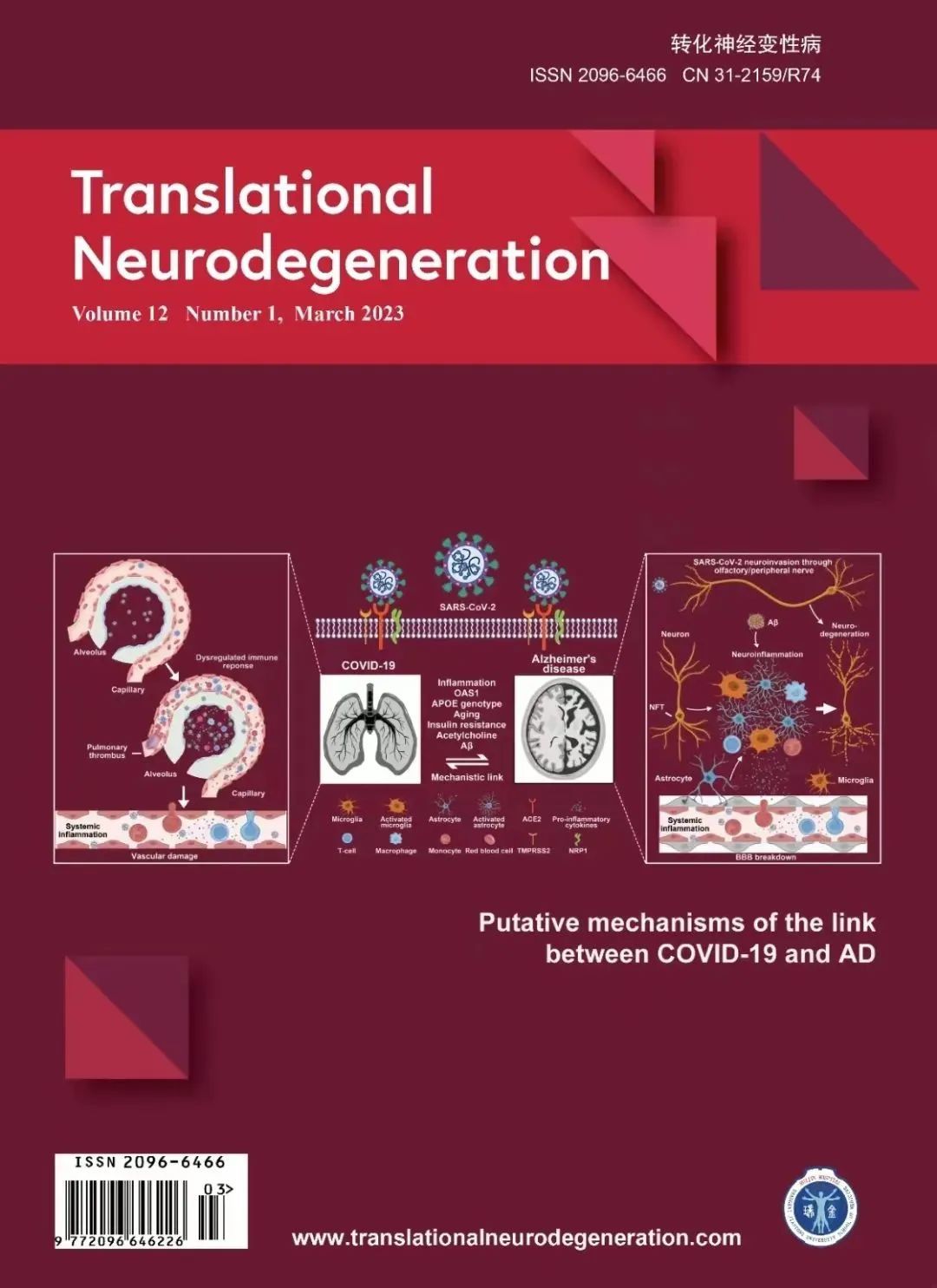
Translational Neurodegeneration, an open-access, peer-reviewed journal, addresses all aspects of neurodegenerative diseases. It serves as a prominent platform for research, therapeutics, and education, fostering discussions and insights across basic, translational, and clinical research domains. Covering Parkinson's disease, Alzheimer's disease, and other neurodegenerative conditions, it welcomes contributions on epidemiology, pathogenesis, diagnosis, prevention, drug development, rehabilitation, and drug delivery. Scientists, clinicians, and physician-scientists are encouraged to share their work in this specialized journal tailored to their fields.

 求助内容:
 应助结果提醒方式:


 京公网安备 11010802042870号


