{"title":"Autoantibody Reactome Profiling Reveals Distinct Humoral Immune Signatures Induced by Simulated Microgravity, Radiation, and Combined Exposure in Mice.","authors":"Lining Wu, Kaipeng Zheng, Bomiao Yu, Bingxin Gao, Pancheng Xiao, Saiya Wang, Yanjun Li, Ruimin Liu, Xiaomei Zhang, Mansheng Li, Chun-Ping Cui, Weiming Tian, Xiaobo Yu","doi":"10.1016/j.mcpro.2026.101665","DOIUrl":null,"url":null,"abstract":"<p><p>Microgravity (μG) and space radiation are major environmental stressors leading to immune dysfunction in astronauts, but the mechanisms governing humoral immunity and effective interventions remain unclear. In this study, we used a high-throughput autoantigen microarray derived from the AAgAtlas 1.0 database to profile humoral immune responses in mice exposed to μG and proton irradiation. We generated 70,490 autoantibody reactivity measurements and observed combined effects of radiation and μG on humoral immunity. Specifically, 38 IgM and 57 IgG autoantibody candidates showed dose-associated changes across 0, 1 and 5 Gy proton irradiation. We further established a global autoantibody landscape for mice under μG, 1 Gy, 5 Gy and μG & 1 Gy. Autoantibody targets altered under μG were enriched for cardiovascular-associated proteins, whereas proton irradiation-associated targets were enriched for DNA repair-related proteins and co-exposure-associated targets were enriched for inflammation-related proteins, revealing distinct humoral immune recognition signatures across exposure conditions. Additionally, a glutamine-free diet (GFD) was associated with changes in autoantibody profiles and shifts in selected bone and hematological parameters toward control levels under μG and μG & 1 Gy conditions. This work provides a resource for investigating humoral immunity under space-related stress and identifies candidate autoantibody signatures and a potential role of dietary modulation that warrant further validation.</p>","PeriodicalId":18712,"journal":{"name":"Molecular & Cellular Proteomics","volume":" ","pages":"101665"},"PeriodicalIF":6.3000,"publicationDate":"2026-09-18","publicationTypes":"Journal Article","fieldsOfStudy":null,"isOpenAccess":false,"openAccessPdf":"https://www.ncbi.nlm.nih.gov/pmc/articles/PMC13691153/pdf/","citationCount":"0","resultStr":null,"platform":"Semanticscholar","paperid":null,"PeriodicalName":"Molecular & Cellular Proteomics","FirstCategoryId":"1085","ListUrlMain":"https://doi.org/10.1016/j.mcpro.2026.101665","RegionNum":2,"RegionCategory":"生物学","ArticlePicture":[],"TitleCN":null,"AbstractTextCN":null,"PMCID":null,"EPubDate":"","PubModel":"","JCR":"Q1","JCRName":"BIOCHEMICAL RESEARCH METHODS","Score":null,"Total":0}
引用次数: 0
Abstract
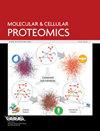
Microgravity (μG) and space radiation are major environmental stressors leading to immune dysfunction in astronauts, but the mechanisms governing humoral immunity and effective interventions remain unclear. In this study, we used a high-throughput autoantigen microarray derived from the AAgAtlas 1.0 database to profile humoral immune responses in mice exposed to μG and proton irradiation. We generated 70,490 autoantibody reactivity measurements and observed combined effects of radiation and μG on humoral immunity. Specifically, 38 IgM and 57 IgG autoantibody candidates showed dose-associated changes across 0, 1 and 5 Gy proton irradiation. We further established a global autoantibody landscape for mice under μG, 1 Gy, 5 Gy and μG & 1 Gy. Autoantibody targets altered under μG were enriched for cardiovascular-associated proteins, whereas proton irradiation-associated targets were enriched for DNA repair-related proteins and co-exposure-associated targets were enriched for inflammation-related proteins, revealing distinct humoral immune recognition signatures across exposure conditions. Additionally, a glutamine-free diet (GFD) was associated with changes in autoantibody profiles and shifts in selected bone and hematological parameters toward control levels under μG and μG & 1 Gy conditions. This work provides a resource for investigating humoral immunity under space-related stress and identifies candidate autoantibody signatures and a potential role of dietary modulation that warrant further validation.
期刊介绍:
The mission of MCP is to foster the development and applications of proteomics in both basic and translational research. MCP will publish manuscripts that report significant new biological or clinical discoveries underpinned by proteomic observations across all kingdoms of life. Manuscripts must define the biological roles played by the proteins investigated or their mechanisms of action.
The journal also emphasizes articles that describe innovative new computational methods and technological advancements that will enable future discoveries. Manuscripts describing such approaches do not have to include a solution to a biological problem, but must demonstrate that the technology works as described, is reproducible and is appropriate to uncover yet unknown protein/proteome function or properties using relevant model systems or publicly available data.
Scope:
-Fundamental studies in biology, including integrative "omics" studies, that provide mechanistic insights
-Novel experimental and computational technologies
-Proteogenomic data integration and analysis that enable greater understanding of physiology and disease processes
-Pathway and network analyses of signaling that focus on the roles of post-translational modifications
-Studies of proteome dynamics and quality controls, and their roles in disease
-Studies of evolutionary processes effecting proteome dynamics, quality and regulation
-Chemical proteomics, including mechanisms of drug action
-Proteomics of the immune system and antigen presentation/recognition
-Microbiome proteomics, host-microbe and host-pathogen interactions, and their roles in health and disease
-Clinical and translational studies of human diseases
-Metabolomics to understand functional connections between genes, proteins and phenotypes

 求助内容:
 应助结果提醒方式:


 京公网安备 11010802042870号


