Guohui Zhang, Yuhong Zhao, Yu Lei, Weiwei Zhi, Wenming Xu, Jiuzhi Zeng, Li Wang, Fangyi Long, Juncen Guo, Weixin Liu
{"title":"Comparative Lactylomic Profiling Unveils Dynamic Reprogramming of Post-translational Lactylation Landscapes During Human Sperm Capacitation.","authors":"Guohui Zhang, Yuhong Zhao, Yu Lei, Weiwei Zhi, Wenming Xu, Jiuzhi Zeng, Li Wang, Fangyi Long, Juncen Guo, Weixin Liu","doi":"10.1016/j.mcpro.2026.101657","DOIUrl":null,"url":null,"abstract":"<p><p>Lactylation, a novel post-translational modification involving lactate conjugation to lysine residues, bridges metabolic flux and epigenetic regulation and has emerged as a conserved regulatory mechanism across eukaryotes and prokaryotes, governing cell proliferation, immune responses, and metabolic reprogramming via a \"Writer-Eraser\" system. Despite the established roles of lactylation in energy metabolism, its function in male reproduction remains unexplored. This study investigates the lactylation modification dynamics during human sperm capacitation, a process requiring metabolic reprogramming for hyperactivated motility. Through 4D FastDIA-based quantitative dynamic profiling, we first conducted the comprehensive characterization of lysine lactylation modifications during sperm capacitation, systematically mapping differential lactylation patterns at the pathway, proteomic, and site-specific levels. We identified 2030 quantifiable lactylated proteins, revealing significant capacitation-dependent modulation: 115 proteins with 133 sites demonstrated upregulated lactylation, while 287 proteins containing 471 sites showed downregulation (p < 0.05, Fold Change >1.5). Notably, 30 proteins exhibited bidirectional regulatory patterns with coexisting upregulated and downregulated sites, and a predominant proportion of modified proteins (263 of 372) displayed single-site differential lactylation. A marked reduction in lactylation levels of mitochondrial respiratory chain proteins was observed after sperm capacitation, indicating heightened ATP requirements. Moreover, proteins with differential lactylation were enriched in biological processes including fertilization, sperm capacitation, β-oxidation, and microtubule dynamics. Strikingly, the presence of known lactylation regulatory enzymes including Alanine-tRNA ligase 1 (AARS1), Sirtuin (SIRT) 2/3, and Histone deacetylase (HDAC) 1/2/6 were detected in the sperm proteome, revealing a 1.6-fold upregulation of SIRT3, implicating its role in delactylation regulation during capacitation. Collectively, these findings delineate a lactylation-coordinated mechanism governing mitochondrial oxidative phosphorylation optimization and cytoskeletal architecture remodeling. This work substantiates a trinity regulatory mechanism integrating \"metabolism-epigenetics-function\" axes through lactylation circuitry, which may have implications for understanding male infertility.</p>","PeriodicalId":18712,"journal":{"name":"Molecular & Cellular Proteomics","volume":" ","pages":"101657"},"PeriodicalIF":6.3000,"publicationDate":"2026-09-08","publicationTypes":"Journal Article","fieldsOfStudy":null,"isOpenAccess":false,"openAccessPdf":"","citationCount":"0","resultStr":null,"platform":"Semanticscholar","paperid":null,"PeriodicalName":"Molecular & Cellular Proteomics","FirstCategoryId":"1085","ListUrlMain":"https://doi.org/10.1016/j.mcpro.2026.101657","RegionNum":2,"RegionCategory":"生物学","ArticlePicture":[],"TitleCN":null,"AbstractTextCN":null,"PMCID":null,"EPubDate":"","PubModel":"","JCR":"Q1","JCRName":"BIOCHEMICAL RESEARCH METHODS","Score":null,"Total":0}
引用次数: 0
Abstract
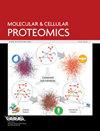
Lactylation, a novel post-translational modification involving lactate conjugation to lysine residues, bridges metabolic flux and epigenetic regulation and has emerged as a conserved regulatory mechanism across eukaryotes and prokaryotes, governing cell proliferation, immune responses, and metabolic reprogramming via a "Writer-Eraser" system. Despite the established roles of lactylation in energy metabolism, its function in male reproduction remains unexplored. This study investigates the lactylation modification dynamics during human sperm capacitation, a process requiring metabolic reprogramming for hyperactivated motility. Through 4D FastDIA-based quantitative dynamic profiling, we first conducted the comprehensive characterization of lysine lactylation modifications during sperm capacitation, systematically mapping differential lactylation patterns at the pathway, proteomic, and site-specific levels. We identified 2030 quantifiable lactylated proteins, revealing significant capacitation-dependent modulation: 115 proteins with 133 sites demonstrated upregulated lactylation, while 287 proteins containing 471 sites showed downregulation (p < 0.05, Fold Change >1.5). Notably, 30 proteins exhibited bidirectional regulatory patterns with coexisting upregulated and downregulated sites, and a predominant proportion of modified proteins (263 of 372) displayed single-site differential lactylation. A marked reduction in lactylation levels of mitochondrial respiratory chain proteins was observed after sperm capacitation, indicating heightened ATP requirements. Moreover, proteins with differential lactylation were enriched in biological processes including fertilization, sperm capacitation, β-oxidation, and microtubule dynamics. Strikingly, the presence of known lactylation regulatory enzymes including Alanine-tRNA ligase 1 (AARS1), Sirtuin (SIRT) 2/3, and Histone deacetylase (HDAC) 1/2/6 were detected in the sperm proteome, revealing a 1.6-fold upregulation of SIRT3, implicating its role in delactylation regulation during capacitation. Collectively, these findings delineate a lactylation-coordinated mechanism governing mitochondrial oxidative phosphorylation optimization and cytoskeletal architecture remodeling. This work substantiates a trinity regulatory mechanism integrating "metabolism-epigenetics-function" axes through lactylation circuitry, which may have implications for understanding male infertility.
期刊介绍:
The mission of MCP is to foster the development and applications of proteomics in both basic and translational research. MCP will publish manuscripts that report significant new biological or clinical discoveries underpinned by proteomic observations across all kingdoms of life. Manuscripts must define the biological roles played by the proteins investigated or their mechanisms of action.
The journal also emphasizes articles that describe innovative new computational methods and technological advancements that will enable future discoveries. Manuscripts describing such approaches do not have to include a solution to a biological problem, but must demonstrate that the technology works as described, is reproducible and is appropriate to uncover yet unknown protein/proteome function or properties using relevant model systems or publicly available data.
Scope:
-Fundamental studies in biology, including integrative "omics" studies, that provide mechanistic insights
-Novel experimental and computational technologies
-Proteogenomic data integration and analysis that enable greater understanding of physiology and disease processes
-Pathway and network analyses of signaling that focus on the roles of post-translational modifications
-Studies of proteome dynamics and quality controls, and their roles in disease
-Studies of evolutionary processes effecting proteome dynamics, quality and regulation
-Chemical proteomics, including mechanisms of drug action
-Proteomics of the immune system and antigen presentation/recognition
-Microbiome proteomics, host-microbe and host-pathogen interactions, and their roles in health and disease
-Clinical and translational studies of human diseases
-Metabolomics to understand functional connections between genes, proteins and phenotypes

 求助内容:
 应助结果提醒方式:


 京公网安备 11010802042870号


