Adam M Kabza, Rosey Chu, Jesse Trejo, Xiaolu Li, Matthew J Gaffrey, David Hall, Wei-Jun Qian, Tong Zhang
{"title":"A Scalable Low-Input Redox Proteomics Workflow Enables High-Throughput Analysis of Cysteine Oxidation in 96-Well Cell Cultures.","authors":"Adam M Kabza, Rosey Chu, Jesse Trejo, Xiaolu Li, Matthew J Gaffrey, David Hall, Wei-Jun Qian, Tong Zhang","doi":"10.1016/j.mcpro.2026.101641","DOIUrl":null,"url":null,"abstract":"<p><p>Reversible oxidation of cysteine residues (redox modifications) plays a crucial role in regulating protein function, signaling, and cellular homeostasis. These dynamic modifications act as molecular switches that transduce redox signals and modulate stress responses, metabolism, and pathogenesis. Redox proteomics enables systematic profiling of these modifications, quantifying the oxidation levels of tens of thousands of cysteine sites across the proteome and providing rich data to understand redox-regulated networks. However, conventional redox proteomic workflows are often limited by low-throughput and high sample requirements. Here, we present a high-throughput sample processing workflow for redox proteomics analysis from as little as 2 μg of protein. The workflow integrates 96-well plate-based cell culture, lysis, digestion, and cysteine-peptide enrichment, substantially increasing throughput and reducing hands-on processing time. Incorporating field asymmetric ion mobility spectrometry (FAIMS) further enhances redox proteome coverage by removing singly charged species in low-input samples, thereby increasing the signal of cysteine-containing peptides. Applying the workflow to RAW264.7 cells cultured in 96-well plates (40,000 cells per well), DIA identified >10,000 cysteine sites, and revealed a global increase in cysteine oxidation upon diamide treatment. To assess robustness, we repeated the 96-well experiment across three independent batches processed on different days and observed consistent coverage, reproducible quantification, and comparable diamide-induced oxidation of heat shock proteins, transcription factors, and protein kinases. Together, this workflow and new data acquisition scheme enable comprehensive redox proteomics from minimal inputs, paving the way for high-throughput sophisticated studies of redox modifications in cell signaling, disease, or large-scale screening of redox-modulating compounds.</p>","PeriodicalId":18712,"journal":{"name":"Molecular & Cellular Proteomics","volume":" ","pages":"101641"},"PeriodicalIF":6.3000,"publicationDate":"2026-09-01","publicationTypes":"Journal Article","fieldsOfStudy":null,"isOpenAccess":false,"openAccessPdf":"https://www.ncbi.nlm.nih.gov/pmc/articles/PMC13590100/pdf/","citationCount":"0","resultStr":null,"platform":"Semanticscholar","paperid":null,"PeriodicalName":"Molecular & Cellular Proteomics","FirstCategoryId":"1085","ListUrlMain":"https://doi.org/10.1016/j.mcpro.2026.101641","RegionNum":2,"RegionCategory":"生物学","ArticlePicture":[],"TitleCN":null,"AbstractTextCN":null,"PMCID":null,"EPubDate":"2026/8/17 0:00:00","PubModel":"Epub","JCR":"Q1","JCRName":"BIOCHEMICAL RESEARCH METHODS","Score":null,"Total":0}
引用次数: 0
Abstract
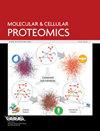
Reversible oxidation of cysteine residues (redox modifications) plays a crucial role in regulating protein function, signaling, and cellular homeostasis. These dynamic modifications act as molecular switches that transduce redox signals and modulate stress responses, metabolism, and pathogenesis. Redox proteomics enables systematic profiling of these modifications, quantifying the oxidation levels of tens of thousands of cysteine sites across the proteome and providing rich data to understand redox-regulated networks. However, conventional redox proteomic workflows are often limited by low-throughput and high sample requirements. Here, we present a high-throughput sample processing workflow for redox proteomics analysis from as little as 2 μg of protein. The workflow integrates 96-well plate-based cell culture, lysis, digestion, and cysteine-peptide enrichment, substantially increasing throughput and reducing hands-on processing time. Incorporating field asymmetric ion mobility spectrometry (FAIMS) further enhances redox proteome coverage by removing singly charged species in low-input samples, thereby increasing the signal of cysteine-containing peptides. Applying the workflow to RAW264.7 cells cultured in 96-well plates (40,000 cells per well), DIA identified >10,000 cysteine sites, and revealed a global increase in cysteine oxidation upon diamide treatment. To assess robustness, we repeated the 96-well experiment across three independent batches processed on different days and observed consistent coverage, reproducible quantification, and comparable diamide-induced oxidation of heat shock proteins, transcription factors, and protein kinases. Together, this workflow and new data acquisition scheme enable comprehensive redox proteomics from minimal inputs, paving the way for high-throughput sophisticated studies of redox modifications in cell signaling, disease, or large-scale screening of redox-modulating compounds.
期刊介绍:
The mission of MCP is to foster the development and applications of proteomics in both basic and translational research. MCP will publish manuscripts that report significant new biological or clinical discoveries underpinned by proteomic observations across all kingdoms of life. Manuscripts must define the biological roles played by the proteins investigated or their mechanisms of action.
The journal also emphasizes articles that describe innovative new computational methods and technological advancements that will enable future discoveries. Manuscripts describing such approaches do not have to include a solution to a biological problem, but must demonstrate that the technology works as described, is reproducible and is appropriate to uncover yet unknown protein/proteome function or properties using relevant model systems or publicly available data.
Scope:
-Fundamental studies in biology, including integrative "omics" studies, that provide mechanistic insights
-Novel experimental and computational technologies
-Proteogenomic data integration and analysis that enable greater understanding of physiology and disease processes
-Pathway and network analyses of signaling that focus on the roles of post-translational modifications
-Studies of proteome dynamics and quality controls, and their roles in disease
-Studies of evolutionary processes effecting proteome dynamics, quality and regulation
-Chemical proteomics, including mechanisms of drug action
-Proteomics of the immune system and antigen presentation/recognition
-Microbiome proteomics, host-microbe and host-pathogen interactions, and their roles in health and disease
-Clinical and translational studies of human diseases
-Metabolomics to understand functional connections between genes, proteins and phenotypes

 求助内容:
 应助结果提醒方式:


 京公网安备 11010802042870号


