Leyla Ayse Erozenci, Fenna Feenstra, Sander R Piersma, Thang V Pham, Jianing Liu, Joke Wortel, Jan R T van Weering, Natasja Fj Dits, Guido Jenster, R Jeroen A van Moorselaar, Irene V Bijnsdorp, Connie R Jimenez
{"title":"Surface Proteomics of Cancer-Derived Extracellular Vesicles Reveals Universal Heat Shock Proteins and Cancer Signatures.","authors":"Leyla Ayse Erozenci, Fenna Feenstra, Sander R Piersma, Thang V Pham, Jianing Liu, Joke Wortel, Jan R T van Weering, Natasja Fj Dits, Guido Jenster, R Jeroen A van Moorselaar, Irene V Bijnsdorp, Connie R Jimenez","doi":"10.1016/j.mcpro.2026.101649","DOIUrl":null,"url":null,"abstract":"<p><p>Extracellular vesicles (EVs) secreted by cancer cells are a valuable source of noninvasive biomarkers, as they are released into biofluids and reflect the molecular makeup of their cells of origin. To enable direct capture and detection of cancer-derived EVs, detailed knowledge of their surface proteome is essential. Here, we combined mild enzymatic treatment with mass spectrometry to analyze outward-facing proteins of EVs across a panel of 18 cell lines. This approach identified 1094 EV-associated surface proteins, including 144 transmembrane proteins involved in cellular communication and transport. Peptide-level analyses revealed that nearly 50% of multi-pass transmembrane proteins, such as ATP1A1, displayed their intracellular domains on the external EV surface. Out of a core set of 112 EV surface proteins shared across all cancer types, we report a top list of 15 highly abundant EV-surface proteins including ATP1A1, heat shock proteins (HSP)A8 and HSP90AB1 and nuclear proteins linked to EV biogenesis and cancer progression. This comprehensive profiling of EV surface proteomes from diverse cancer types reveals a robust set of pan-cancer EV surface markers with potential for diagnostic analysis.</p>","PeriodicalId":18712,"journal":{"name":"Molecular & Cellular Proteomics","volume":" ","pages":"101649"},"PeriodicalIF":6.3000,"publicationDate":"2026-08-22","publicationTypes":"Journal Article","fieldsOfStudy":null,"isOpenAccess":false,"openAccessPdf":"https://www.ncbi.nlm.nih.gov/pmc/articles/PMC13634791/pdf/","citationCount":"0","resultStr":null,"platform":"Semanticscholar","paperid":null,"PeriodicalName":"Molecular & Cellular Proteomics","FirstCategoryId":"1085","ListUrlMain":"https://doi.org/10.1016/j.mcpro.2026.101649","RegionNum":2,"RegionCategory":"生物学","ArticlePicture":[],"TitleCN":null,"AbstractTextCN":null,"PMCID":null,"EPubDate":"","PubModel":"","JCR":"Q1","JCRName":"BIOCHEMICAL RESEARCH METHODS","Score":null,"Total":0}
引用次数: 0
Abstract
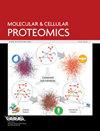
Extracellular vesicles (EVs) secreted by cancer cells are a valuable source of noninvasive biomarkers, as they are released into biofluids and reflect the molecular makeup of their cells of origin. To enable direct capture and detection of cancer-derived EVs, detailed knowledge of their surface proteome is essential. Here, we combined mild enzymatic treatment with mass spectrometry to analyze outward-facing proteins of EVs across a panel of 18 cell lines. This approach identified 1094 EV-associated surface proteins, including 144 transmembrane proteins involved in cellular communication and transport. Peptide-level analyses revealed that nearly 50% of multi-pass transmembrane proteins, such as ATP1A1, displayed their intracellular domains on the external EV surface. Out of a core set of 112 EV surface proteins shared across all cancer types, we report a top list of 15 highly abundant EV-surface proteins including ATP1A1, heat shock proteins (HSP)A8 and HSP90AB1 and nuclear proteins linked to EV biogenesis and cancer progression. This comprehensive profiling of EV surface proteomes from diverse cancer types reveals a robust set of pan-cancer EV surface markers with potential for diagnostic analysis.
期刊介绍:
The mission of MCP is to foster the development and applications of proteomics in both basic and translational research. MCP will publish manuscripts that report significant new biological or clinical discoveries underpinned by proteomic observations across all kingdoms of life. Manuscripts must define the biological roles played by the proteins investigated or their mechanisms of action.
The journal also emphasizes articles that describe innovative new computational methods and technological advancements that will enable future discoveries. Manuscripts describing such approaches do not have to include a solution to a biological problem, but must demonstrate that the technology works as described, is reproducible and is appropriate to uncover yet unknown protein/proteome function or properties using relevant model systems or publicly available data.
Scope:
-Fundamental studies in biology, including integrative "omics" studies, that provide mechanistic insights
-Novel experimental and computational technologies
-Proteogenomic data integration and analysis that enable greater understanding of physiology and disease processes
-Pathway and network analyses of signaling that focus on the roles of post-translational modifications
-Studies of proteome dynamics and quality controls, and their roles in disease
-Studies of evolutionary processes effecting proteome dynamics, quality and regulation
-Chemical proteomics, including mechanisms of drug action
-Proteomics of the immune system and antigen presentation/recognition
-Microbiome proteomics, host-microbe and host-pathogen interactions, and their roles in health and disease
-Clinical and translational studies of human diseases
-Metabolomics to understand functional connections between genes, proteins and phenotypes

 求助内容:
 应助结果提醒方式:


 京公网安备 11010802042870号


