Wendi Zhang, Yang Gao, Jiao Wang, Quanzheng Deng, Lu Han, Wanning Zhang, Yuxi Fang
{"title":"Prebiotic Absolute Asymmetric Synthesis of d-Ribose on Wollastonite","authors":"Wendi Zhang, Yang Gao, Jiao Wang, Quanzheng Deng, Lu Han, Wanning Zhang, Yuxi Fang","doi":"10.1002/chir.70139","DOIUrl":null,"url":null,"abstract":"<div>\n \n <p>ATP is the core substance of energy metabolism in all forms of life. The chirality of <span>d</span>-ribose is essential for ATP's function, ensuring efficient molecular recognition, metabolic stability, and co-evolution with RNA in biological processes. However, origin of chirality of <span>d</span>-ribose is still unknown. Here, we demonstrate that wollastonite, an abundant Earth mineral, catalyzes the formose reaction between formaldehyde and glycolaldehyde and achieves high enantioselectivity (63.3%–91.3% <i>ee</i>) toward <span>d</span>-ribose. The lower energy barrier for the transition state of <span>d</span>-glyceraldehyde compared to that of <span>l</span>-glyceraldehyde, which possesses a similar configuration to glyceraldehyde, results in the enantioselective synthesis of ribose. Experimental and computational studies reveal that the surface chirality of wollastonite, which is characterized by its wavy atomic arrangement, selectively reduces the adsorption energy of the <span>d</span>-glyceraldehyde intermediate compared to its <span>l</span>-enantiomer. This preferential adsorption kinetically promotes the <span>d</span>-glyceraldehyde pathway and steers the reaction toward <span>d</span>-ribose. Our work establishes wollastonite as an intrinsically enantioselective mineral catalyst, provides a mechanistic foundation for prebiotic chiral selection toward <span>d</span>-ribose, and highlights surface design principles for asymmetric synthesis.</p>\n </div>","PeriodicalId":10170,"journal":{"name":"Chirality","volume":"38 9","pages":""},"PeriodicalIF":2.4000,"publicationDate":"2026-08-20","publicationTypes":"Journal Article","fieldsOfStudy":null,"isOpenAccess":false,"openAccessPdf":"","citationCount":"0","resultStr":null,"platform":"Semanticscholar","paperid":null,"PeriodicalName":"Chirality","FirstCategoryId":"92","ListUrlMain":"https://onlinelibrary.wiley.com/doi/10.1002/chir.70139","RegionNum":4,"RegionCategory":"化学","ArticlePicture":[],"TitleCN":null,"AbstractTextCN":null,"PMCID":null,"EPubDate":"","PubModel":"","JCR":"Q2","JCRName":"CHEMISTRY, ANALYTICAL","Score":null,"Total":0}
引用次数: 0
Abstract
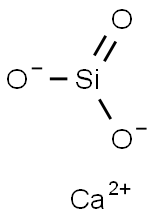
ATP is the core substance of energy metabolism in all forms of life. The chirality of d-ribose is essential for ATP's function, ensuring efficient molecular recognition, metabolic stability, and co-evolution with RNA in biological processes. However, origin of chirality of d-ribose is still unknown. Here, we demonstrate that wollastonite, an abundant Earth mineral, catalyzes the formose reaction between formaldehyde and glycolaldehyde and achieves high enantioselectivity (63.3%–91.3% ee) toward d-ribose. The lower energy barrier for the transition state of d-glyceraldehyde compared to that of l-glyceraldehyde, which possesses a similar configuration to glyceraldehyde, results in the enantioselective synthesis of ribose. Experimental and computational studies reveal that the surface chirality of wollastonite, which is characterized by its wavy atomic arrangement, selectively reduces the adsorption energy of the d-glyceraldehyde intermediate compared to its l-enantiomer. This preferential adsorption kinetically promotes the d-glyceraldehyde pathway and steers the reaction toward d-ribose. Our work establishes wollastonite as an intrinsically enantioselective mineral catalyst, provides a mechanistic foundation for prebiotic chiral selection toward d-ribose, and highlights surface design principles for asymmetric synthesis.
期刊介绍:
The main aim of the journal is to publish original contributions of scientific work on the role of chirality in chemistry and biochemistry in respect to biological, chemical, materials, pharmacological, spectroscopic and physical properties.
Papers on the chemistry (physiochemical, preparative synthetic, and analytical), physics, pharmacology, clinical pharmacology, toxicology, and other biological aspects of chiral molecules will be published.

 求助内容:
 应助结果提醒方式:


 京公网安备 11010802042870号


