{"title":"[The development models of Shanghai Fo Ci Pharmaceutical Factory and Cui Hua Pharmaceutical Factory in the Republic of China].","authors":"C X Zhao, W Zhang","doi":"10.3760/cma.j.cn112155-20250628-00101","DOIUrl":null,"url":null,"abstract":"<p><p>Fo Ci Pharmaceutical Factory, founded in Shanghai in 1932, was the first modern joint-stock enterprise to successfully commercialize 'Chinese medicine made in the western way'. It pioneered the 'condensed pill' technology according to traditional Chinese medical theories, gaining wide recognition for its remarkable efficacy. It emphasized laboratory analysis, experimental research and formula transparency. It maximised its influence domestically and exported its products overseas with flexible market strategies. It survives today despite obstacles like industry resistance and the War of Resistance against Japan. In contrast, Cui Hua Pharmaceutical Factory, as the first western-style pharmaceutical factory of traditional Chinese medicine, established a sound organizational structure, management system and active business strategies. However, it failed three years later after its establishment because of its poor efficacy, poor quality and inconsistency with traditional Chinese medicine theories. Additionally, it lost the market with a lack of long-term planning and risk assessment. This paper focuses on the development of Fo Ci and makes reference to Cui Hua, offering a comparative study in terms of historical context, corporate culture, product characteristics, market exploration, and risk responses. Their success and failure provided valuable insights for modern enterprises of Chinese medicines, such as adapting to trends in market research, strictly controlling product quality while balancing traditions and innovation, optimising internal structures and strengthening talent development to enhance competitiveness and risk resistance to achieve sustainable development.</p>","PeriodicalId":35995,"journal":{"name":"中华医史杂志","volume":"56 4","pages":"248-255"},"PeriodicalIF":0.0000,"publicationDate":"2026-07-28","publicationTypes":"Journal Article","fieldsOfStudy":null,"isOpenAccess":false,"openAccessPdf":"","citationCount":"0","resultStr":null,"platform":"Semanticscholar","paperid":null,"PeriodicalName":"中华医史杂志","FirstCategoryId":"1090","ListUrlMain":"https://doi.org/10.3760/cma.j.cn112155-20250628-00101","RegionNum":0,"RegionCategory":null,"ArticlePicture":[],"TitleCN":null,"AbstractTextCN":null,"PMCID":null,"EPubDate":"","PubModel":"","JCR":"Q4","JCRName":"Medicine","Score":null,"Total":0}
引用次数: 0
Abstract
Fo Ci Pharmaceutical Factory, founded in Shanghai in 1932, was the first modern joint-stock enterprise to successfully commercialize 'Chinese medicine made in the western way'. It pioneered the 'condensed pill' technology according to traditional Chinese medical theories, gaining wide recognition for its remarkable efficacy. It emphasized laboratory analysis, experimental research and formula transparency. It maximised its influence domestically and exported its products overseas with flexible market strategies. It survives today despite obstacles like industry resistance and the War of Resistance against Japan. In contrast, Cui Hua Pharmaceutical Factory, as the first western-style pharmaceutical factory of traditional Chinese medicine, established a sound organizational structure, management system and active business strategies. However, it failed three years later after its establishment because of its poor efficacy, poor quality and inconsistency with traditional Chinese medicine theories. Additionally, it lost the market with a lack of long-term planning and risk assessment. This paper focuses on the development of Fo Ci and makes reference to Cui Hua, offering a comparative study in terms of historical context, corporate culture, product characteristics, market exploration, and risk responses. Their success and failure provided valuable insights for modern enterprises of Chinese medicines, such as adapting to trends in market research, strictly controlling product quality while balancing traditions and innovation, optimising internal structures and strengthening talent development to enhance competitiveness and risk resistance to achieve sustainable development.
期刊介绍:
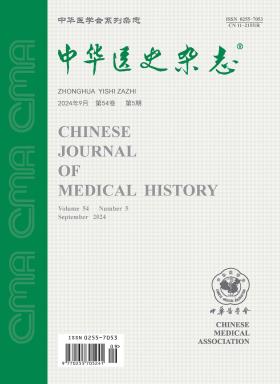
The Chinese Journal of Medical History is the only professional academic journal on medical history in the country. The first publication was named "Journal of Medical History" and was designated as a quarterly publication. In 2009, it was changed from quarterly to bimonthly.
The Chinese Journal of Medical History has columns such as special articles, reviews, expert talks, medical history treatises, literature research, forums and debates, historical accounts, figures, short essays, graduate forums, lectures, historical materials, medical history, and book reviews.
Chinese Journal of Medical History has been included in the US Medline online database.

 求助内容:
 应助结果提醒方式:


 京公网安备 11010802042870号


