
Nondestructive Lithium-Plating Detection Based on Reversible Lithium Reintercalation in Lithium-ion Batteries

IF 4 Q1 Engineering
Chinese Journal of Electrical Engineering Pub Date : 2026-03-01 Epub Date: 2026-04-07 DOI:10.23919/CJEE.2026.000016
Hongchang Cai;Kai Yang;Yunfeng Huang;Zhecheng Fan;Yilin Lai;Jian Mei;Yong Peng;Xuning Feng
{"title":"Nondestructive Lithium-Plating Detection Based on Reversible Lithium Reintercalation in Lithium-ion Batteries","authors":"Hongchang Cai;Kai Yang;Yunfeng Huang;Zhecheng Fan;Yilin Lai;Jian Mei;Yong Peng;Xuning Feng","doi":"10.23919/CJEE.2026.000016","DOIUrl":null,"url":null,"abstract":"Lithium plating in lithium-ion batteries can cause critical safety and performance issues, including internal short circuits, severe capacity degradation, and reduced thermal stability. Developing efficient detection methods is imperative to mitigate the safety risks associated with lithium plating. However, most advanced detection techniques require destructive battery disassembly, whereas existing nondestructive approaches often involve extended detection times or have limited practical applicability. To address these challenges, a nondestructive lithium-plating detection method based on the reversible lithium reintercalation mechanism is proposed. This method extracts the direct current internal resistance during the rest phase of pulse charging as a key feature, normalizes this feature, and applies clustering algorithms for nondestructive identification. Experimental analysis of large-format cells, together with post-mortem validation, confirms the effectiveness of the proposed approach. With applicability across wide temperature ranges and diverse current conditions, and relying only on readily obtainable features, this approach enables nondestructive lithium-plating detection and significantly enhances the operational safety and stability of batteries.","PeriodicalId":36428,"journal":{"name":"Chinese Journal of Electrical Engineering","volume":"12 1","pages":"93-106"},"PeriodicalIF":4.0000,"publicationDate":"2026-03-01","publicationTypes":"Journal Article","fieldsOfStudy":null,"isOpenAccess":false,"openAccessPdf":"https://ieeexplore.ieee.org/stamp/stamp.jsp?tp=&arnumber=11476986","citationCount":"0","resultStr":null,"platform":"Semanticscholar","paperid":null,"PeriodicalName":"Chinese Journal of Electrical Engineering","FirstCategoryId":"1087","ListUrlMain":"https://ieeexplore.ieee.org/document/11476986/","RegionNum":0,"RegionCategory":null,"ArticlePicture":[],"TitleCN":null,"AbstractTextCN":null,"PMCID":null,"EPubDate":"2026/4/7 0:00:00","PubModel":"Epub","JCR":"Q1","JCRName":"Engineering","Score":null,"Total":0}
引用次数: 0

Abstract

Lithium plating in lithium-ion batteries can cause critical safety and performance issues, including internal short circuits, severe capacity degradation, and reduced thermal stability. Developing efficient detection methods is imperative to mitigate the safety risks associated with lithium plating. However, most advanced detection techniques require destructive battery disassembly, whereas existing nondestructive approaches often involve extended detection times or have limited practical applicability. To address these challenges, a nondestructive lithium-plating detection method based on the reversible lithium reintercalation mechanism is proposed. This method extracts the direct current internal resistance during the rest phase of pulse charging as a key feature, normalizes this feature, and applies clustering algorithms for nondestructive identification. Experimental analysis of large-format cells, together with post-mortem validation, confirms the effectiveness of the proposed approach. With applicability across wide temperature ranges and diverse current conditions, and relying only on readily obtainable features, this approach enables nondestructive lithium-plating detection and significantly enhances the operational safety and stability of batteries.
基于锂离子电池可逆锂再嵌入的非破坏性镀锂检测
在锂离子电池中镀锂会导致严重的安全和性能问题,包括内部短路、严重的容量退化和热稳定性降低。开发有效的检测方法对于降低与镀锂相关的安全风险至关重要。然而,大多数先进的检测技术需要对电池进行破坏性拆卸,而现有的非破坏性方法通常需要延长检测时间或具有有限的实际适用性。为了解决这些问题,提出了一种基于可逆锂再嵌入机制的非破坏性镀锂检测方法。该方法提取脉冲充电剩余阶段的直流内阻作为关键特征,对该特征进行归一化,并应用聚类算法进行无损识别。大尺寸细胞的实验分析,连同死后验证,证实了所提出的方法的有效性。该方法适用于广泛的温度范围和不同的电流条件,并且仅依赖于易于获得的特征,可以实现非破坏性的镀锂检测,并显着提高电池的操作安全性和稳定性。
本文章由计算机程序翻译,如有差异,请以英文原文为准。
求助全文
约1分钟内获得全文 求助全文
来源期刊
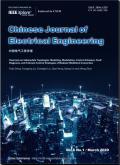
Chinese Journal of Electrical Engineering
Chinese Journal of Electrical Engineering Energy-Energy Engineering and Power Technology
CiteScore
7.80
自引率
0.00%
发文量
621
审稿时长
12 weeks

×
引用
GB/T 7714-2015
复制
MLA
复制
APA
复制
导出至
BibTeX EndNote RefMan NoteFirst NoteExpress
×
提示
您的信息不完整,为了账户安全,请先补充。
现在去补充
×
提示
您因"违规操作"
具体请查看互助需知
我知道了
×
提示
确定
请完成安全验证×
copy
已复制链接
快去分享给好友吧!
我知道了
右上角分享
点击右上角分享
0
联系我们:info@booksci.cn Book学术提供免费学术资源搜索服务,方便国内外学者检索中英文文献。致力于提供最便捷和优质的服务体验。 Copyright © 2023 布克学术 All rights reserved.
京ICP备2023020795号-1
ghs 京公网安备 11010802042870号
Book学术文献互助
Book学术文献互助群
群 号:604180095
Book学术官方微信
小红书


