Yi-Xue Zhang, Ji Huang, Hui-Ya Chen, Tian Tian, Zhen-Xiao Sun
{"title":"Gancao Ganjiang Decoction Inhibits Renal Cell Carcinoma Progression via PI3K-AKT and JAK-STAT Signaling Pathways.","authors":"Yi-Xue Zhang, Ji Huang, Hui-Ya Chen, Tian Tian, Zhen-Xiao Sun","doi":"10.1007/s11655-026-4155-3","DOIUrl":null,"url":null,"abstract":"<p><strong>Objective: </strong>To evaluate the therapeutic potential of Chinese medicine prescription Gancao Ganjiang Decoction (Licorice and Dried Ginger Decoction, LDGD) against renal cell carcinoma (RCC) and to elucidate its underlying mechanisms.</p><p><strong>Methods: </strong>A mouse RCC model was established in BALB/c mice by subcutaneous injection of Renca cells. The effects of LDGD (5, 10, and 15 g/kg), cisplatin (3 mg/kg), and their combination (10 g/kg LDGD + 3 mg/kg cisplatin) on tumor growth were assessed. Ki-67 expression in tumor tissue was detected by immunohistochemistry. The anti-proliferative effects of LDGD and its 7 blood-absorbed constituents were evaluated on 769-P and 786-O human RCC cell lines using MTT and colony formation assays. Network pharmacology was conducted to predict core targets and signaling pathways. Molecular docking was performed to forecast interactions between active components of LDGD and key proteins in related signaling pathways. Western blot was used to validate phosphorylation levels of the key proteins.</p><p><strong>Results: </strong>LDGD and cisplatin inhibited mouse RCC growth in vivo. The combination of LDGD with cisplatin enhanced the tumor inhibition rate as compared with cisplatin alone. Ki-67 expression was reduced following treatments. LDGD and its blood-absorbed constituents inhibited RCC cell viability and proliferation in a time- and dose-dependent manner in vitro. Network pharmacology showed that PI3K-AKT and JAK-STAT pathways implicated in the anti-RCC effect of LDGD and its blood-absorbed constituents, and AKT1 and STAT3 were potential targets. Molecular docking suggested that isoliquiritigenin and 6-shogaol had strong binding affinity for AKT1 and STAT3. Western blot showed that LDGD suppressed phosphorylation of AKT and STAT3 in 769-P cells, while inhibited phosphorylation of STAT3 protein in 786-O cells. Isoliquiritigenin inhibited phosphorylation of AKT and STAT3 proteins in both 769-P and 786-O cells, and 6-shogaol inhibited phosphorylation of STAT3 protein in 786-O cells.</p><p><strong>Conclusion: </strong>LDGD exerts significant anti-tumor effects against RCC, possibly via suppression of AKT and STAT3 phosphorylation.</p>","PeriodicalId":10005,"journal":{"name":"Chinese Journal of Integrative Medicine","volume":" ","pages":""},"PeriodicalIF":3.1000,"publicationDate":"2026-07-15","publicationTypes":"Journal Article","fieldsOfStudy":null,"isOpenAccess":false,"openAccessPdf":"","citationCount":"0","resultStr":null,"platform":"Semanticscholar","paperid":null,"PeriodicalName":"Chinese Journal of Integrative Medicine","FirstCategoryId":"3","ListUrlMain":"https://doi.org/10.1007/s11655-026-4155-3","RegionNum":3,"RegionCategory":"医学","ArticlePicture":[],"TitleCN":null,"AbstractTextCN":null,"PMCID":null,"EPubDate":"","PubModel":"","JCR":"Q2","JCRName":"INTEGRATIVE & COMPLEMENTARY MEDICINE","Score":null,"Total":0}
引用次数: 0
Abstract
Objective: To evaluate the therapeutic potential of Chinese medicine prescription Gancao Ganjiang Decoction (Licorice and Dried Ginger Decoction, LDGD) against renal cell carcinoma (RCC) and to elucidate its underlying mechanisms.
Methods: A mouse RCC model was established in BALB/c mice by subcutaneous injection of Renca cells. The effects of LDGD (5, 10, and 15 g/kg), cisplatin (3 mg/kg), and their combination (10 g/kg LDGD + 3 mg/kg cisplatin) on tumor growth were assessed. Ki-67 expression in tumor tissue was detected by immunohistochemistry. The anti-proliferative effects of LDGD and its 7 blood-absorbed constituents were evaluated on 769-P and 786-O human RCC cell lines using MTT and colony formation assays. Network pharmacology was conducted to predict core targets and signaling pathways. Molecular docking was performed to forecast interactions between active components of LDGD and key proteins in related signaling pathways. Western blot was used to validate phosphorylation levels of the key proteins.
Results: LDGD and cisplatin inhibited mouse RCC growth in vivo. The combination of LDGD with cisplatin enhanced the tumor inhibition rate as compared with cisplatin alone. Ki-67 expression was reduced following treatments. LDGD and its blood-absorbed constituents inhibited RCC cell viability and proliferation in a time- and dose-dependent manner in vitro. Network pharmacology showed that PI3K-AKT and JAK-STAT pathways implicated in the anti-RCC effect of LDGD and its blood-absorbed constituents, and AKT1 and STAT3 were potential targets. Molecular docking suggested that isoliquiritigenin and 6-shogaol had strong binding affinity for AKT1 and STAT3. Western blot showed that LDGD suppressed phosphorylation of AKT and STAT3 in 769-P cells, while inhibited phosphorylation of STAT3 protein in 786-O cells. Isoliquiritigenin inhibited phosphorylation of AKT and STAT3 proteins in both 769-P and 786-O cells, and 6-shogaol inhibited phosphorylation of STAT3 protein in 786-O cells.
Conclusion: LDGD exerts significant anti-tumor effects against RCC, possibly via suppression of AKT and STAT3 phosphorylation.
期刊介绍:
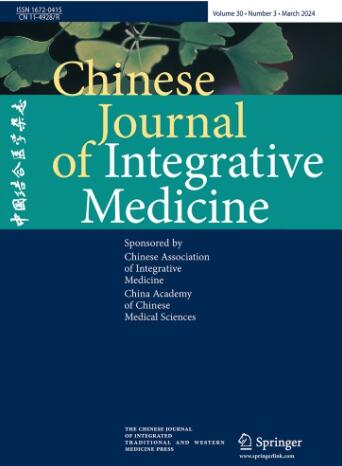
Chinese Journal of Integrative Medicine seeks to promote international communication and exchange on integrative medicine as well as complementary and alternative medicine (CAM) and provide a rapid forum for the dissemination of scientific articles focusing on the latest developments and trends as well as experiences and achievements on integrative medicine or CAM in clinical practice, scientific research, education and healthcare.

 求助内容:
 应助结果提醒方式:


 京公网安备 11010802042870号


